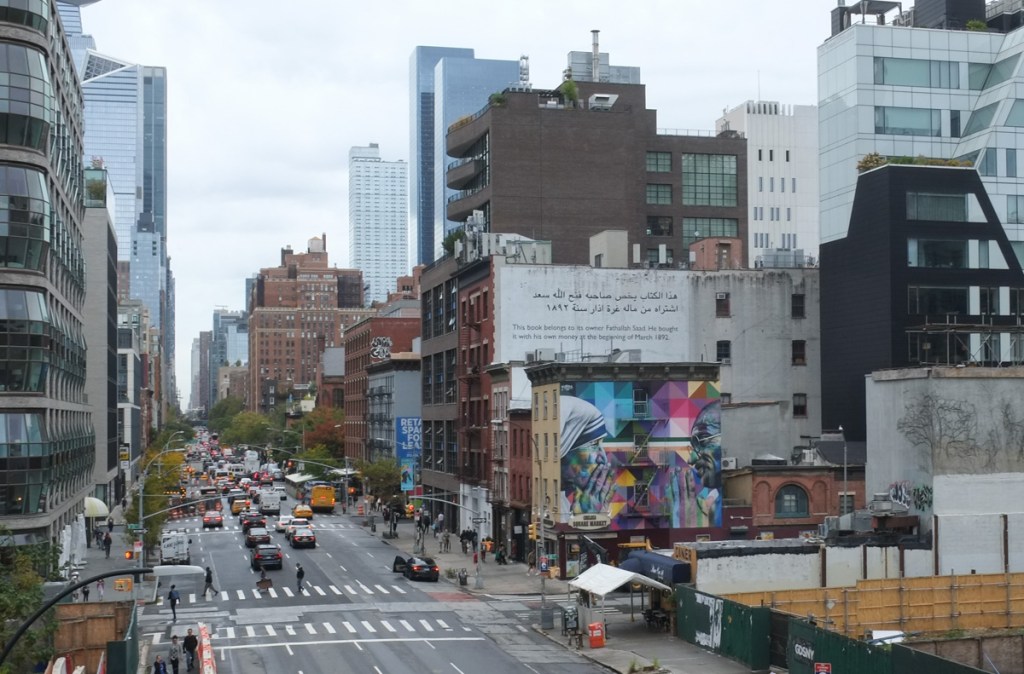
There are two large colourful murals on 10th Avenue that were painted by Eduardo Kobra. Both are visible from the High Line, Manhattan’s elevated park.
below: Mother Teresa and Gandhi as seen from the High Line
and then closer up, face to face, respectful, hopeful
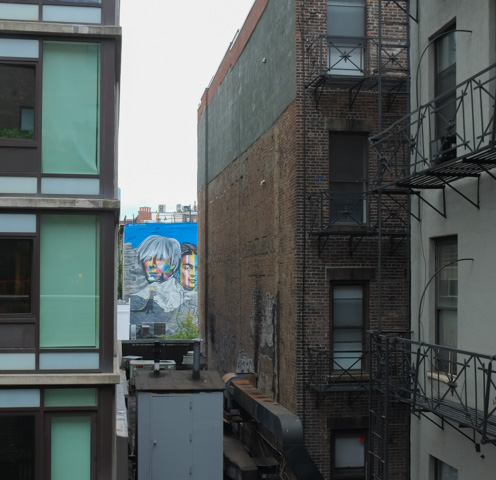
below: A hint of a second mural – Andy Warhol can be spotted between two buildings.
below: Above the Empire Diner in West Chelsea is this mural inspired by the carvings on Mount Rushmore, a re-imagining of it if you will. Instead of four American presidents there are four famous artists – Andy Warhol, Frida Kahlo, Keith Haring, and Jean-Michel Basquiat.
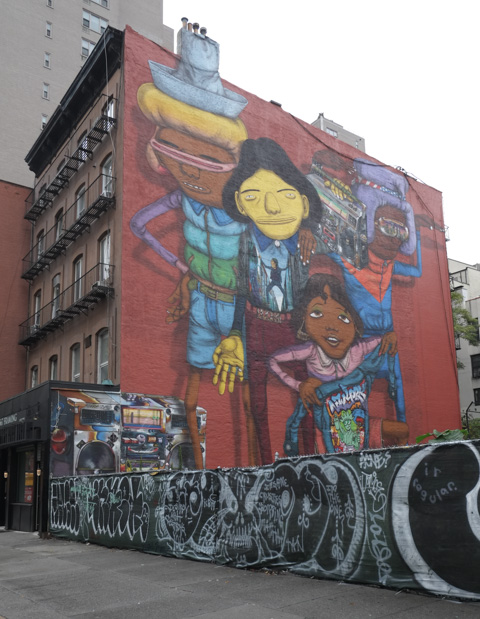
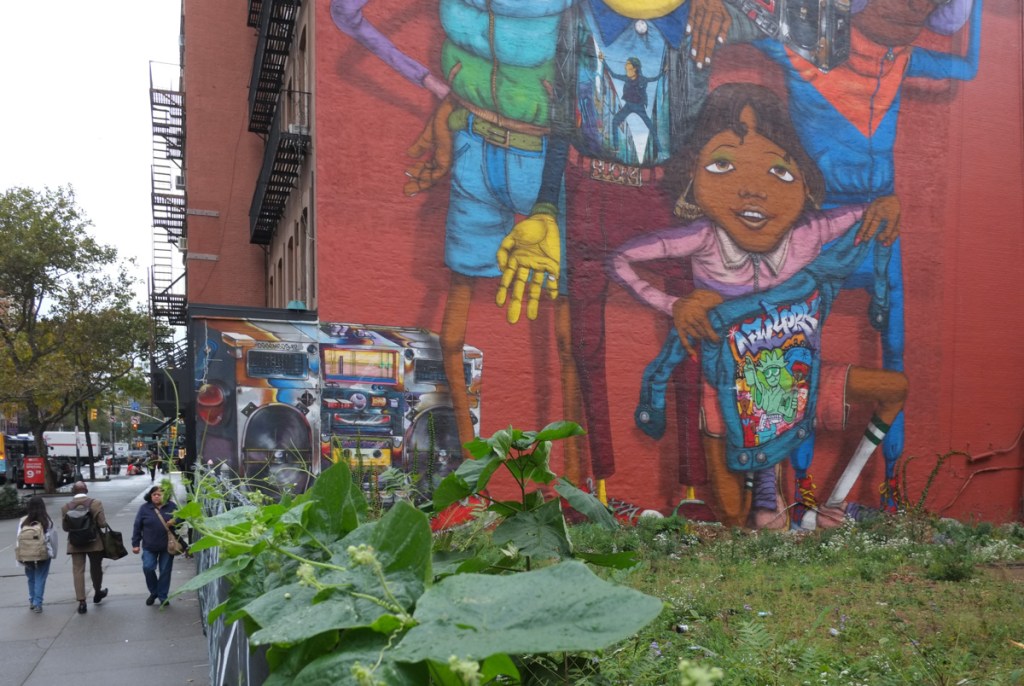
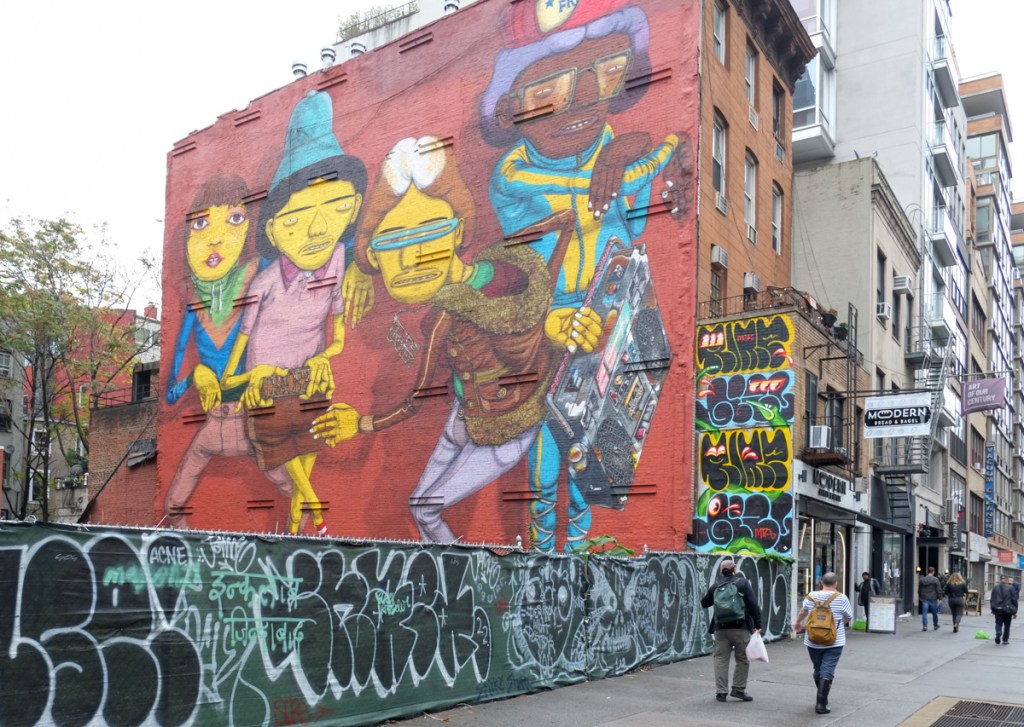
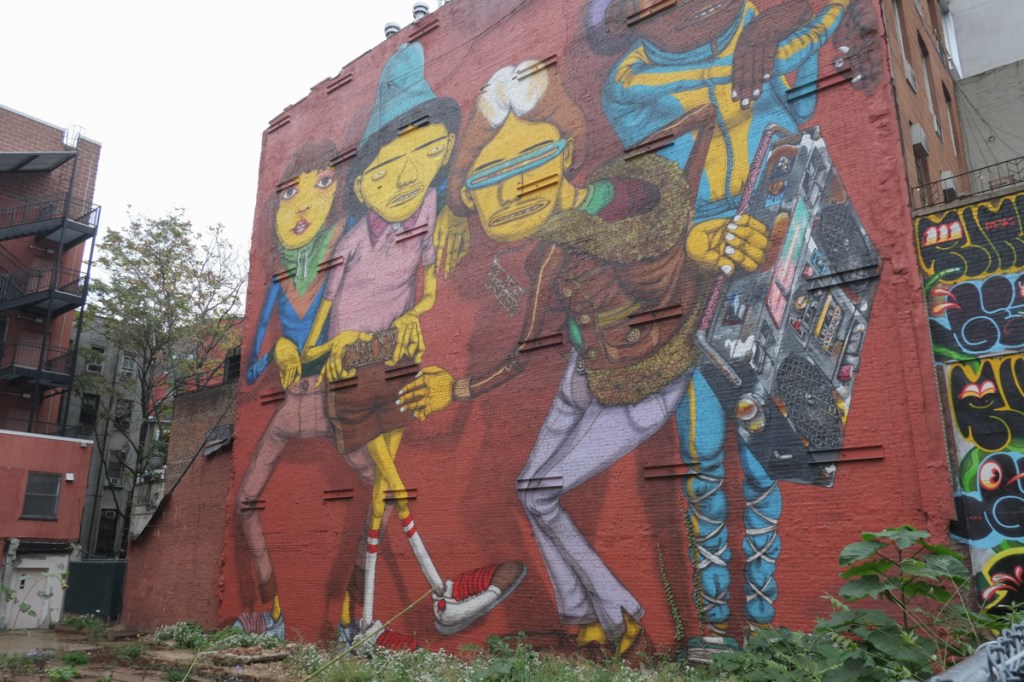
In a vacant lot on 14th Street in Manhattan are two large murals by the street art team, OSGEMEOS (or Os Gemeos), a Portuguese word meaning twins. An apt word in this case because the two Brazilian artists, Gustavo Pandolfo and Otavio Pandolfo, are twin brothers. The murals were painted in 2017 after a building was demolished – the lot is still vacant and the murals are still looking good (even if they are behind a fence).
They face each other across the wasteland. Music fans might be able to find the references to various musicians that have been included in the paintings.
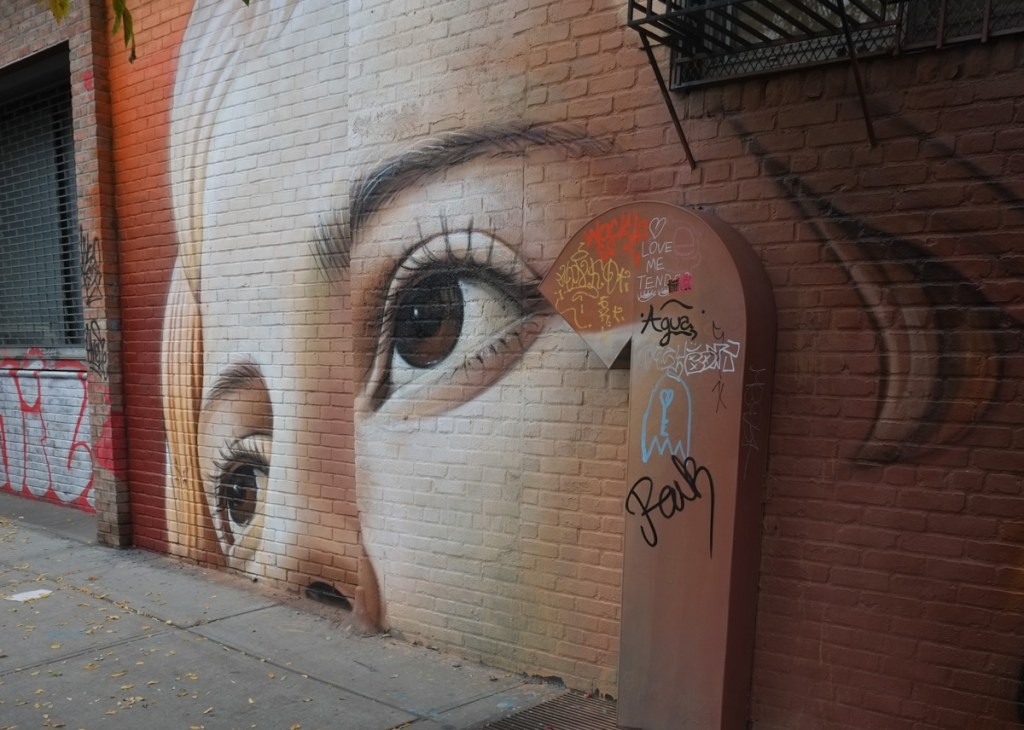
A large mural in Bushwick (Brooklyn) NY called ‘Brick Venus’ was recently painted by two Italian artists, Ligama and Mirko Loste. It features large sculpture-like faces. The face on the righthand side is so large it extends off the top of the wall so that you can’t see her eyes.
Some colour seems to be creeping into the middle face. Colour and life.
By the third Venus, the transition is complete; she is no longer made of stone
The Bushwick Collective – a graffiti and street art project of artists from around the world founded in 2011 and still going strong.
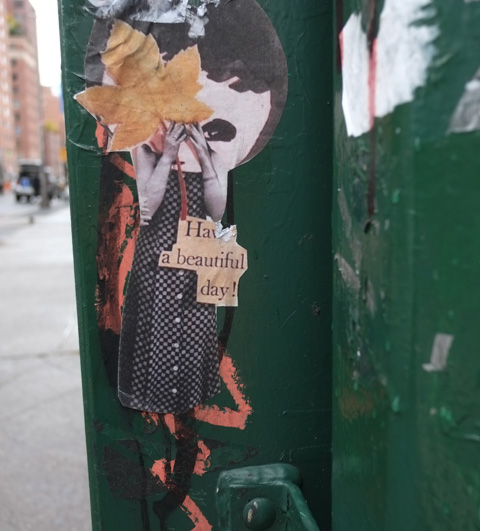
below: Have a beautiful day, a beautiful autumn day!
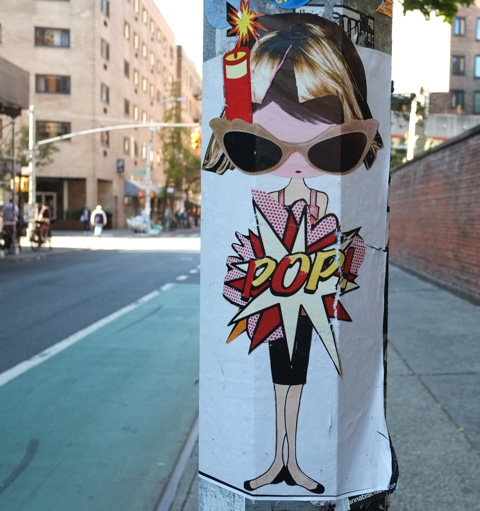
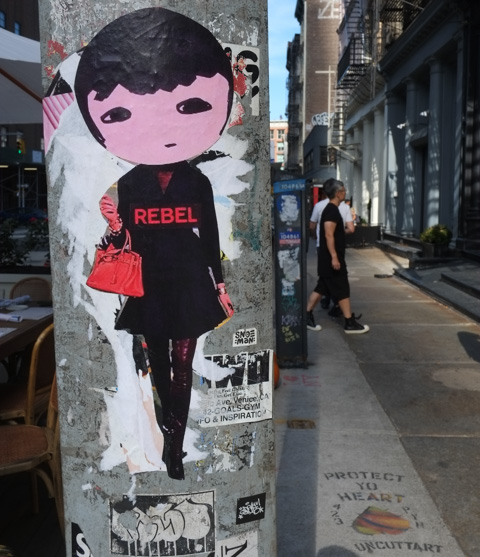
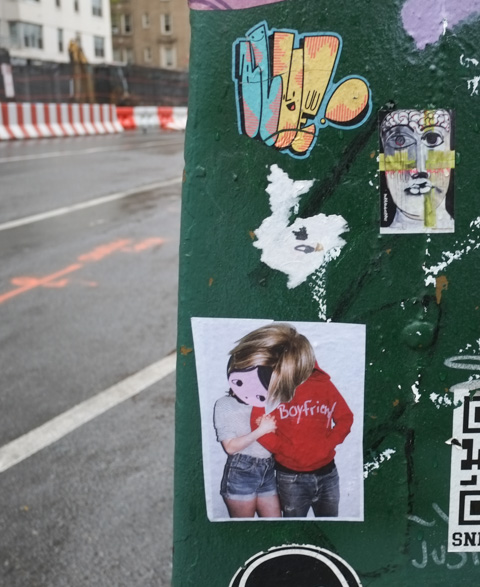
Phoebe paste-ups have been seen around New York City for a few years now. Sometimes she’s whimsical and sometimes she’s serious – she’s had a very busy life! She even has her own instagram page, Phoebe New York, where you can find all the other Phoebes!
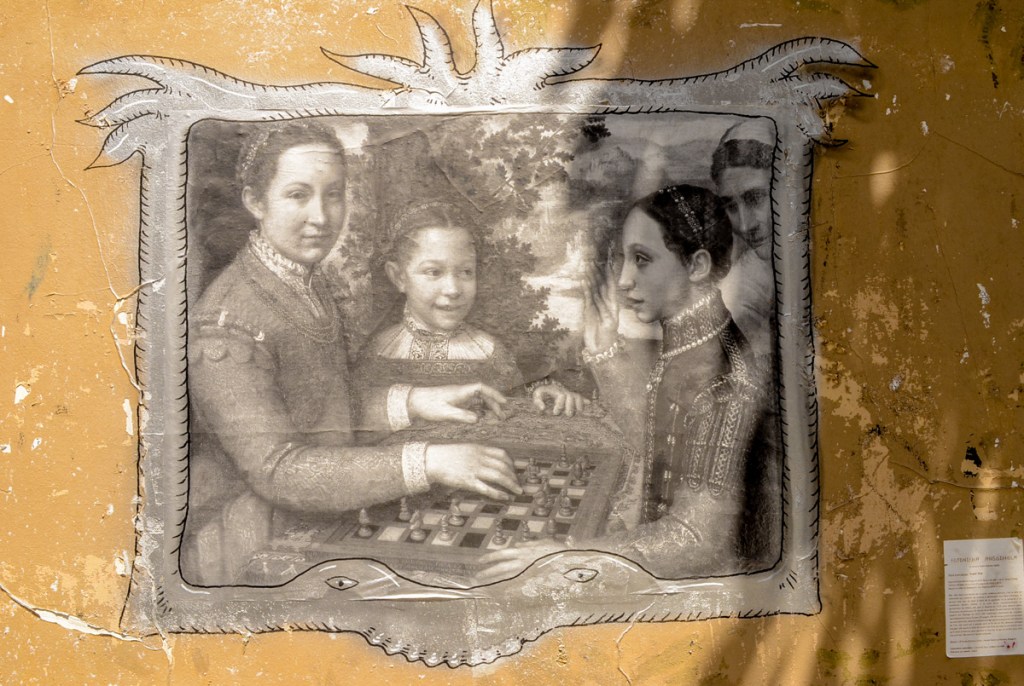
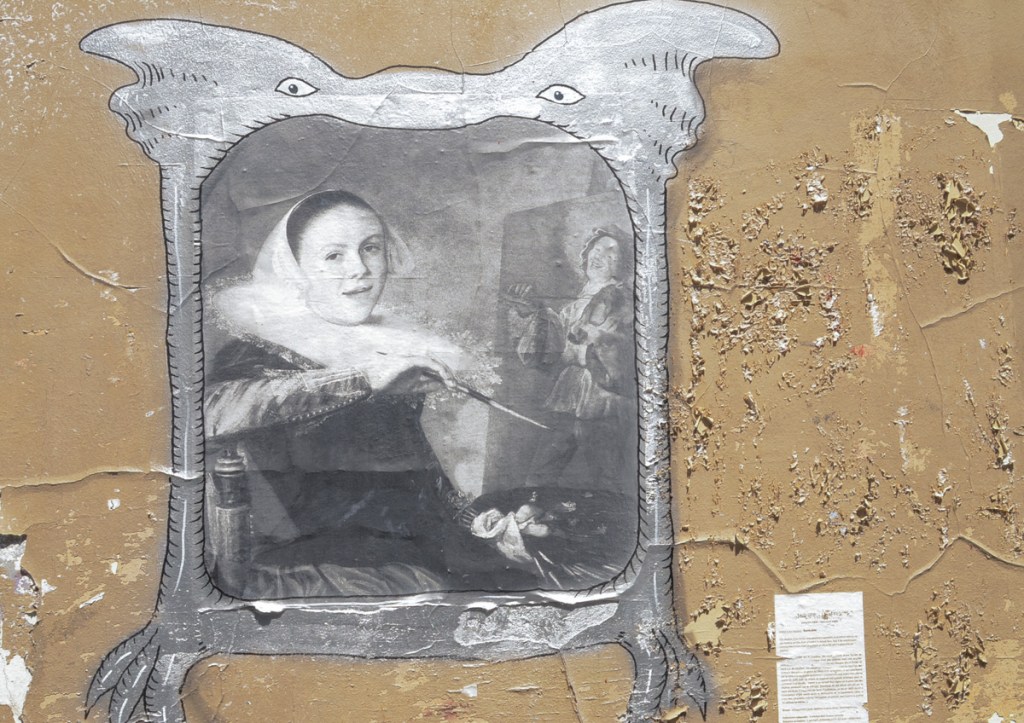
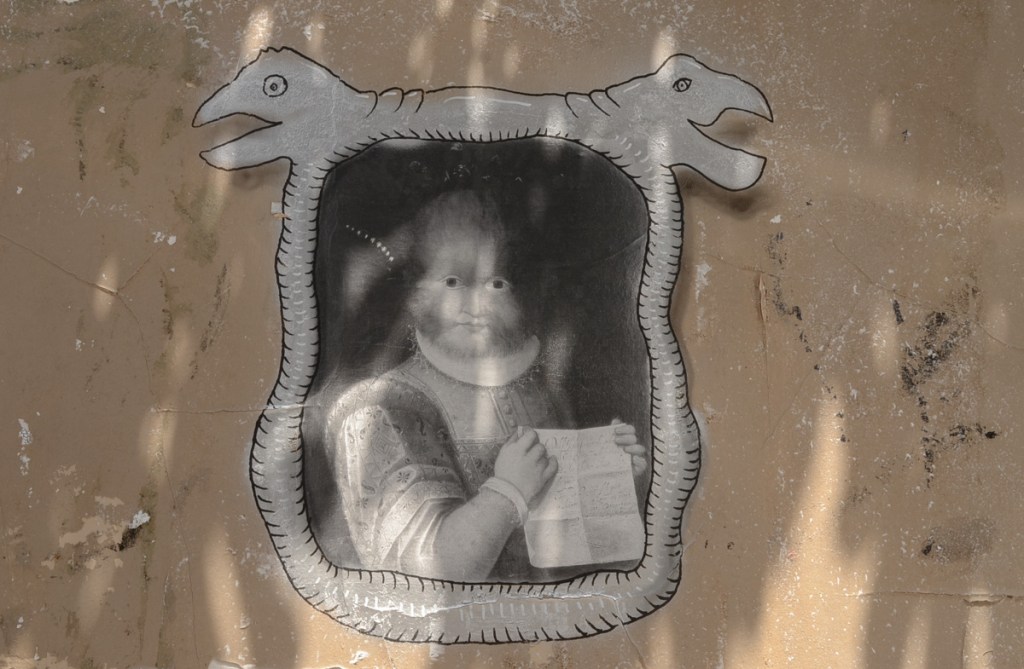
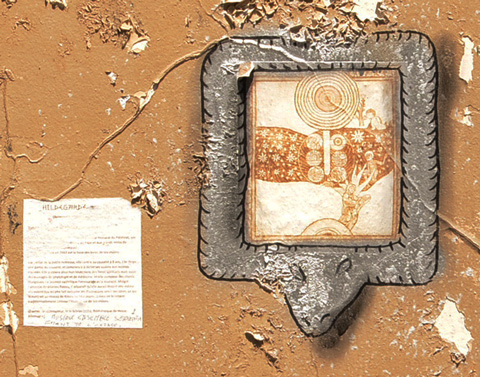
Street art of a slightly different kind…. Seen pasted on a wall on a street in Paris – a display of black and white prints of famous paintings by women artists from over the centuries.
below: ‘Game of Chess’ by Sofonisba Anguissola (c1532-1625, Italian)
below:Self Portrait by Judith Leyster (1609-1660, Dutch)
below: Portrait of Antonietta Gonzales painted by Lavinia Fontana. (1552-1614). She was possibly Italy’s first professional painter. The subject of the painting, Antonietta, suffered from a condition known as hypertrichosis (aka werewolf syndrome), a rare genetic disorder that results in excess body hair. Antonietta’s father also had the disorder as did two of her sisters.
below: A man’s portrait by Rosalba Carriera (1673-1757, Venetian)
below: ‘Portrait of a Lady as a Vestal Virgin’ by Angelica Kauffman (1741-1807), a Swiss Neoclassical painter. Her father was also a painter. He started teaching her at an early age and by 12 she was already known as a painter in her own right. Kauffman was one of only two women founders of the Royal Academy in London.
below: “Still Life with Flowers and Gold Trophies” by Clara Peeters (1589-1657, Flemish)
below:
Another still life with flowers, this one by Rachel Ruysch (1664-1750). She was a Dutch artist whose painting career lasted more than 60 years; she was a master at painting still lifes with flowers.
below: ‘The Redeemer’ by St. Hildegard von Bingen (c1098-1179), with a copy of the original (in colour and unfaded) underneath. St. Hildegard, or Sybil of the Rhine, was a German Benedictine abbess with many accomplishments to her name.
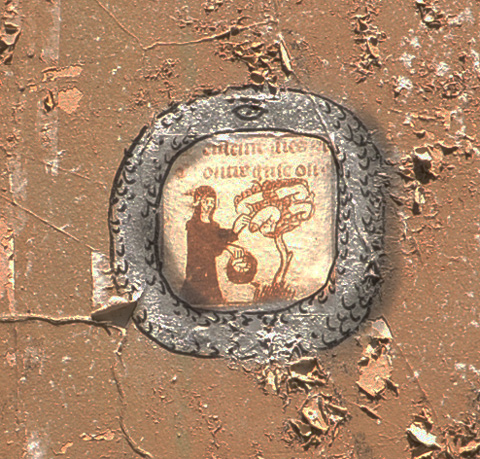
below: ‘The Penis Tree’. Between about 1325 and 1353, Jeanne and Richard de Montbaston printed books and manuscripts including the “scandalous, rude and misogynistic” poem, the ‘Roman de la Rose’. The first 4,058 verses were written by Guillaume de Lorris in the early 1200s and they describe a courtier’s attempt to win over a woman. About 40 years later, Jean de Meun (aka Jean Chopinel) wrote another 19000 lines. This was before the invention of the printing press so each manuscript was hand drawn. The picture shown here of a nun picking penises from a tree is attributed to Jeanne de Montbaston.
below: Crazy P (= Crazy Partners) creation, a collaboration between a number of artists. First, a skull by Cannibal Letters. Unfortunately, the skull’s white teeth are hidden by the construction rubbish in front of it.
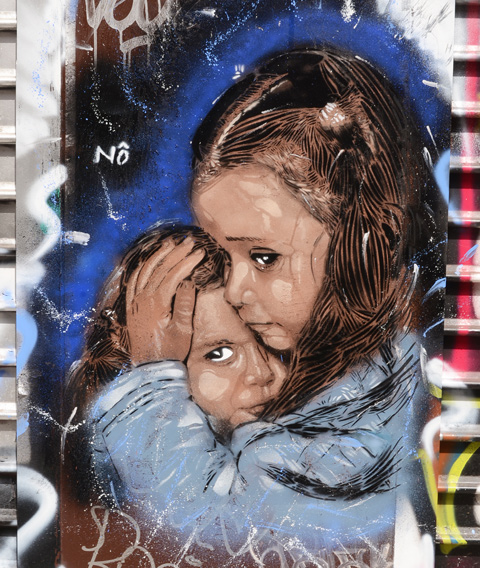
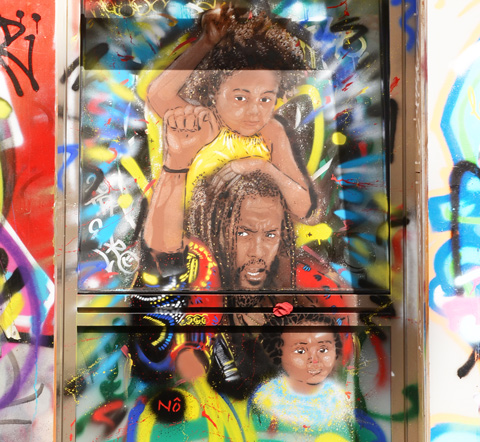
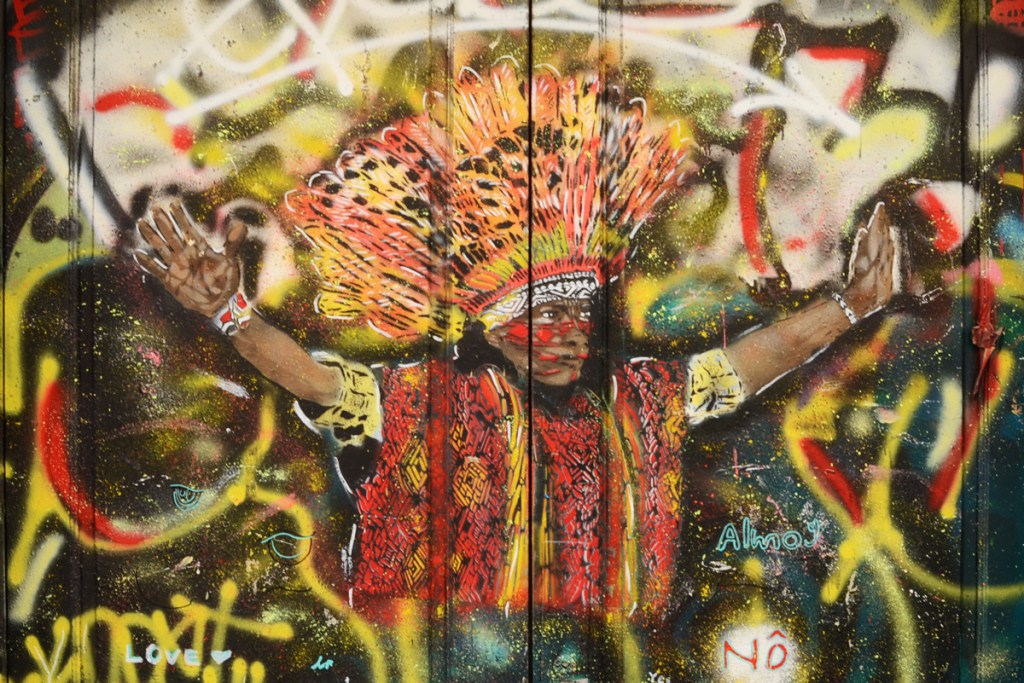
These six street art portraits by Nô were seen on or near Rue Dénoyez in Belleville, Paris…. an older aboriginal Australia with his decorated boomerang, two young girls looking out for each other, another child, a man in dreadlocks, a green eyed woman in a head scarf, and an indigenous American in a feather head dress.
There are many more examples of his portrait painting on instagram, no street art
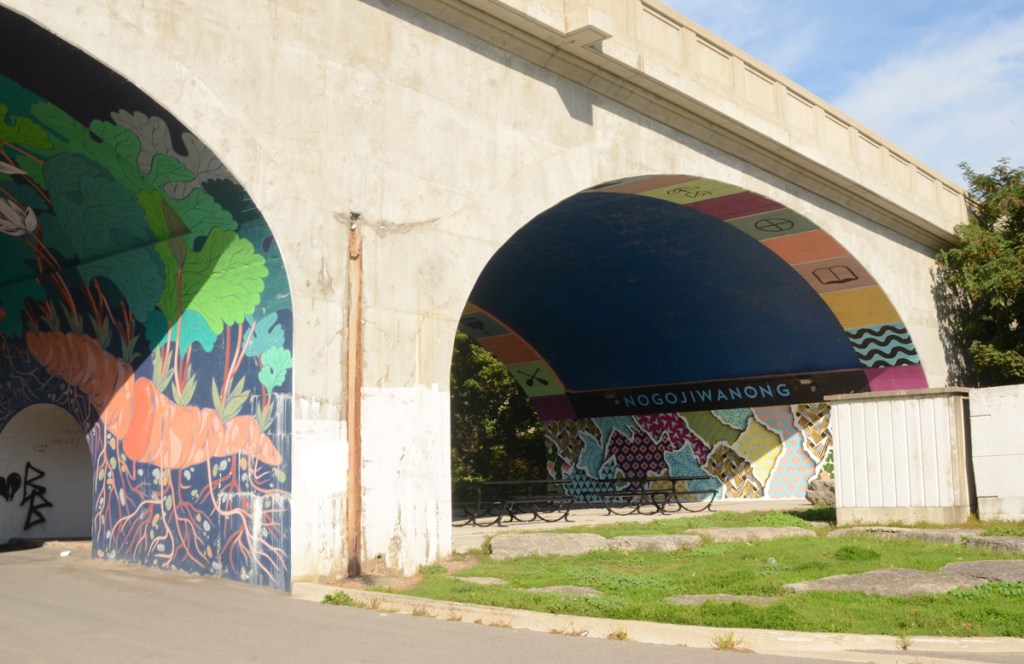
In Peterborough Ontario the Hunter Street bridge crosses the Otonabee River. The west end of the bridge is in downtown while the east ends at James Stevenson Park. It’s in the park that you’ll find the paintings.
Back in 2015 and 2016 two of the arches under the Hunter Street bridge were painted. Nogojiwanong is an Ojibwa word for “place at the end of the rapids” and it was their name for the area that is now Peterborough.
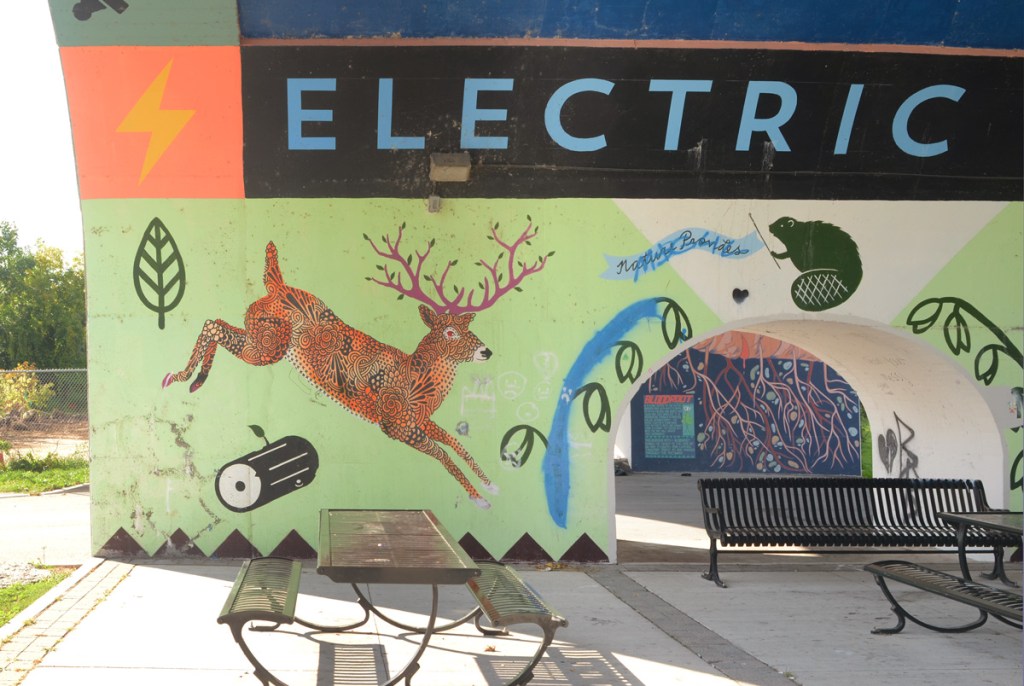
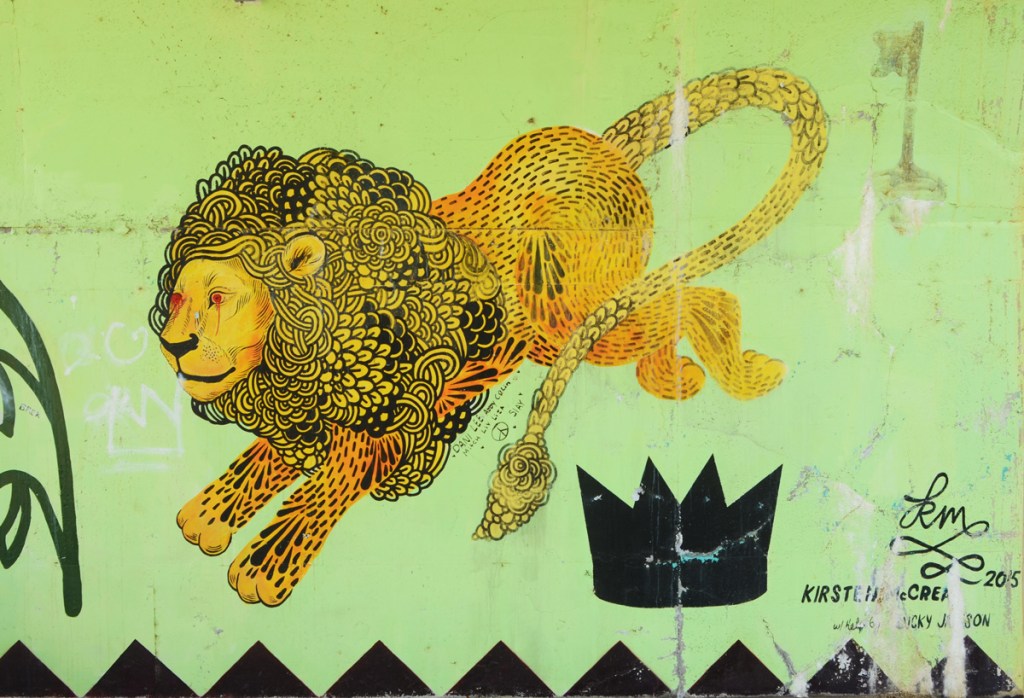
Facing the Nogojiwanong mural, and not visible in the above photo, are three animals – deer, beaver, and lion. Now the town is referred to as Electric City. Why? Because on May 24, 1884 Peterborough was the first town in Canada to have electric street lighting on downtown streets. Power was provided by the London Street hydroelectric water plant, also built in 1884.
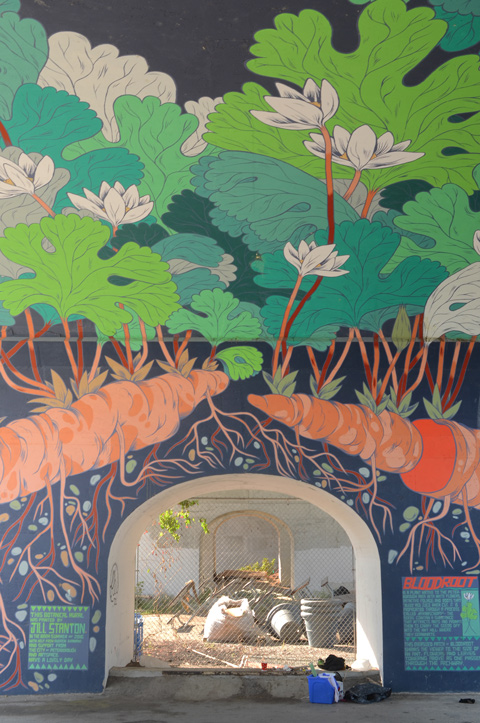
The murals on this arch were painted by Kirsten McCrea, with the help of Vicky Jackson (at least that’s what it looks like in the bottom right of this photo).
Bloodroot is a plant native to the Peterborough area. It gets its name from the fact that it bleeds red when the stems are cut. According to the text in the mural (bottom right, below), bloodroot propagates through a process called myrmecochory which is seed dispersal by ants. The seeds have external “appendages” that are rich in food that ants like. Once this food is consumed, the seed is discarded and can germinate.





















 Eyes on the Streets