Painted in 2008, this mural depicts life in the early days of the fishing communities of Newfoundland. It is found on a retaining wall on Battery Road, one of the narrow hilly roads in the Outer Battery neighbourhood.


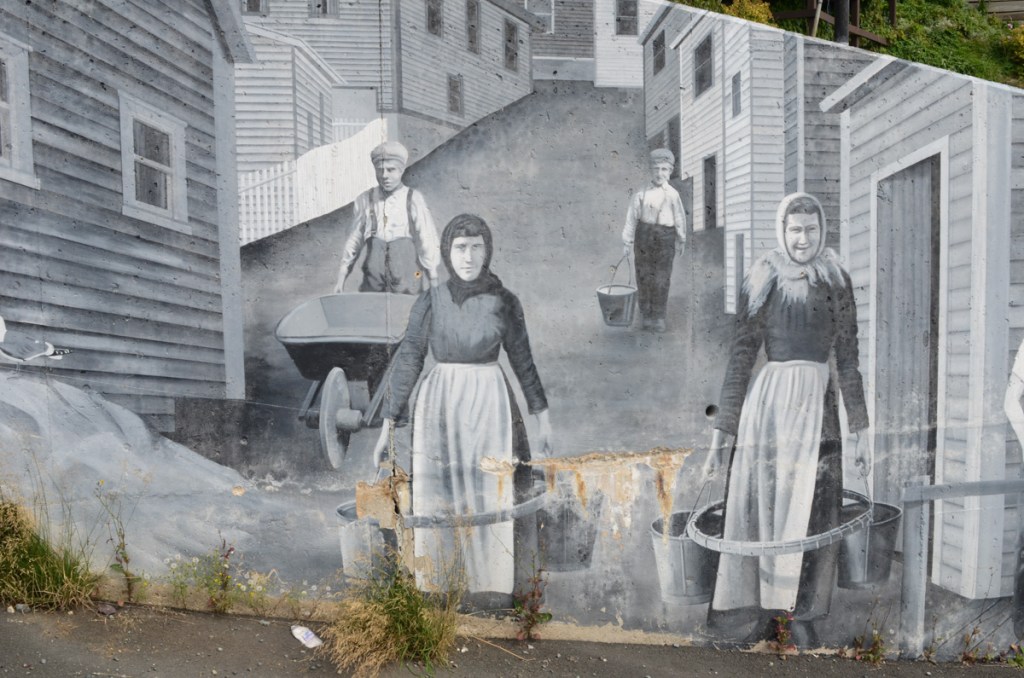
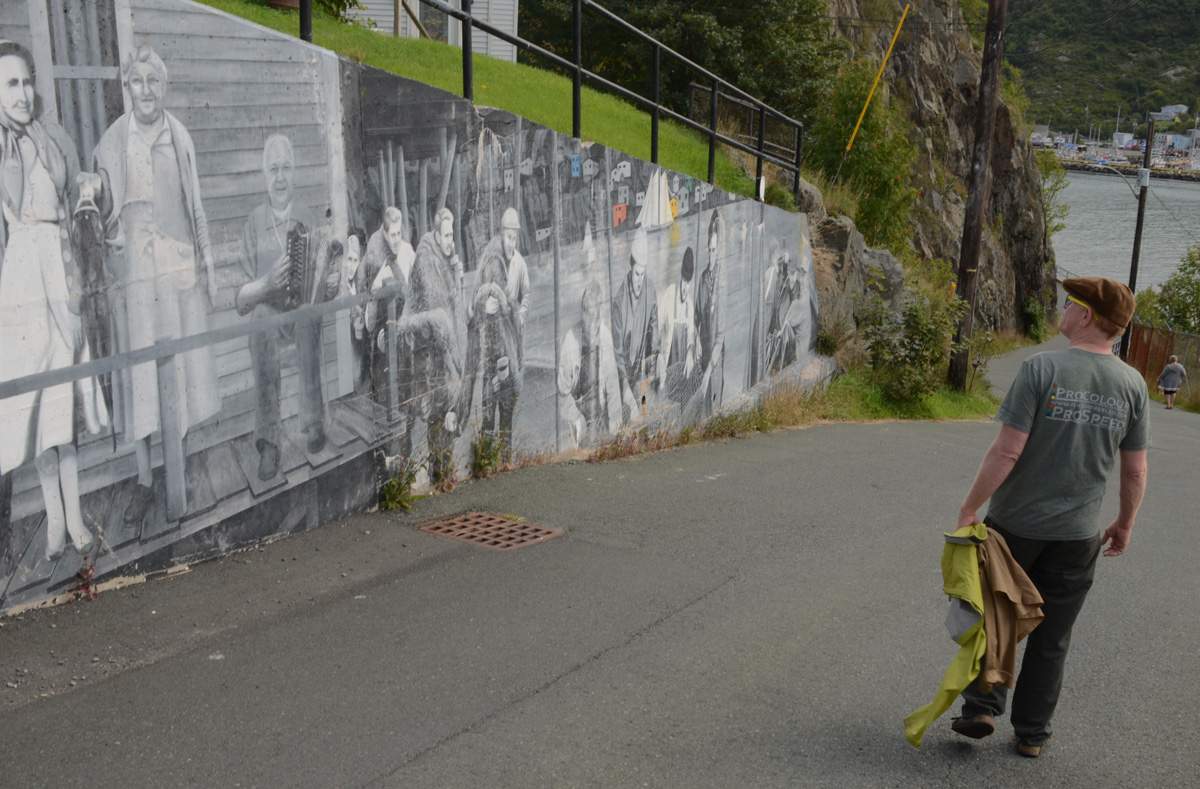

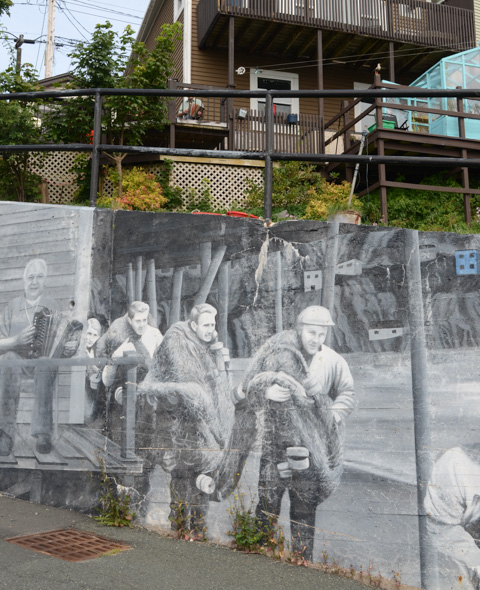
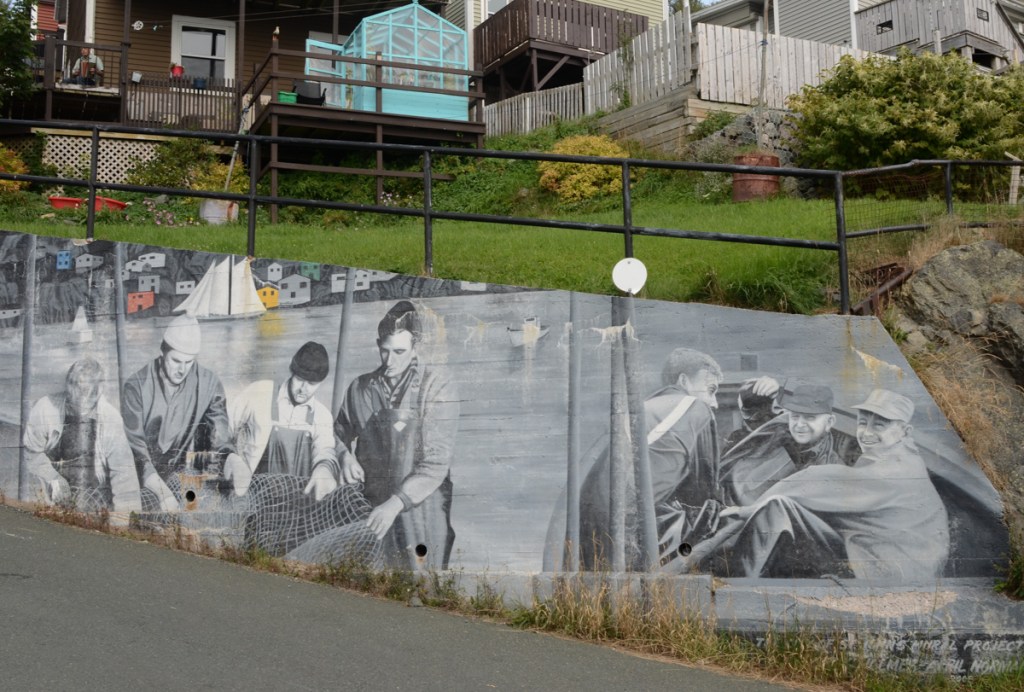
Painted in 2008, this mural depicts life in the early days of the fishing communities of Newfoundland. It is found on a retaining wall on Battery Road, one of the narrow hilly roads in the Outer Battery neighbourhood.
In an alley near Dovercourt and Queen West in Toronto are two garage door murals unlike any others.
below: ‘Elephancy’ by Zirco Fish – It’s an elephant but it’s not. Tusks like an elephant and the ears seem to be big a floppy. But the mouth is like a beak and the eyes are certainly not those of an elephant. A crazy fantastical creature, the product of someone’s imagination.


below: ‘Scrat Attack’ by Zirco Fish.

New Dawn is the name given to the latest laneway street art mural painting project. It is a celebration of the 10th anniversary of StreetARToronto.
The alley runs parallel to Queen Street West (just west of Ossington); it crosses Brookfield and Fennings streets.

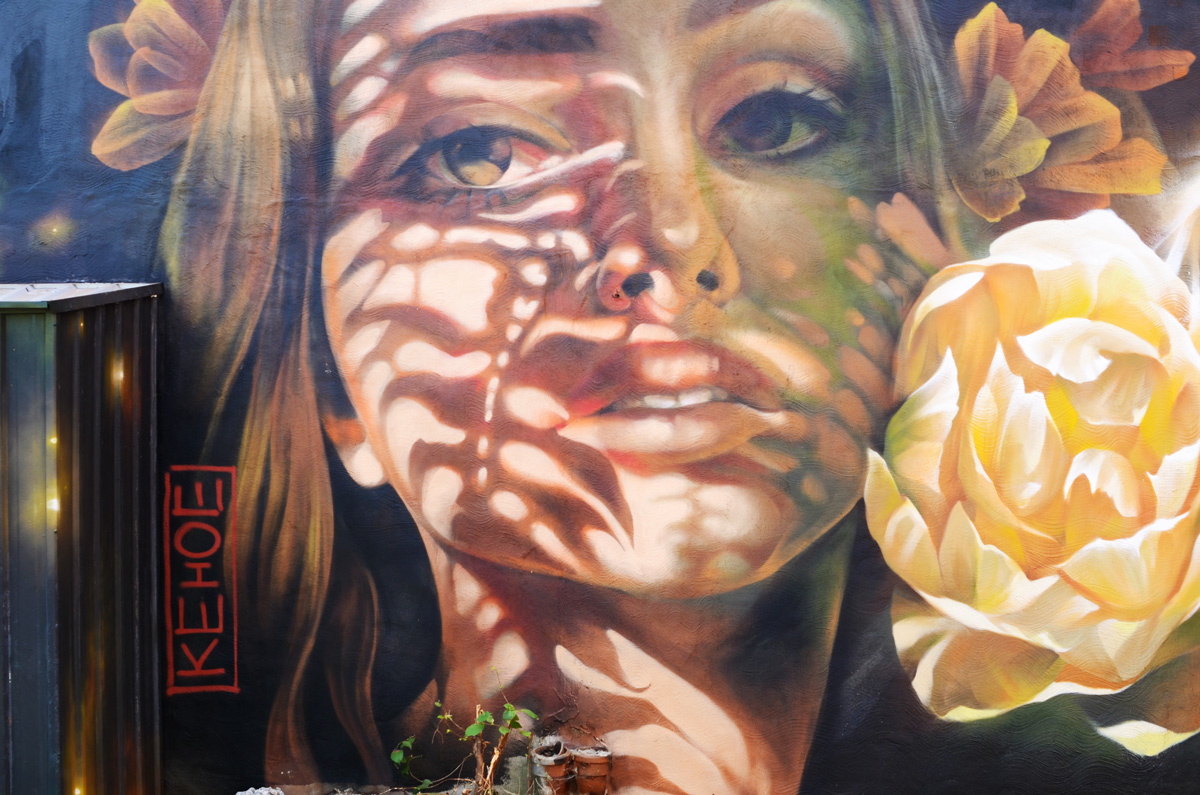
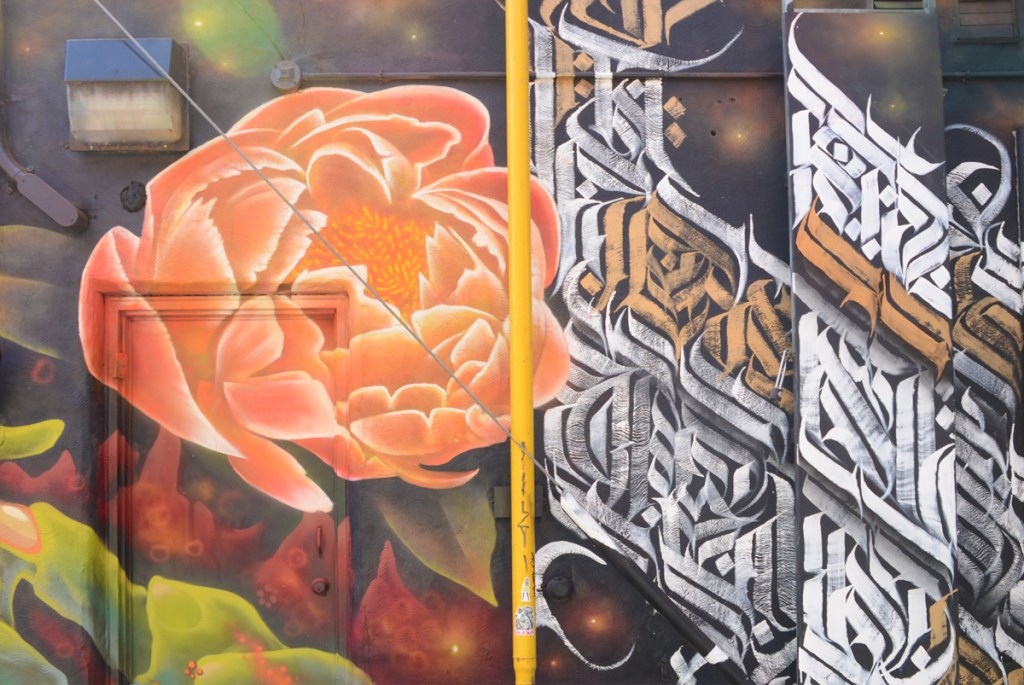
The largest mural of the project is a collaboration between five artists: Meagan Kehoe, Kreecha, Bacon, Sight, and Nick Sweetman.


This post also appears on the As I Walk Toronto blog.
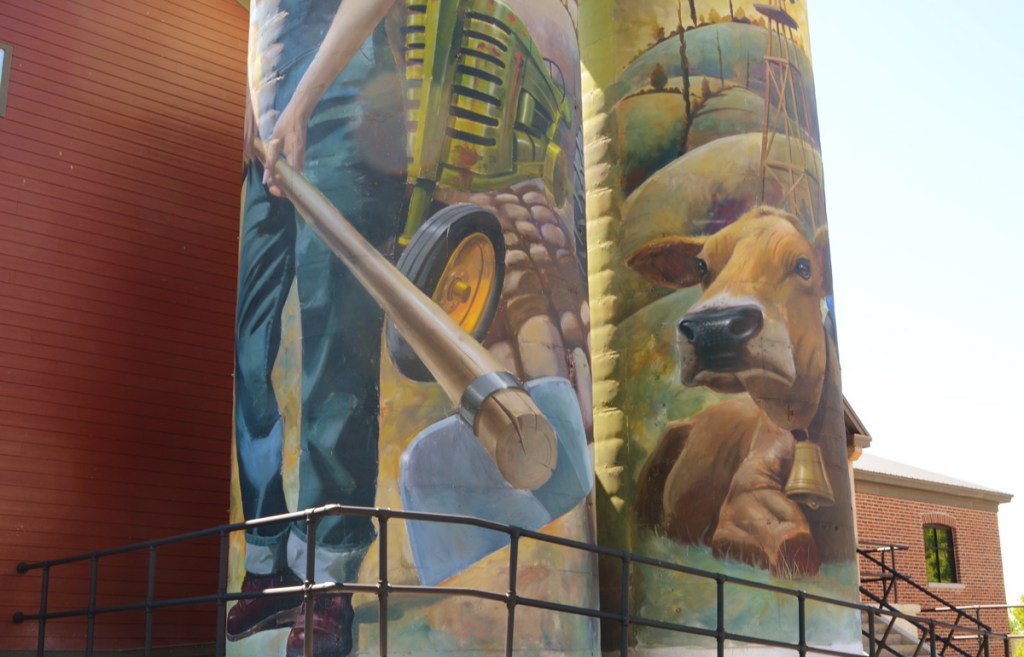
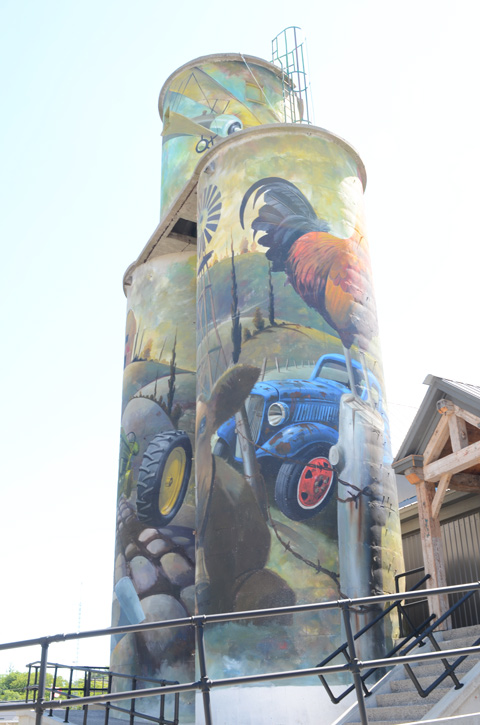
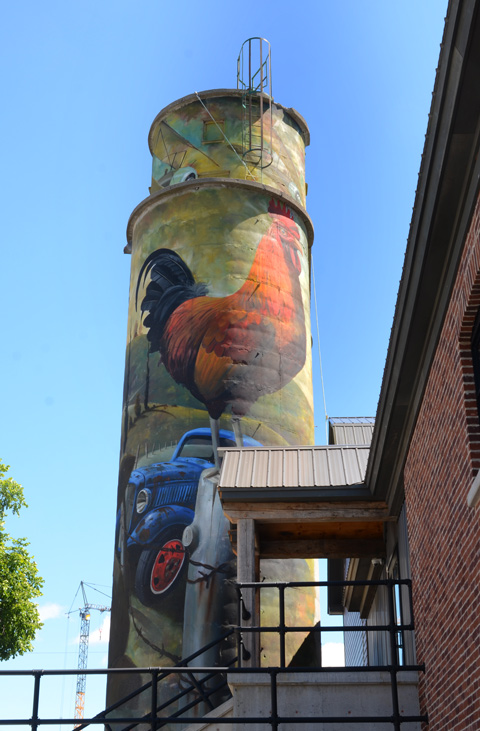
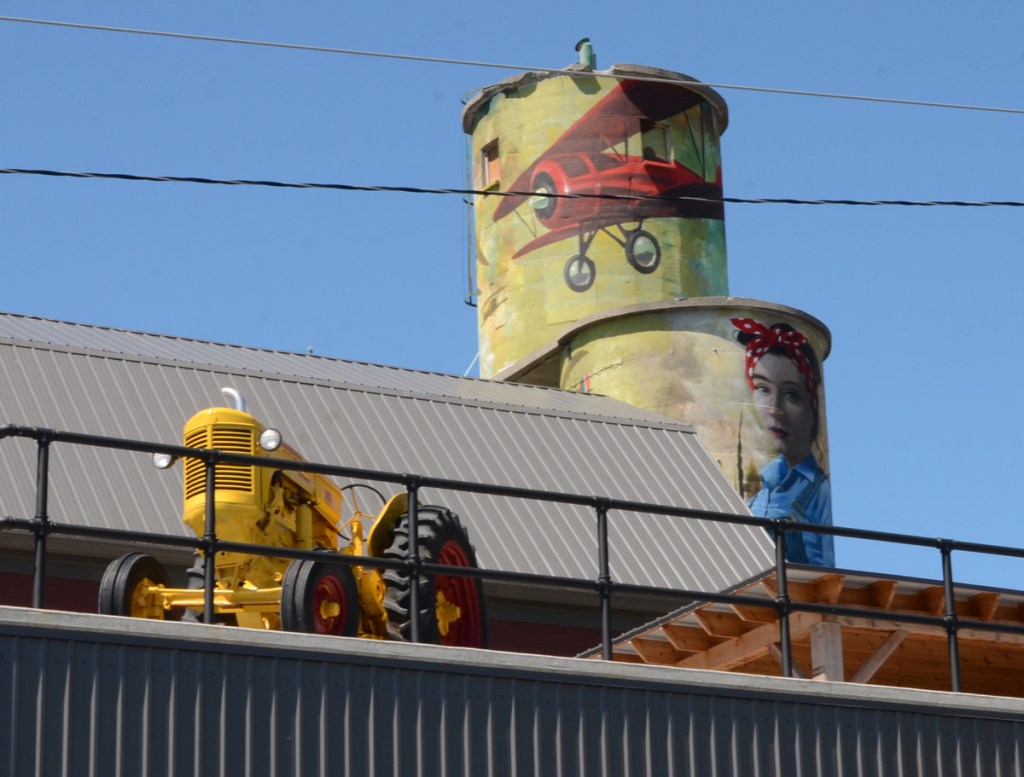
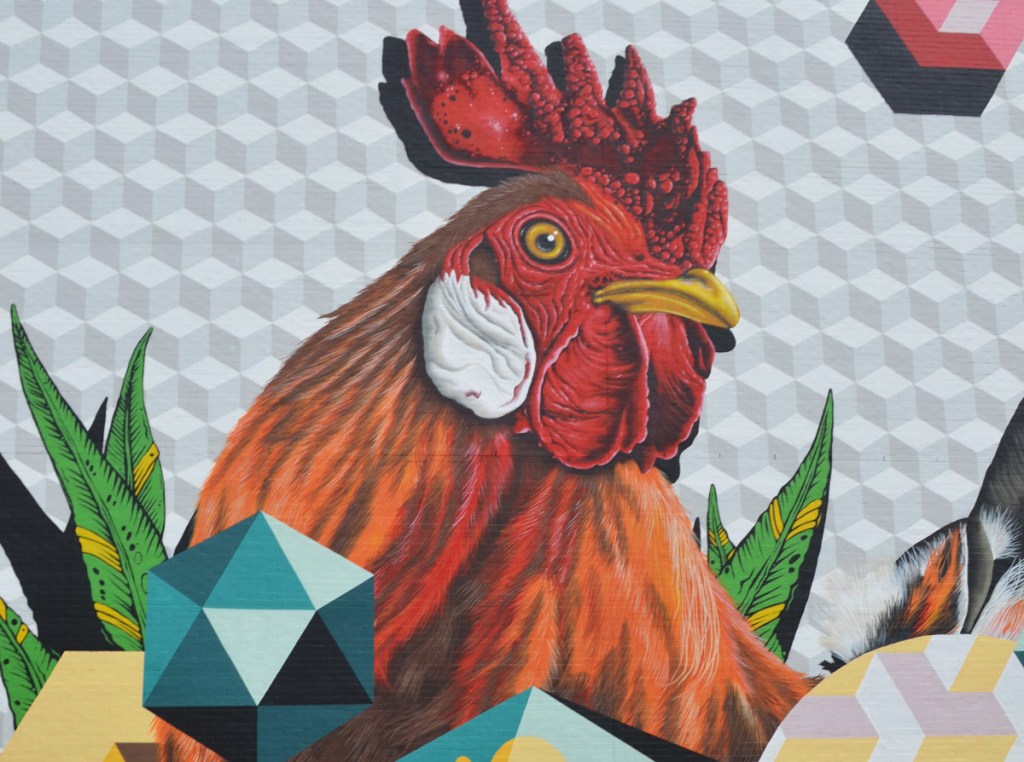
… and rooster … and tractor.. paintings in Napanee Ontario.
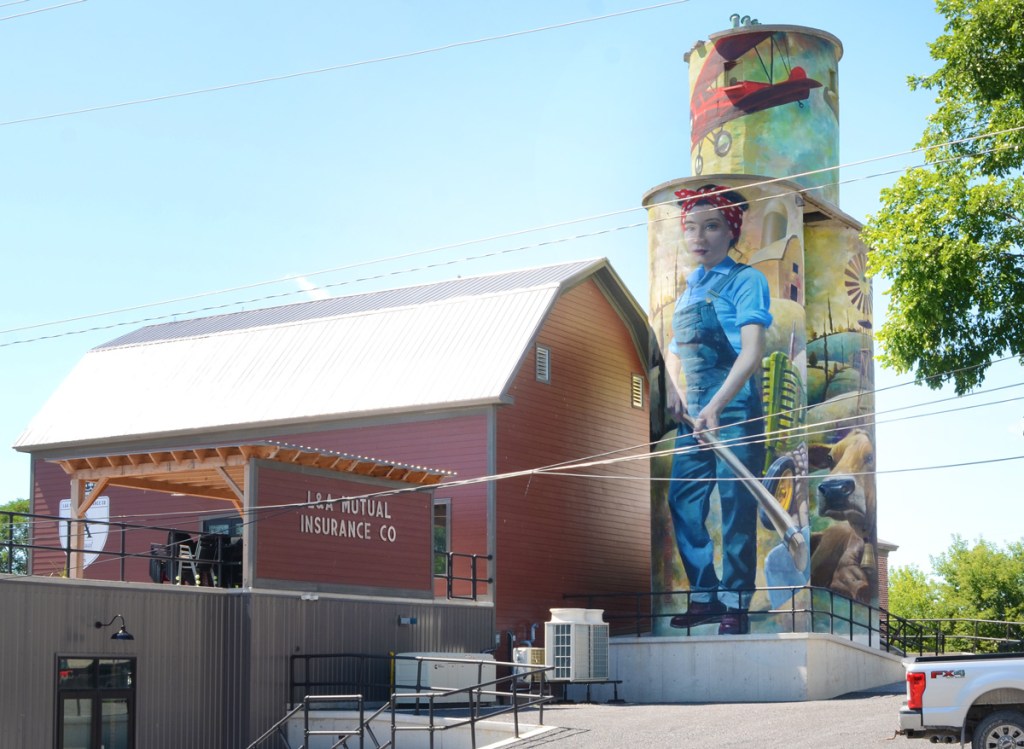
Once used for storage, these silos were painted by Shane Goudreau as part of the redevelopment of the site – from County Depot to insurance company. An excellent way to preserve some of the history of the area.
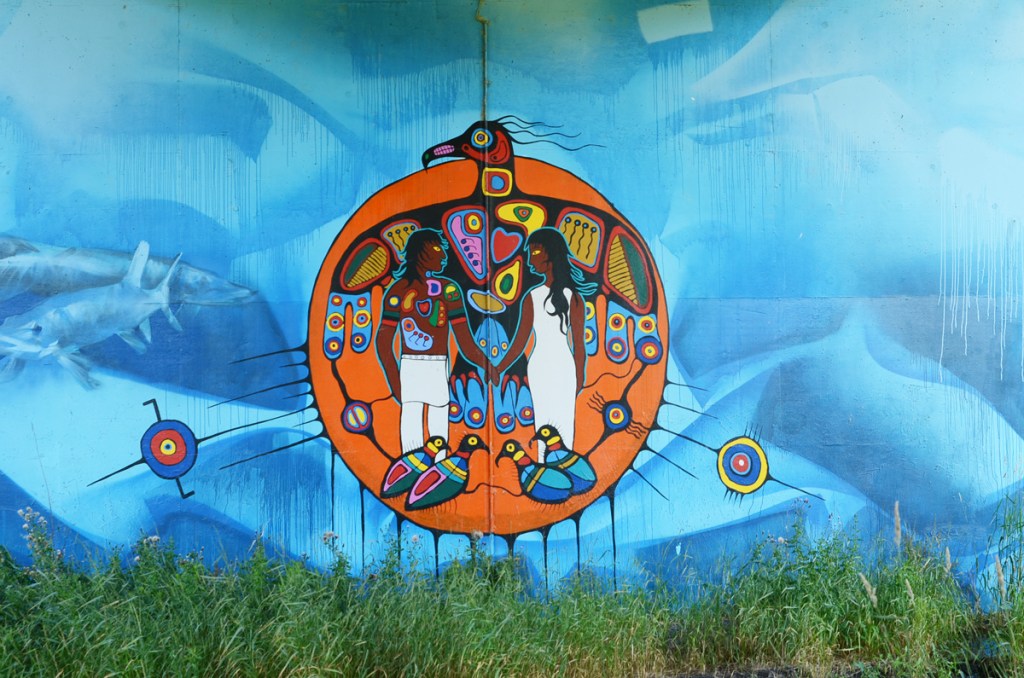
In Toronto, subway tracks cross above the Humber River at Old Mill station. The concrete pillars that support the subway bridge have been covered with many watery blue First Nations themed murals.
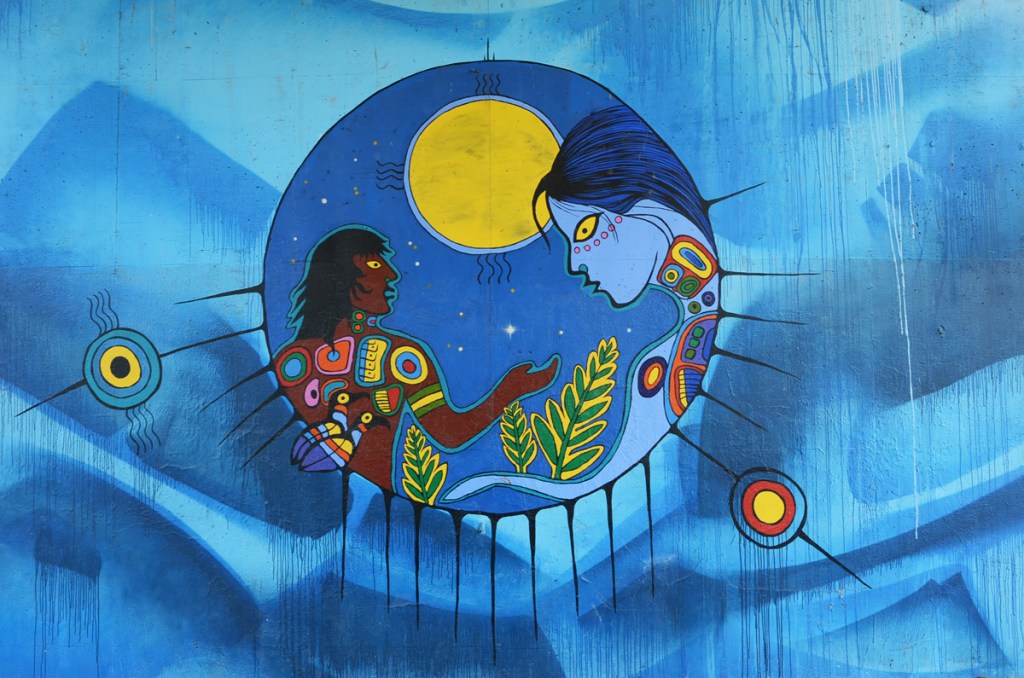
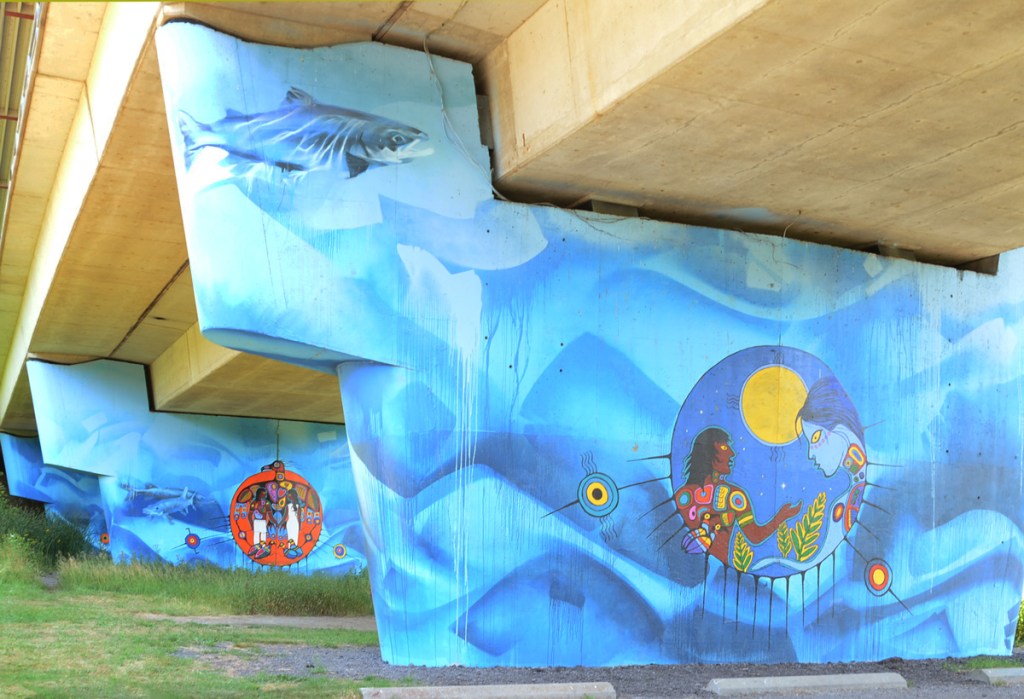
below: The artist, Philip Cote, described the story behind this image on the ArtworxTO website (see link); like all cultures, the Anishinaabe have an origin story. In the beginning there was just Spirit. “And that spirit decided to send signals out into the universe and waited for a response. And when no response happened that spirit called the signals back and said, “As you come back to me, create light in the universe”. And at that moment they had light and dark in the universe. And that is the beginning of the Anishinaabe cosmology. Everything for Anishinaabe is made of light and dark. Everything we look at has a spirit, everything, the ground, the rocks, the sand, the trees, the birds, the plants, everything is… and even our sun and our Mother Earth and the moon, they all have a spirit.”

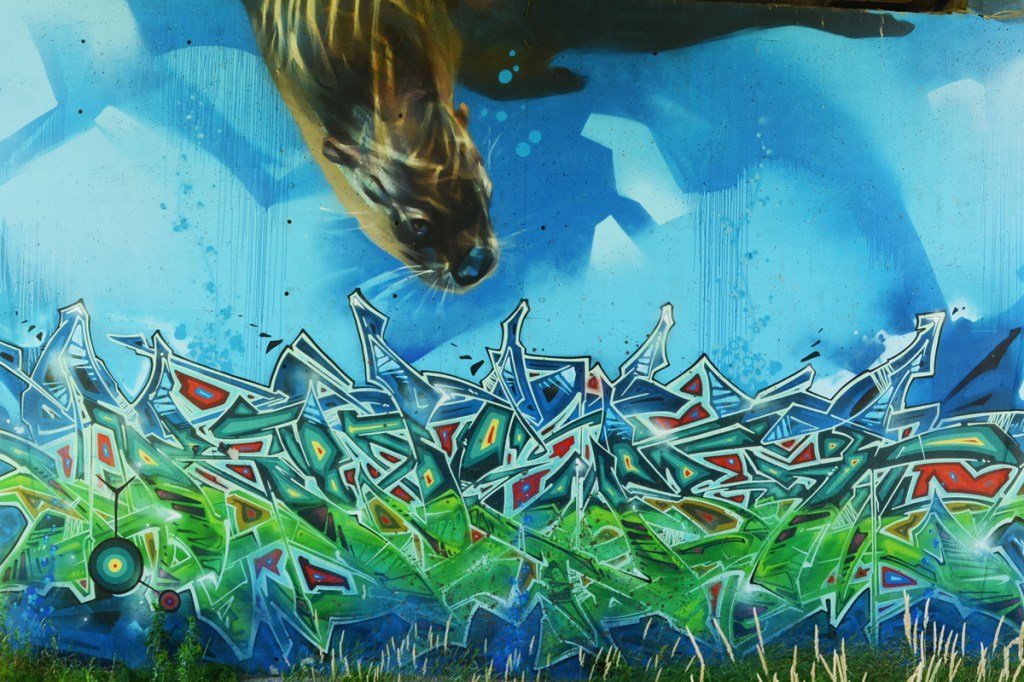
The blues of the water, the Humber River, were painted by Kwest. Water is the Underworld in Ahishinaabe cosmology and the Guardians of this Underworld are the fish. Another artist, Jarus aka (Emmanuel Jarus), painted the fish.

Most of the paintings have a well defined circle. This is the boundary between water and earth, between the spirit world and the physical world. But there are connections between the two worlds – all living things are connected and we are all connected to the Spirit World.



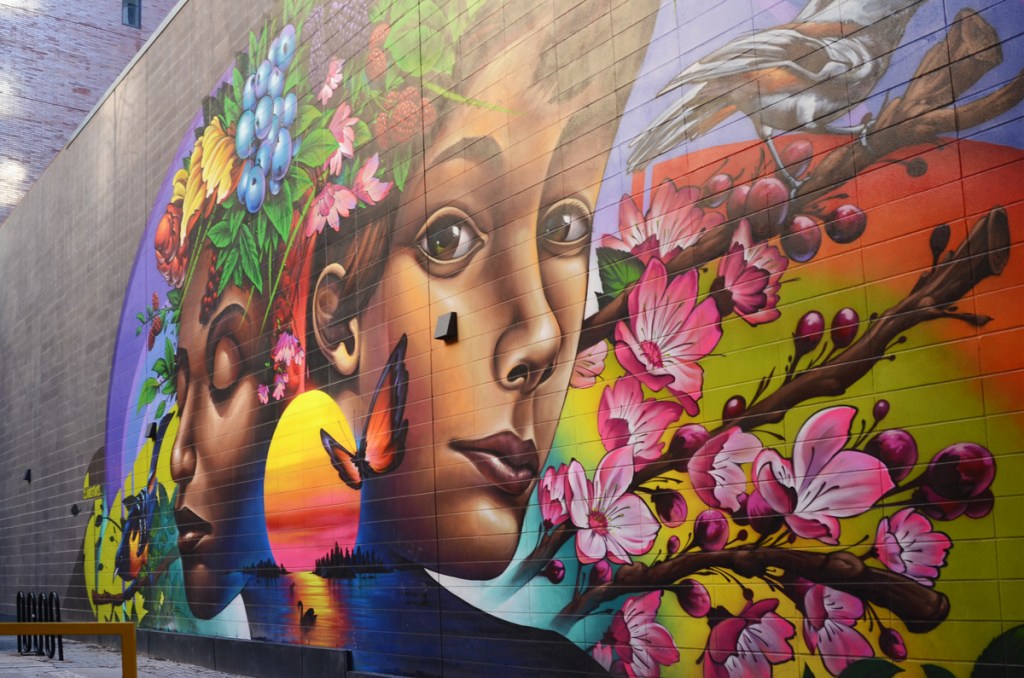
Shalak Attack and Bruno Smoky have painted another large colourful mural. This one features two women, a baltimore oriole, and many flowers.

below: Close up of the bird, a baltimore oriole


below: Adorned with leaves, flowers, and fruit – blueberries, raspberries, and blackberries. Lots of cherry blossoms and another bird too.
There is a large mural (40′ x 50′) in downtown Toronto on the west wall of the St. Lawrence Centre for the Arts on Front Street East. It was painted by Quentin Commanda, aka Que Rock.

below: Commanda’s “Artist Statement” – see below the picture to read the transcription.

Artist Statement:
This mural is meant to be a visual healing experience. The seven rings around Grandfather Sun represent the seven Grandfather teachings of the Anishinaabe people: Wisdom, Love, Humility, Respect, Honesty, Courage, and Truth. There are many layers of sacred geometry patterns on the mural.
The skyline includes the medicine-wheel teachings, Grandmother Moon and the 13 grandmother clan systems. The turtle shell represents North America’s creation story, the 13 full moons per year, and the seven grandfather teachings.
The entire mural also represents the original Peace Treaty of the Six Nations on Turtle Island (North America). The story of the Six Nations Treaty starts with the original five Nations of Turtle Island: the Plant Nation, the Insect Nation, the Bird Nation, the Fish Nation, and the Animal Nation. All five Nations had to agree to let the Human Nation live here on Mother Earth. All five Nations agreed to be humanity’s teachers and the Human Nation was invited to share the land.
The Human Nation was given instructions on how to live on Mother Earth, walk gentle on Mother Earth, learn one new thing every day, and share with one another. These are some of the original instructions given to the Anishinaabe people. The bear represents a Medicine Clan. The Mukwa (bear) is a healer, it is the only animal who communicates with all Six Nations.
The bottom panel represents my story from the past, present, and future. The first character with the microphone is the future and present me. The second character represents my past as a native child with my dog Miangun and the path of healing I have taken to decolonize myself back to the Anishinaabe child I was born to be.
My mother is a residential school survivor and so was my father. I am no different than the 215 children found in Kamloops, B.C. I survived to tell you this story and share my experiences. My community is still here and so am I.
The Artist is from Nbiising or Nipissing First Nation, his traditional name is Manitou Nemeen (Spirit Dancing) and he is from the Miangun Dodem (Wolf Clan).
The orange background on the mural represents the missing/murdered Indigenous peoples of Turtle Island.
The mural was commissioned by TO Live
below: A large mural by Birdo (aka Jerry Rugg), from the 2021 Mural Festival

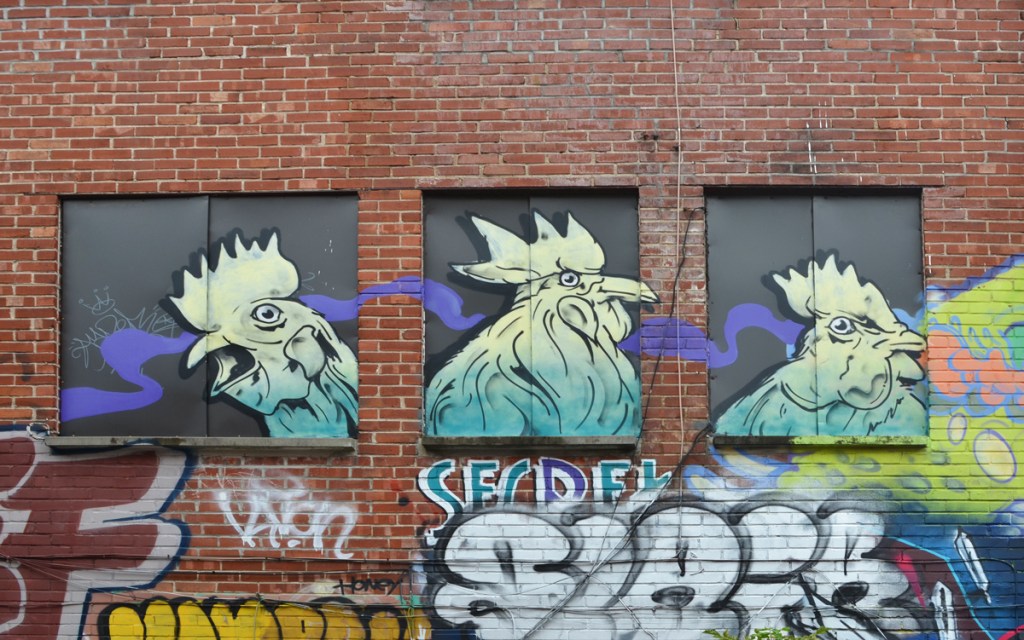
below: Three chickens in three windows..
below: Is it a pink chicken? In a bubble bath? With pink, yellow, and blue feathers? Mural by sbuone. (Portuguese rooster actually).

The previous blog post was about a large Montreal mural by Kevin Ledo that was a portrait of a woman called Mary Socktish. There are a number of other murals in the city that have a woman, or women, as the main feature. These are some of them – the following photos were taken on four visits to Montreal between 2015 and 2021 and some of these murals may no longer exist.
below: One of the older murals in Montreal, a graffiti granny, old woman by ASHOP Productions

below: A mural by five8art, a young woman looking skyward.

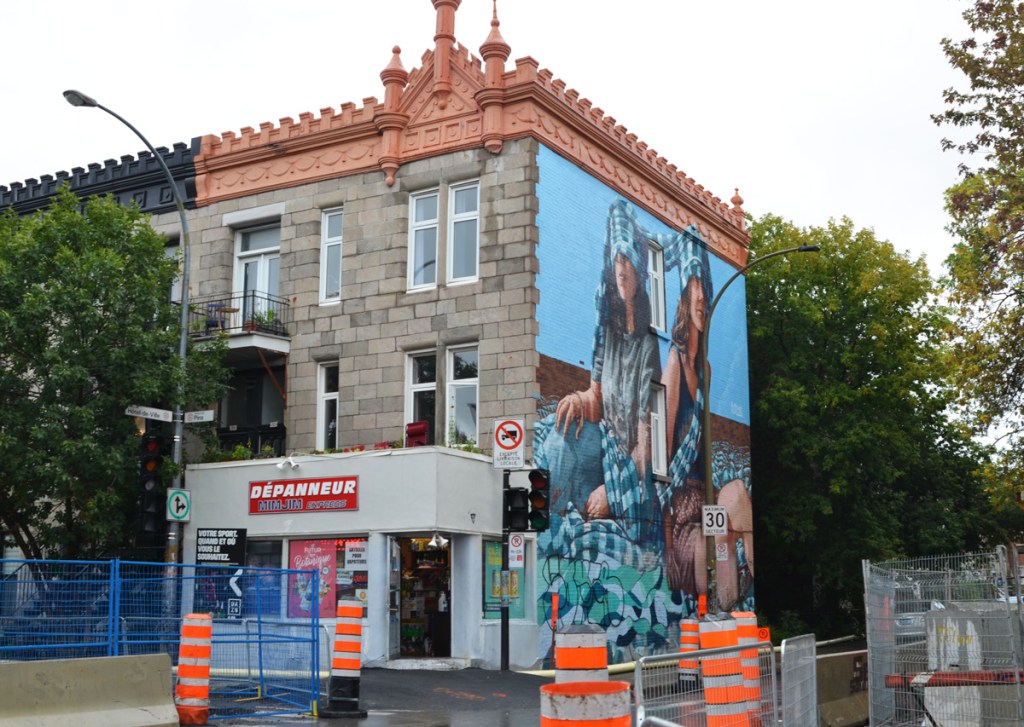
below: By a Depanneur at Pins and Hotel de Ville, a large mural of two seated women and their scarf by Australian artist Fintan Magee.

below: A mural by Rone, another Australian artist.
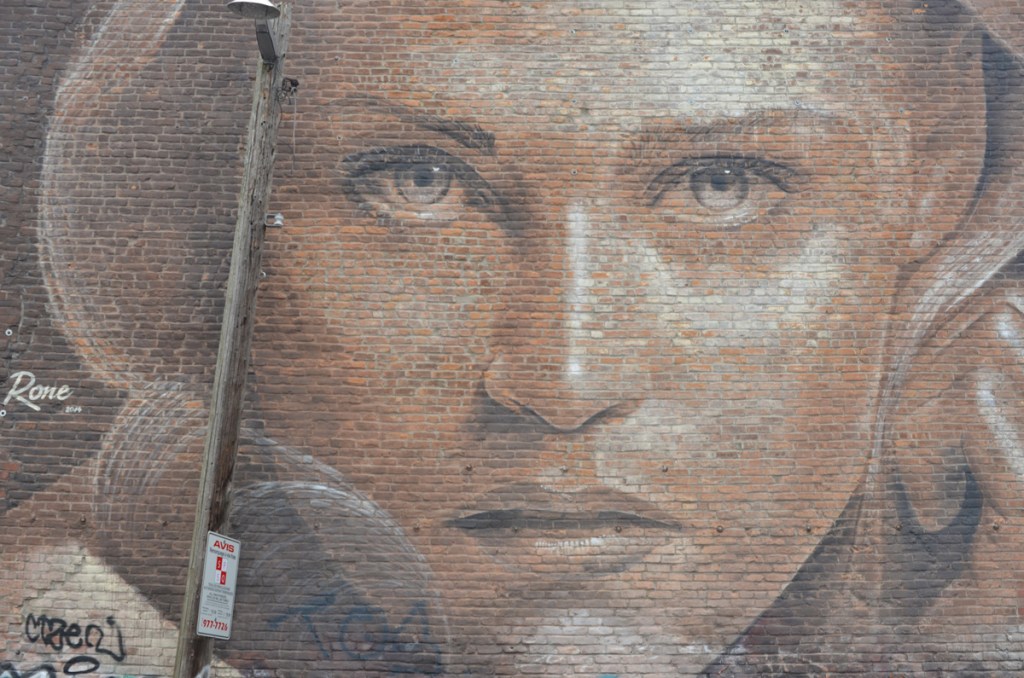
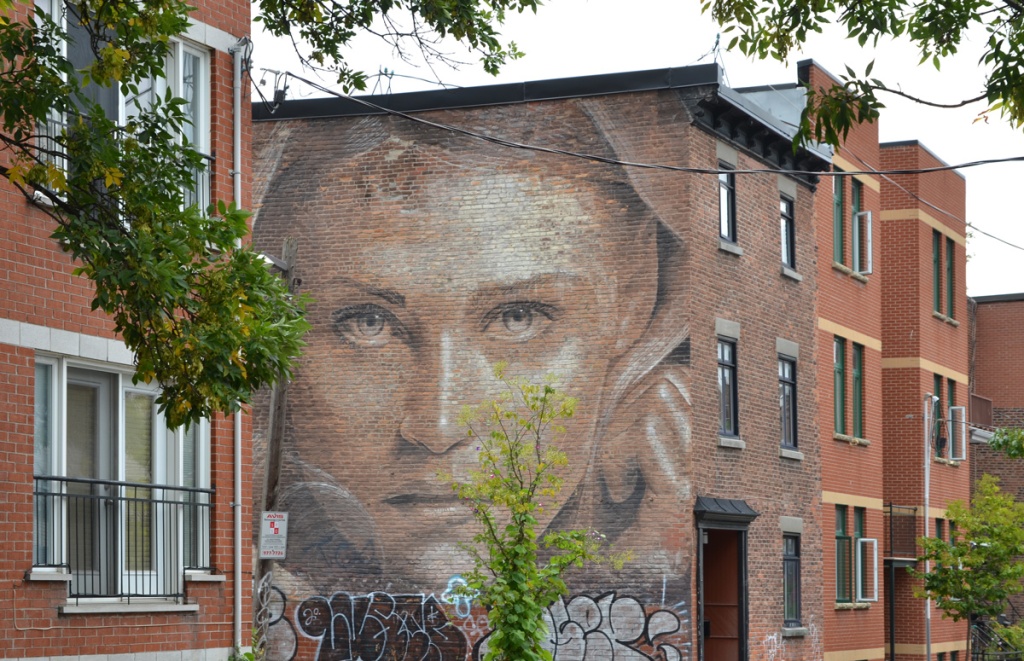
below: Sorry is Not Enough, a mural by Denial (or Enjoy Denial) with a shout out to Black Lives Matter

below: From 2018, this mural by Drew Merritt and Sainte Famille and Milton (photo taken in 2018 as well)

below: Street artist Nychos working on a mural
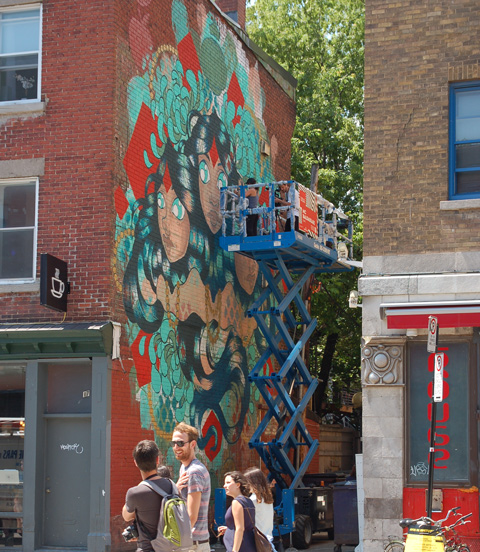
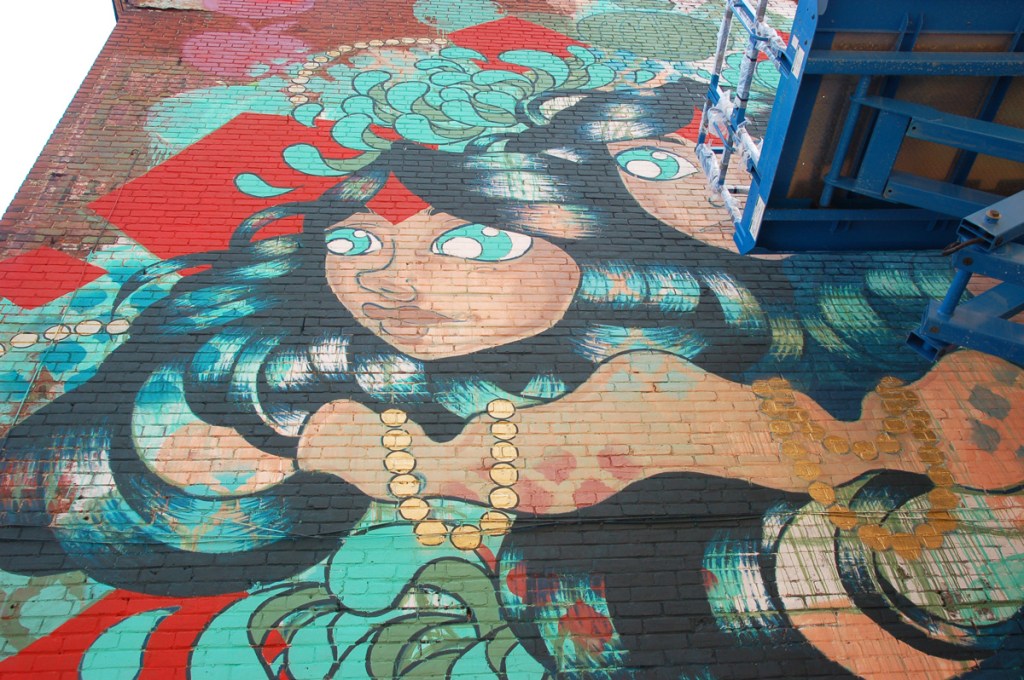
below: A tribute to Lea Roback (1903-2000), by Carlos Oliva (aka Hsix) in 2014. Roback was a textile worker who became a trade union activist, feminist and pacifist (among other things). She fought for woman’s suffrage in Quebec (1936), she played a role in helping to organize 5,000 garment workers who had been on a three-week strike in 1937, and that is only a small fraction of what she accomplished.

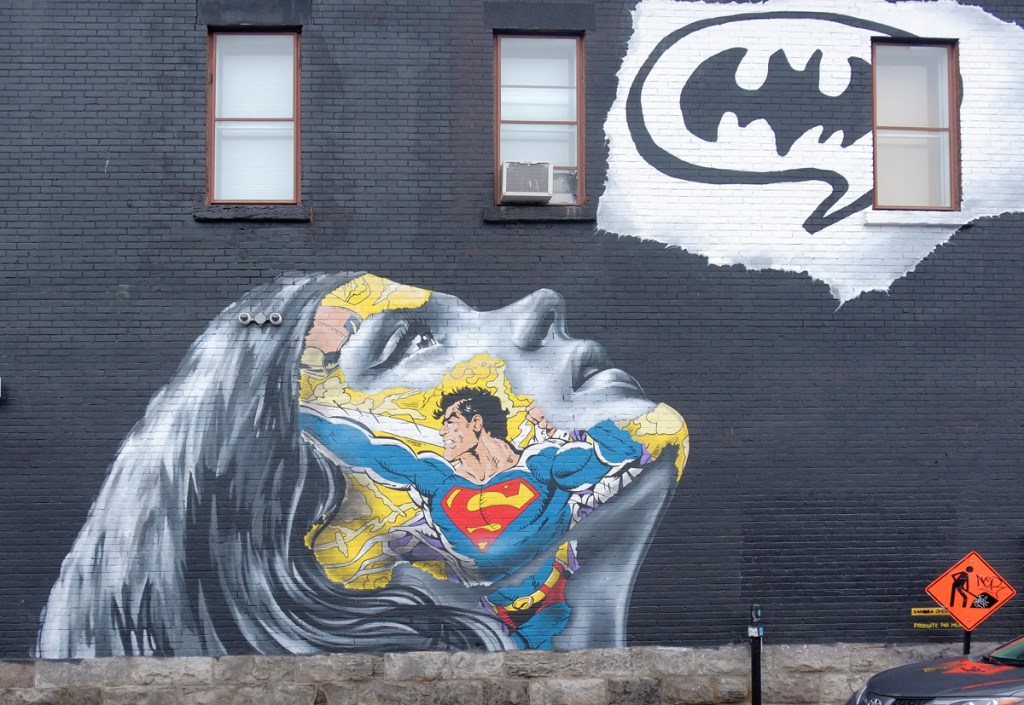
below: by Sandra Chevrier, pop culture references to Superman and Batman
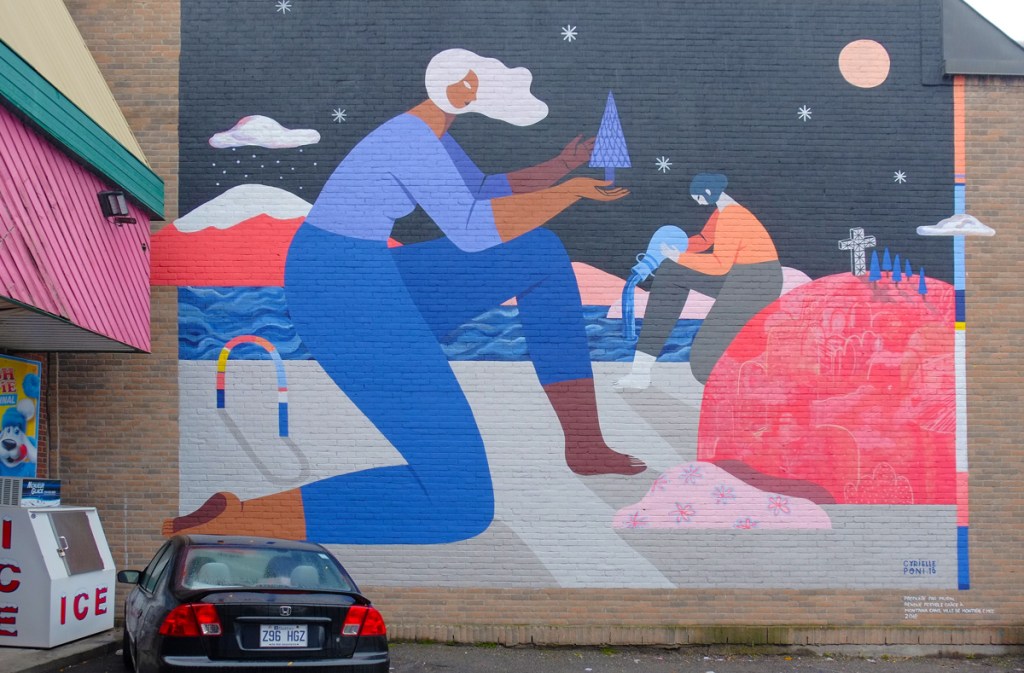
below: A collaboration between Cyrielle Tremblay and Poni (aka Hilda Palafox, painted in 2018. Working in an imaginary garden maybe?
below: A whimsical black and white of women astronauts, guitar players, skate boarders, astronomers, and others. It is the work of Le Monstr, aka Benjamin Tran.

below: A mural from 2014 putting a spotlight on the call for justice for missing and murdered indigenous women.

Another large mural in Montreal painted by Kevin Ledo is this portrait of Mary Socktish of the Hupa tribe in Northern California . This 2014 work is based on an old photograph from a series on the Hupa people, taken by Edward Curtis in 1923.


 Eyes on the Streets