There is a large mural (40′ x 50′) in downtown Toronto on the west wall of the St. Lawrence Centre for the Arts on Front Street East. It was painted by Quentin Commanda, aka Que Rock.
below: Commanda’s “Artist Statement” – see below the picture to read the transcription.
Artist Statement:
This mural is meant to be a visual healing experience. The seven rings around Grandfather Sun represent the seven Grandfather teachings of the Anishinaabe people: Wisdom, Love, Humility, Respect, Honesty, Courage, and Truth. There are many layers of sacred geometry patterns on the mural.
The skyline includes the medicine-wheel teachings, Grandmother Moon and the 13 grandmother clan systems. The turtle shell represents North America’s creation story, the 13 full moons per year, and the seven grandfather teachings.
The entire mural also represents the original Peace Treaty of the Six Nations on Turtle Island (North America). The story of the Six Nations Treaty starts with the original five Nations of Turtle Island: the Plant Nation, the Insect Nation, the Bird Nation, the Fish Nation, and the Animal Nation. All five Nations had to agree to let the Human Nation live here on Mother Earth. All five Nations agreed to be humanity’s teachers and the Human Nation was invited to share the land.
The Human Nation was given instructions on how to live on Mother Earth, walk gentle on Mother Earth, learn one new thing every day, and share with one another. These are some of the original instructions given to the Anishinaabe people. The bear represents a Medicine Clan. The Mukwa (bear) is a healer, it is the only animal who communicates with all Six Nations.
The bottom panel represents my story from the past, present, and future. The first character with the microphone is the future and present me. The second character represents my past as a native child with my dog Miangun and the path of healing I have taken to decolonize myself back to the Anishinaabe child I was born to be.
My mother is a residential school survivor and so was my father. I am no different than the 215 children found in Kamloops, B.C. I survived to tell you this story and share my experiences. My community is still here and so am I.
The Artist is from Nbiising or Nipissing First Nation, his traditional name is Manitou Nemeen (Spirit Dancing) and he is from the Miangun Dodem (Wolf Clan).
The orange background on the mural represents the missing/murdered Indigenous peoples of Turtle Island.
The previous blog post was about a large Montreal mural by Kevin Ledo that was a portrait of a woman called Mary Socktish. There are a number of other murals in the city that have a woman, or women, as the main feature. These are some of them – the following photos were taken on four visits to Montreal between 2015 and 2021 and some of these murals may no longer exist.
below: One of the older murals in Montreal, a graffiti granny, old woman by ASHOP Productions
below: A mural by five8art, a young woman looking skyward.
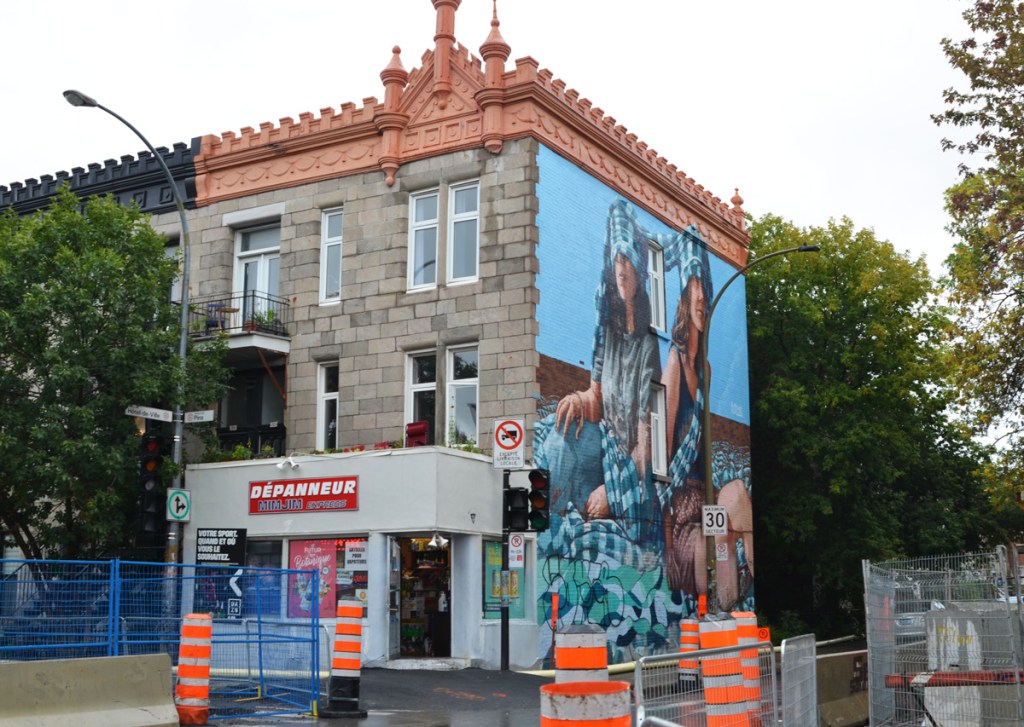
below: By a Depanneur at Pins and Hotel de Ville, a large mural of two seated women and their scarf by Australian artist Fintan Magee.
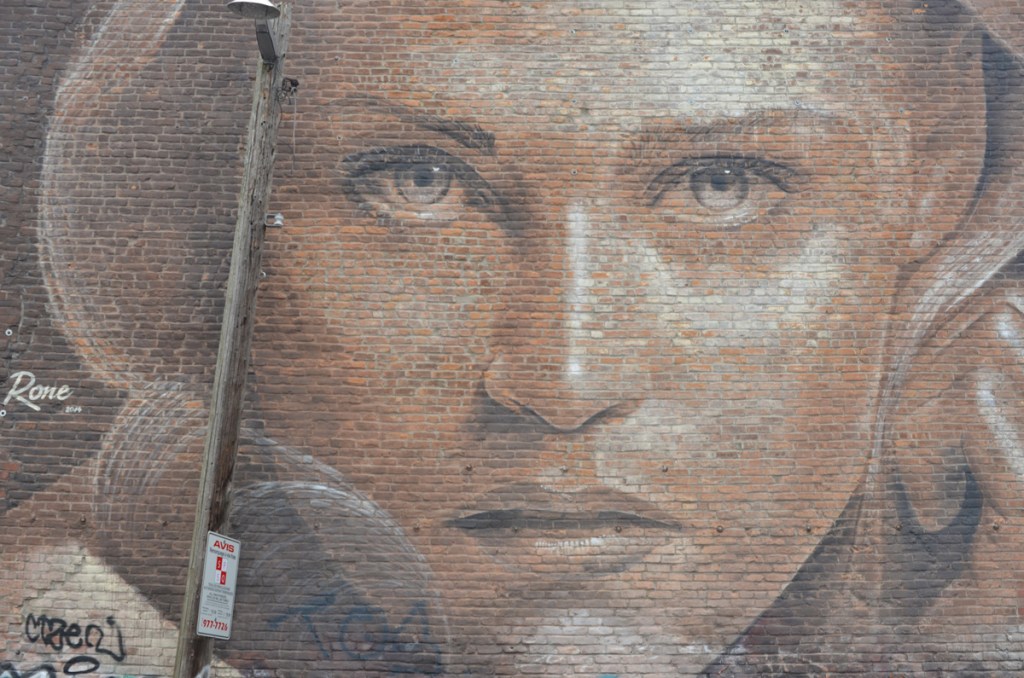
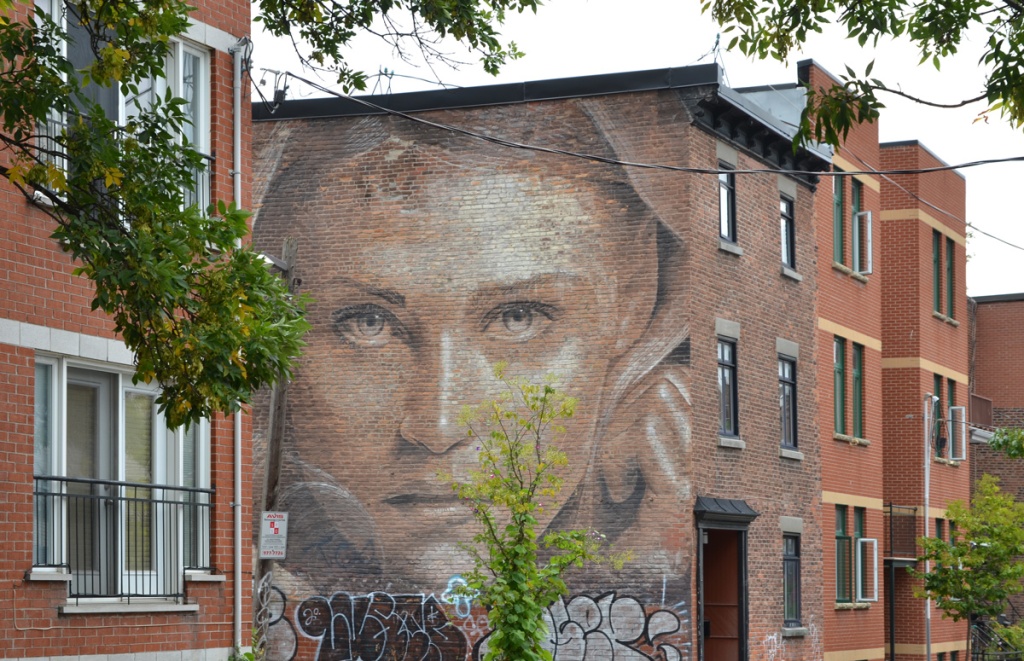
below: A mural by Rone, another Australian artist.
below: Sorry is Not Enough, a mural by Denial (or Enjoy Denial) with a shout out to Black Lives Matter
below: From 2018, this mural by Drew Merritt and Sainte Famille and Milton (photo taken in 2018 as well)
below: A tribute to Lea Roback (1903-2000), by Carlos Oliva (aka Hsix) in 2014. Roback was a textile worker who became a trade union activist, feminist and pacifist (among other things). She fought for woman’s suffrage in Quebec (1936), she played a role in helping to organize 5,000 garment workers who had been on a three-week strike in 1937, and that is only a small fraction of what she accomplished.
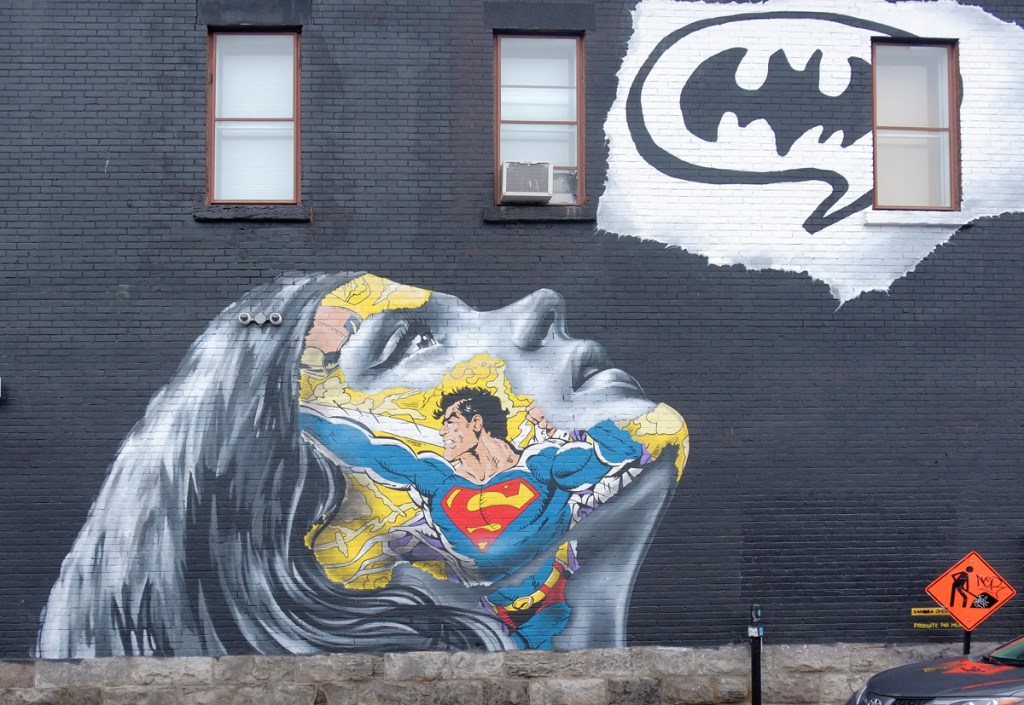
below: by Sandra Chevrier, pop culture references to Superman and Batman
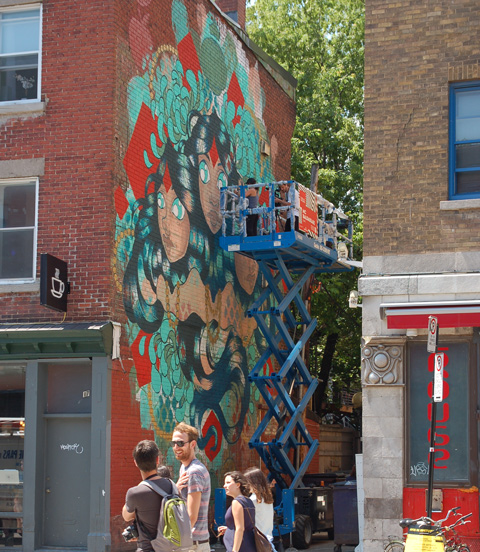
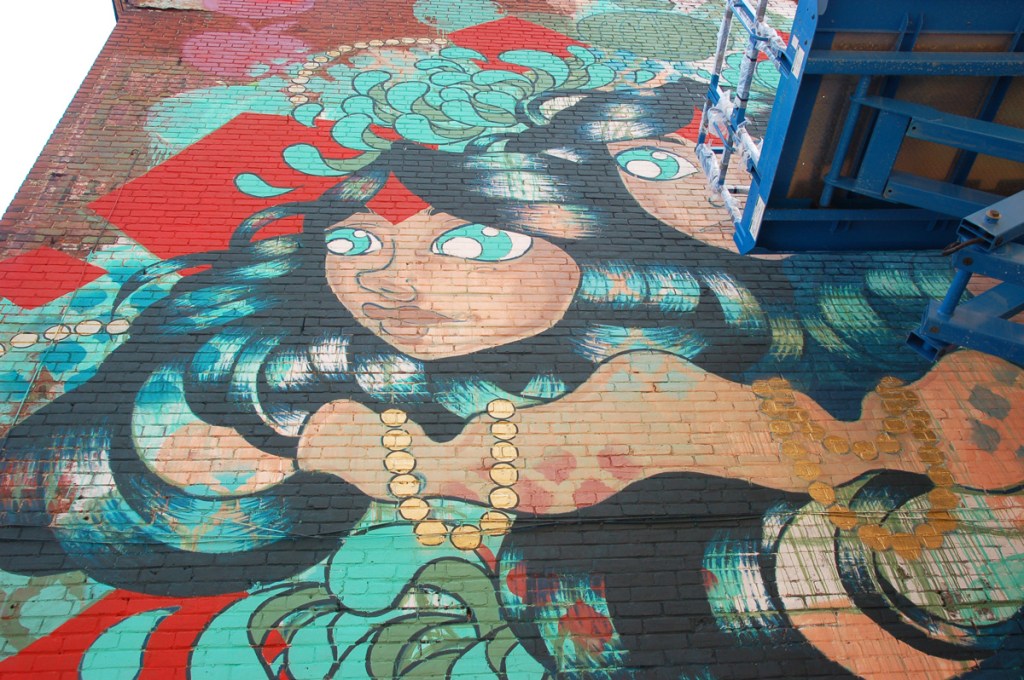
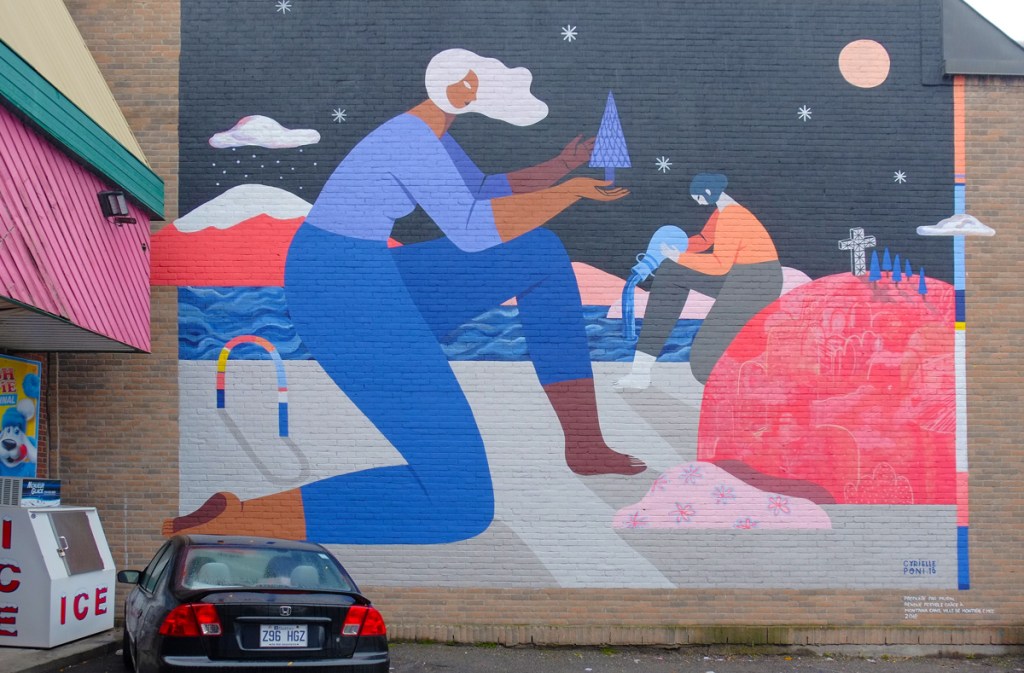
below: A collaboration between Cyrielle Tremblay and Poni (aka Hilda Palafox, painted in 2018. Working in an imaginary garden maybe?
below: A whimsical black and white of women astronauts, guitar players, skate boarders, astronomers, and others. It is the work of Le Monstr, aka Benjamin Tran.
below: A mural from 2014 putting a spotlight on the call for justice for missing and murdered indigenous women.
Another large mural in Montreal painted by Kevin Ledo is this portrait of Mary Socktish of the Hupa tribe in Northern California . This 2014 work is based on an old photograph from a series on the Hupa people, taken by Edward Curtis in 1923.
The song “Hallelujah” is probably Leonard Cohen’s (1934-2016) most recognized work … or at least that’s what I think whenever I hear Leonard Cohen’s name, or see a picture of him. In Montreal, Cohen’s hometown, there is now a large mural of him that was painted by Kevin Ledo, also of Montreal.
Hallelujah Lyrics:
Now I’ve heard there was a secret chord That David played, and it pleased the Lord But you dont really care for music, do you? It goes like this, the fourth, the fifth The minor falls, the major lifts The baffled king composing Hallelujah
Hallelujah, Hallelujah Hallelujah, Hallelujah
Your faith was strong but you needed proof You saw her bathing on the roof Her beauty and the moonlight overthrew her She tied you to a kitchen chair She broke your throne, and she cut your hair And from your lips she drew the Hallelujah
Hallelujah, Hallelujah Hallelujah, Hallelujah
Well, maybe there’s a God above As for me all I’ve ever learned from love Is how to shoot somebody who outdrew you But it’s not a crime that you’re hear tonight It’s not some pilgrim who claims to have seen the Light No, it’s a cold and it’s a very broken Hallelujah
Well people I’ve been here before I know this room and I’ve walked this floor You see I used to live alone before I knew ya And I’ve seen your flag on the marble arch But listen love, love is not some kind of victory march, no It’s a cold and it’s a broken Hallelujah
Hallelujah, Hallelujah Hallelujah, Hallelujah
There was a time you let me know What’s really going on below But now you never show it to me, do you? And I remember when I moved in you And the holy dove she was moving too And every single breath we drew was Hallelujah
Hallelujah, Hallelujah Hallelujah, Hallelujah
Now I’ve done my best, I know it wasn’t much I couldn’t feel, so I tried to touch I’ve told the truth, I didnt come here to London just to fool you And even though it all went wrong I’ll stand right here before the Lord of song With nothing, nothing on my tongue but Hallelujah
Maika is another Montreal street artist. So far, these are the paste-ups of hers that I’ve seen as I’ve walked around the city.
Red, white, and blue, melting into a puddle.One face or two?The hand of David as a wing but with the head of a cow. You can’t start a fire with flowers can you? Lit.
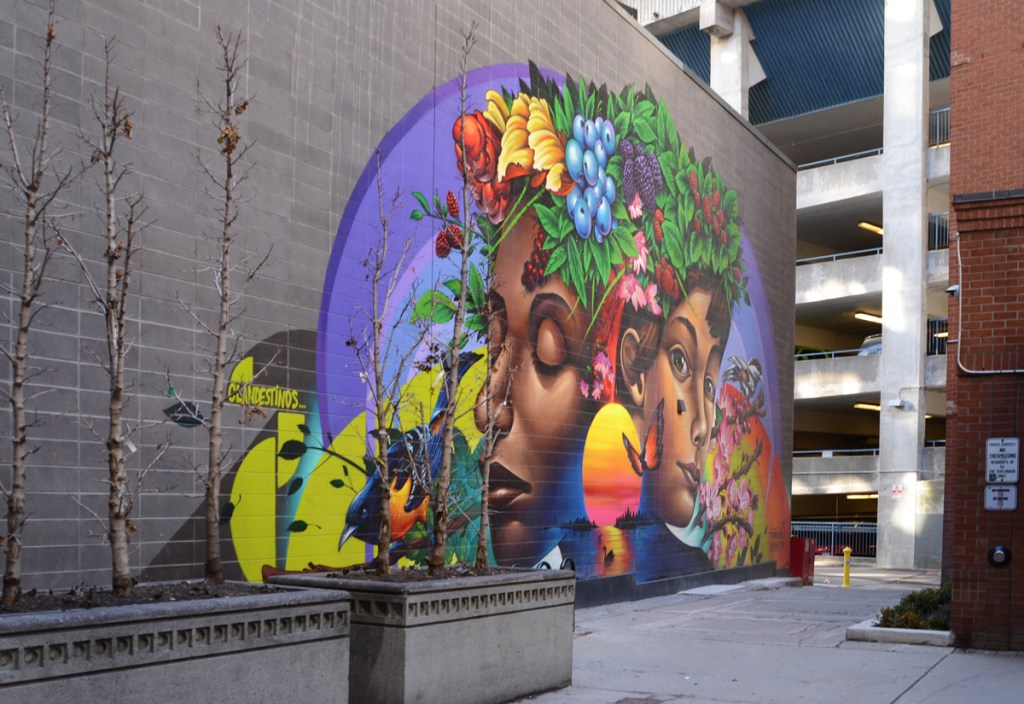
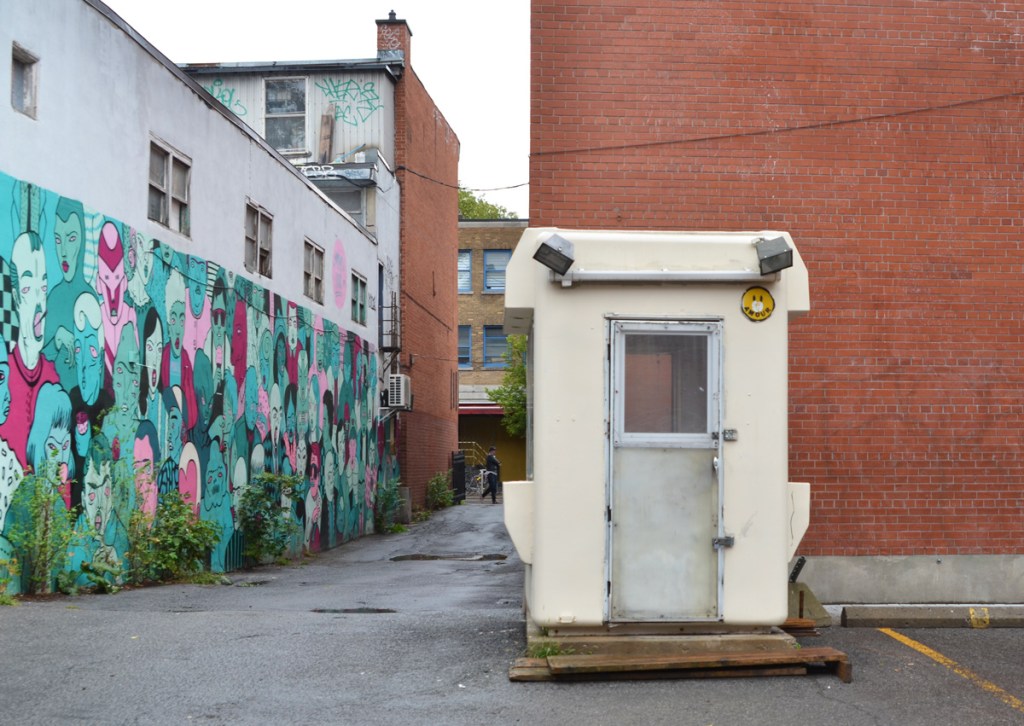
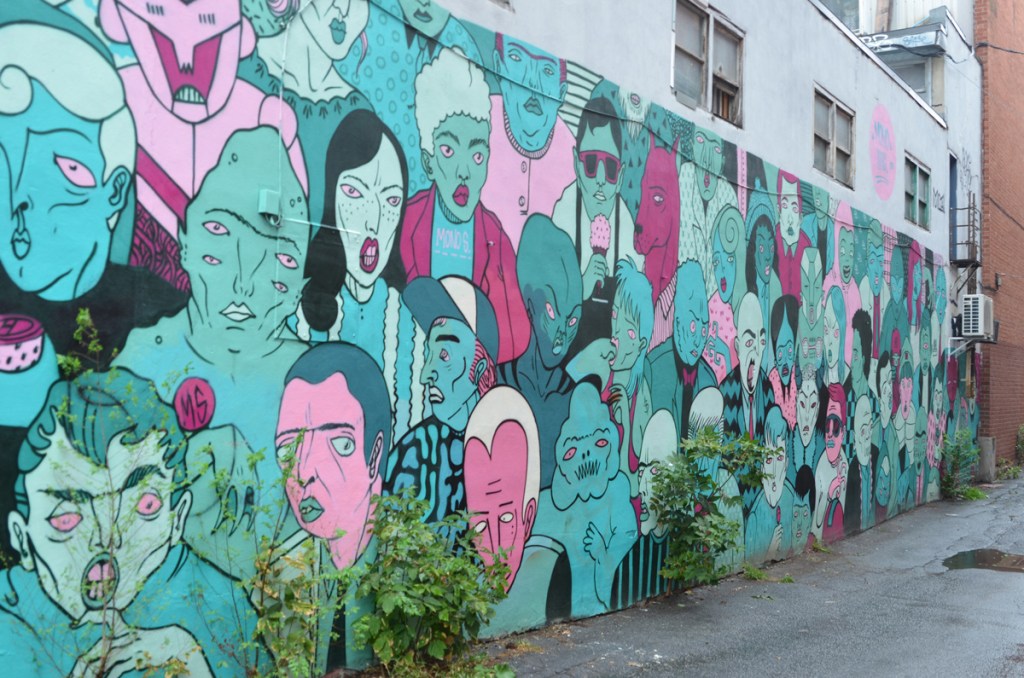
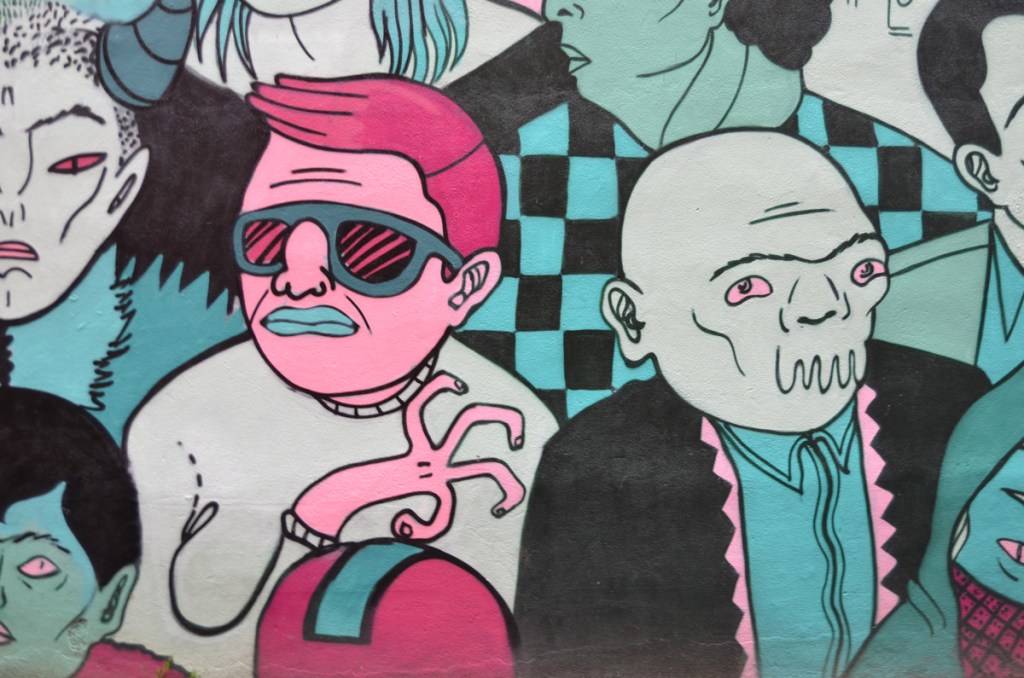
A mural full of odd and somewhat disturbing faces can be found in a narrow alley near the corner of Prince Arthur St. and Saint Laurent Blvd. It was painted by Mono Sourcil, (aka Maxilie Martel) a Montreal street artist. It dates from Mural Festival 2017 and has survived well.
Some of the people look rather ordinary and are doing ordinary things…. others, not so much.
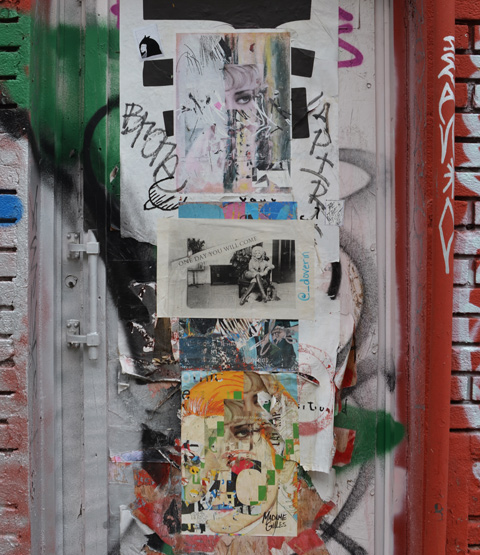
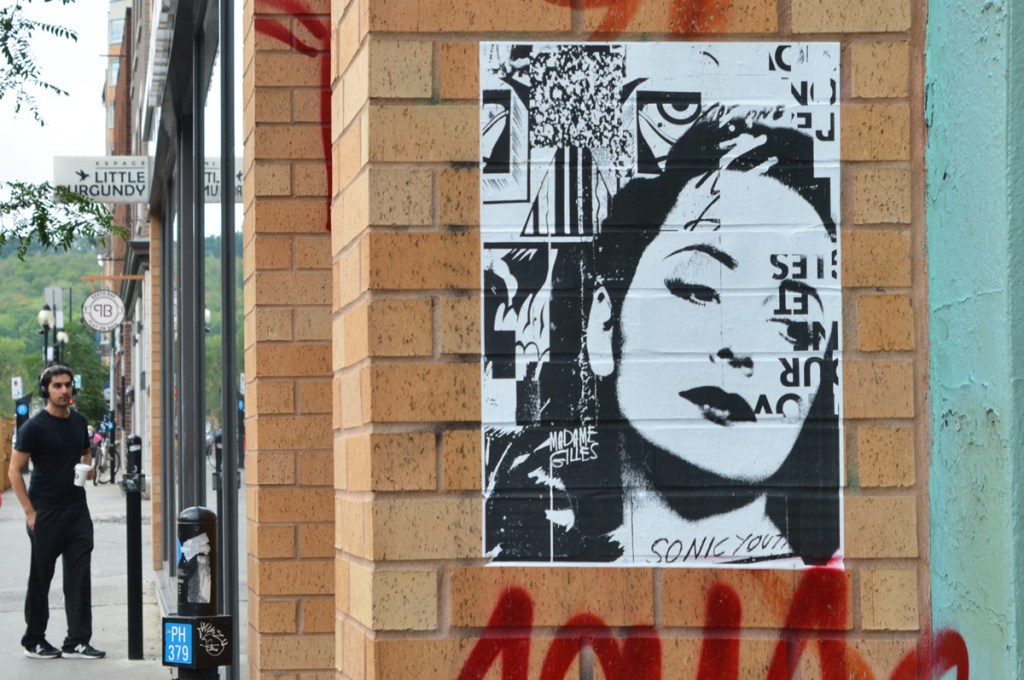
As you walk around the city of Montreal, you can probably spot quite a few paper paste-ups featuring collage images of people that were created by an artist that signs her pieces as Madame Gilles.
below: Similar image as above but this time on a door with another, including “One Day You Will Come” by @_doverin
below: A little less abstract and a lot less colour
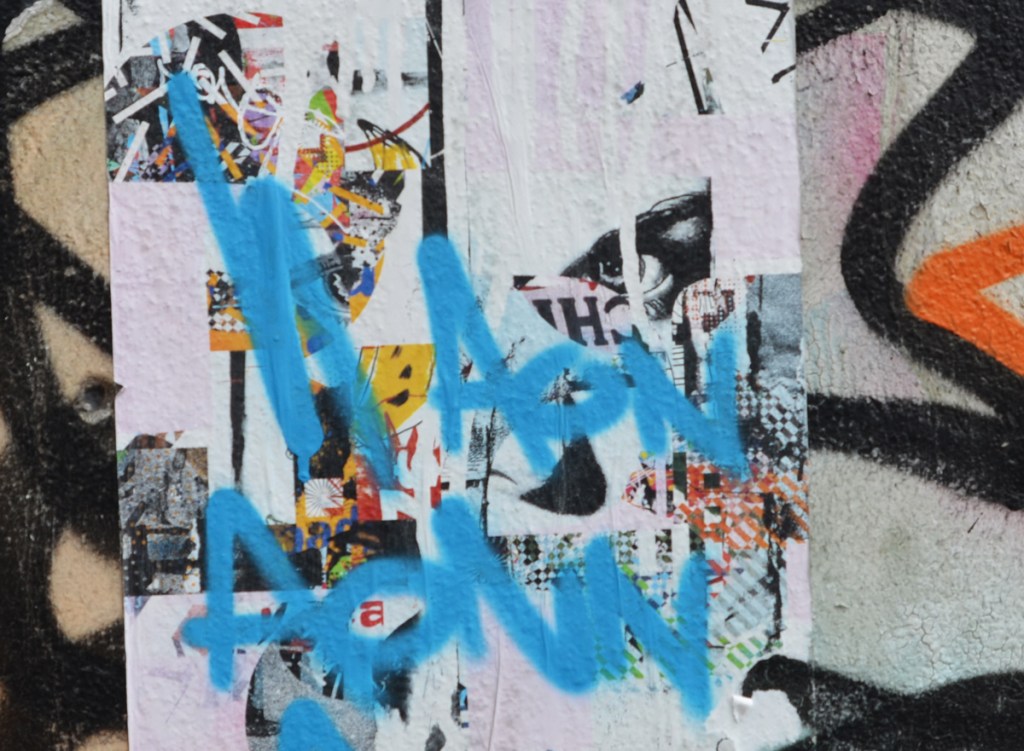
The next two pictures show the same doorway. First the top section where once again the same image appears.
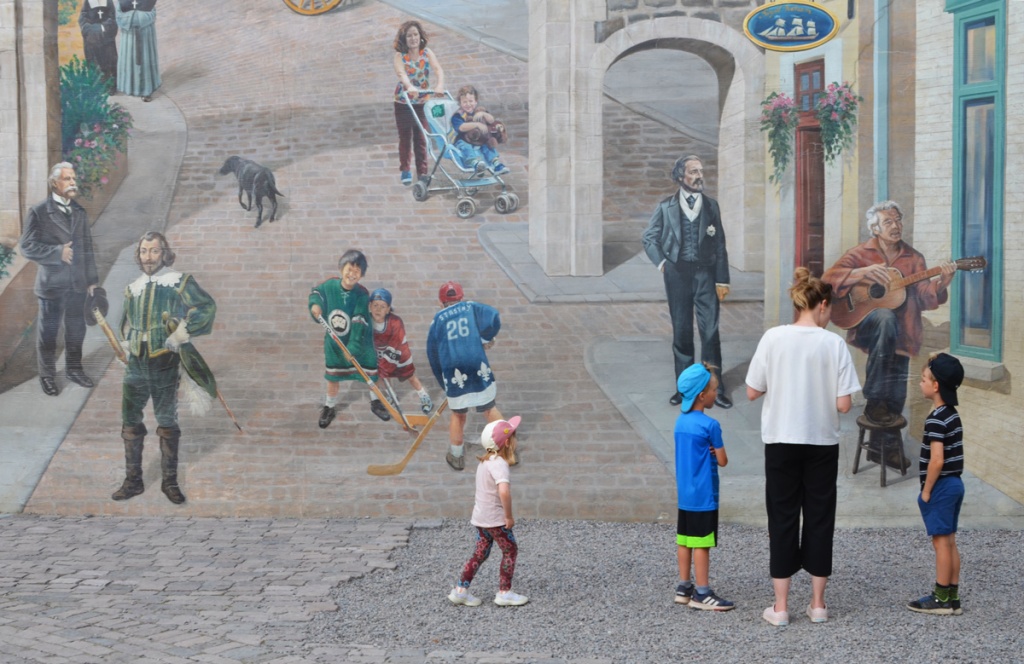
La Fresque des Québécois is the title of a 420 m2 mural found on the side of Maison Soumande on rue Notre-Dame in Old Quebec City. It depicts figures from 400 years of Quebec City history. Twelve painters from France and Quebec contributed to the mural.
New France was the name of the French colony in North America beginning in 1593 with the arrival of Jacques Cartier. The French relinquished the colony to the British and the Spanish in 1763, at the end of the Seven Years War
Looking out of the upper windows are (on the left) Jean Talon (1626-1694) who was steward of New France; in this position he was in control of the civil administration of the colony. The other man is Louis de Baude Comte de Frontenac et de Palluau (1622-1698) was Governor General of New France for many years.
In 1763 what is now Quebec became the Province of Quebec, a British colony. In 1791 this colony was divided into two, Upper Canada along the upper parts of the St. Lawrence River, and Lower Canada, along the lower section of the river. Upper Canada is approximately what is now Ontario while Quebec has grown from Lower Canada. Quebec City was in Lower Canada.
François-Xavier Garneau (1809-1866), national historian of French Canada stands on a balcony with (on the right) Louis-Joseph Papineau (1786-1871), Member of Parliament in Lower Canada. Playing his guitar is Félix Leclerc (1914-1988). Just behind him is Frederick Temple Blackwood, Marquis de Dufferin and d’Ava (1826-1902), Governor General of Canada from 1872-1878; He’s probably best remembered as Lord Dufferin. During his time as Governor General, Quebec City officials began the demolition of the old city walls. Blackwood persuaded them to stop and rebuild the parts that they had damaged. In 1985 Old Quebec was recognized as an UNESCO World Heritage Site. Samuel Champlain (1570-1635) poses in his green jacket while holding onto his hat with the large white feather. He founded Quebec in 1608. Just behind him is Alphonse Desjardins (1854-1920) founder of the Desjardins Cooperative Movement. Coming down the stairs is Louis Jolliet (1645 -1700), along with Jesuit priest Father Jacques Marquette, was the first non-Native to explore the upper parts of the Mississippi River. Jolliet was born near Quebec City.






















 Eyes on the Streets