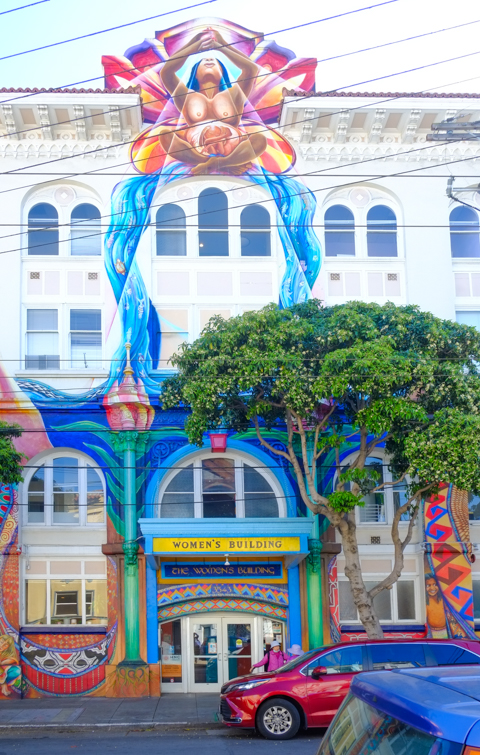
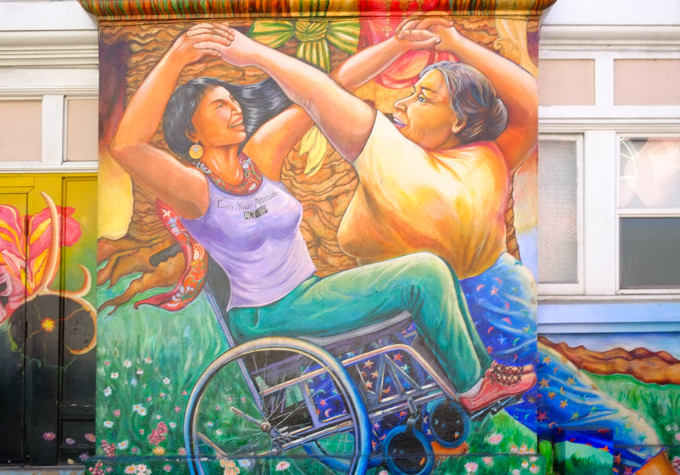
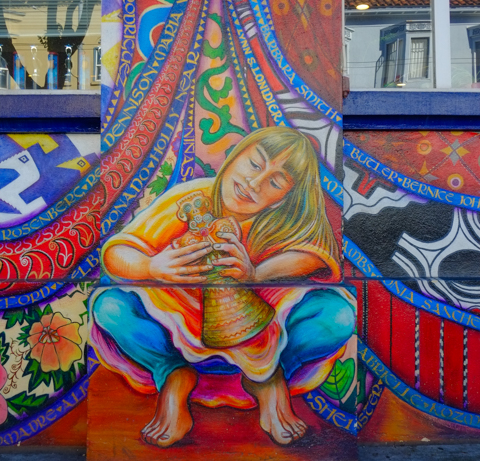
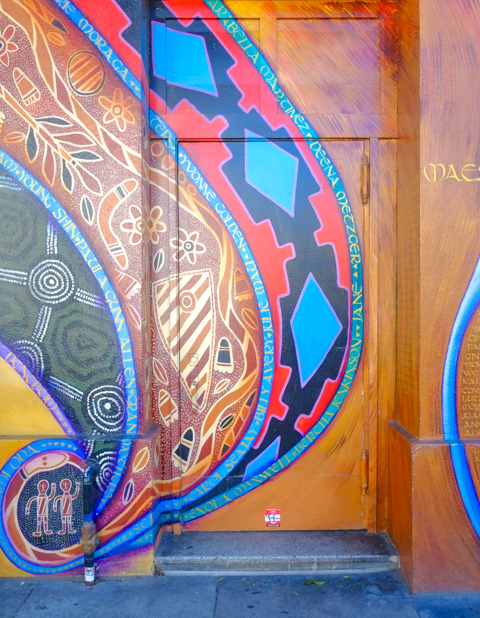
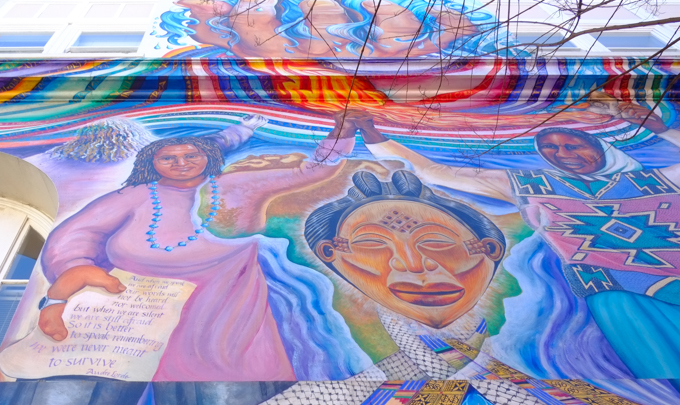
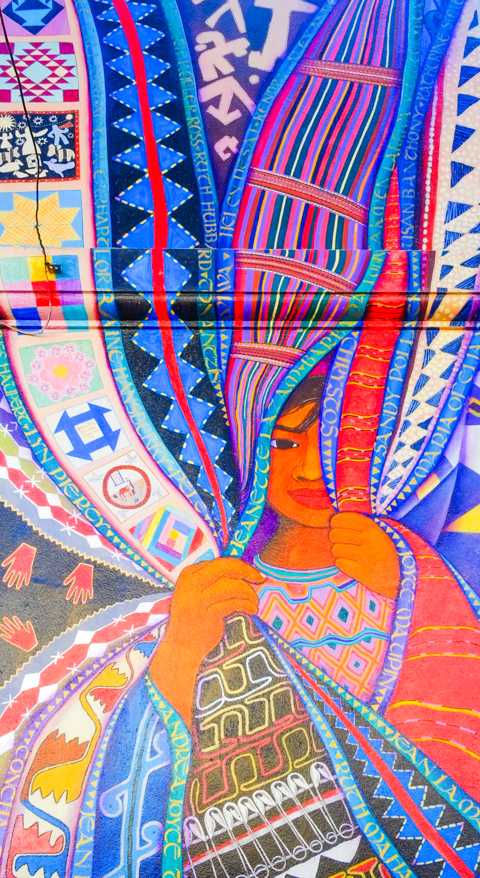
Edificio de Mujeres, or The Women’s Building, is a woman owned and operated community centre that opened in 1979. The exterior is covered with a painting titled “MaestraPeace” which depicts women of different cultures and ages throughout history, both real and fictional. Six hundred names are written into the mural. A group of seven women artists (and numerous helpers and volunteers) completed the painting in 1994 (it was restored in 2012). What follows here is a selection of images showing parts of the mural.
below: Over the front entrance
According to Wikipedia, the artists involved were: Juana Alicia, Miranda Bergman, Edythe Boone, Susan Kelk Cervantes, Meera Desai, Yvonne Littleton, and Irene Perez
below: A dominant feature in Russell Lane is a large yellow and blue mural by Kitt Bennett that runs along the wall of a parking structure.
below: Meet “Princess” with her star wand – a mural commissioned by Melbourne City Council. She stands 24 metres tall in her sneakers. Her pink dress had faded a bit but she is as big and as tall as ever! Painted by Baby Guerilla.
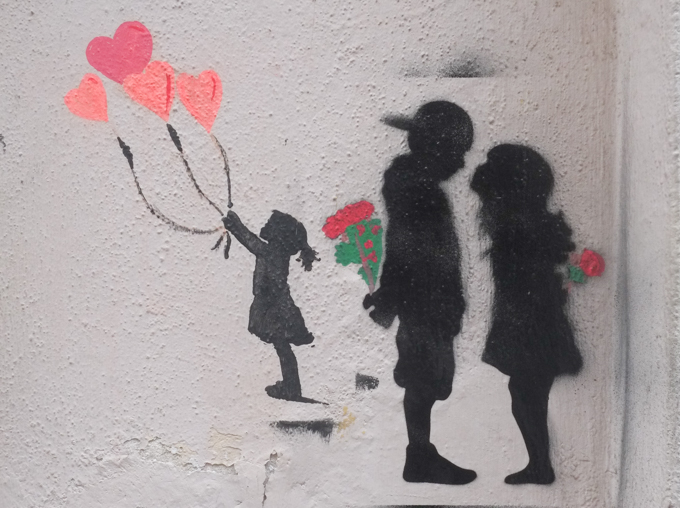
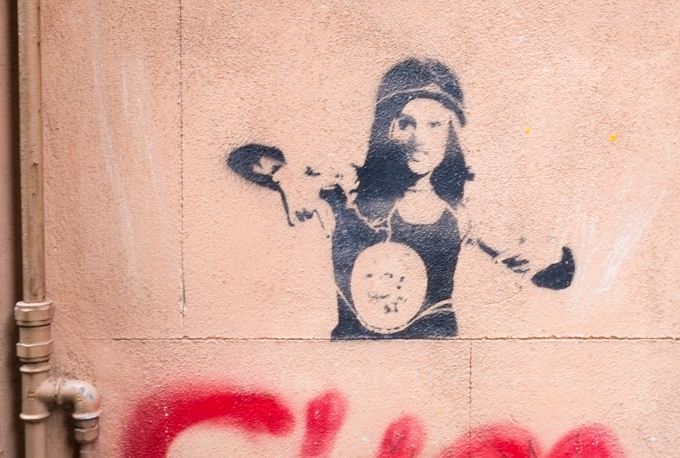
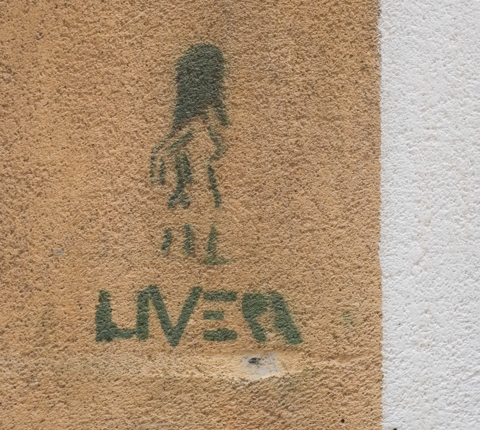
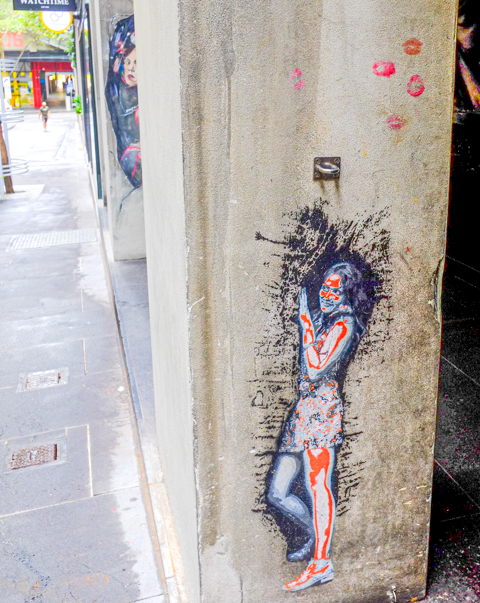
below: There are paste-ups and stencils in some of the doorways – a pink flower in a purple pot along with a number of women.
Springfield MA is home to many murals. This blog post looks at some of them that were seen in the Mason Square neighborhood of that city.
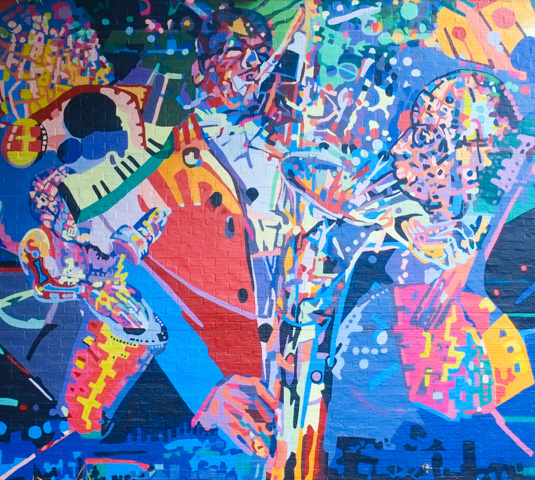
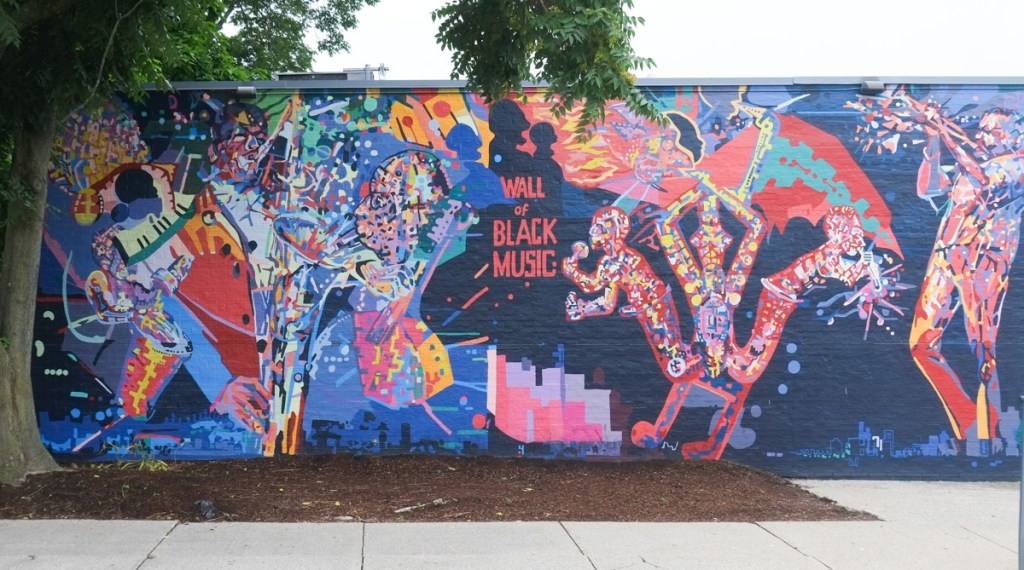
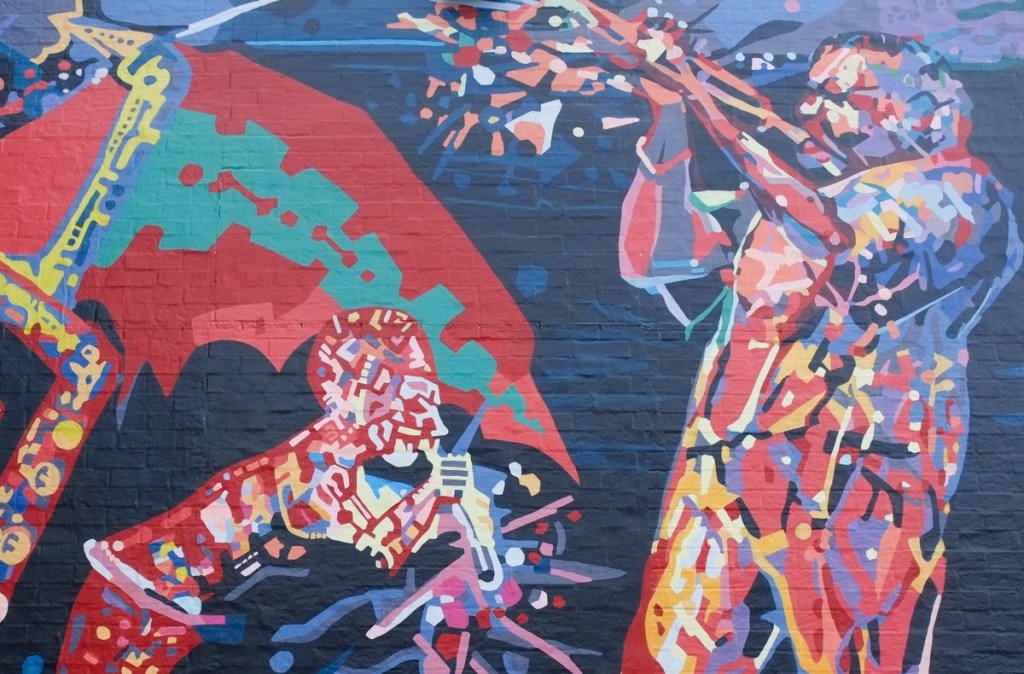
A celebration of Black music that was originally painted in 1974 by Nelson Stevens. Stevens painted many murals in the Springfield area during his lifetime. He died last year at the age of 86. This mural was rededicated earlier in 2022.
below: Martin Luther King in “The Beloved Community” by Nero and Souls.
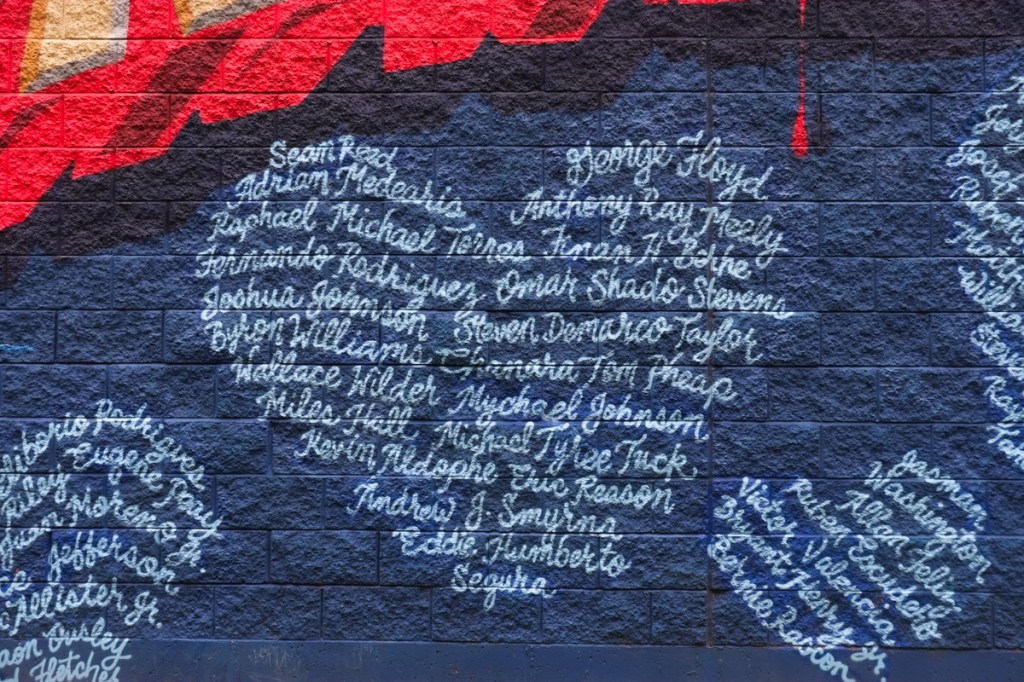
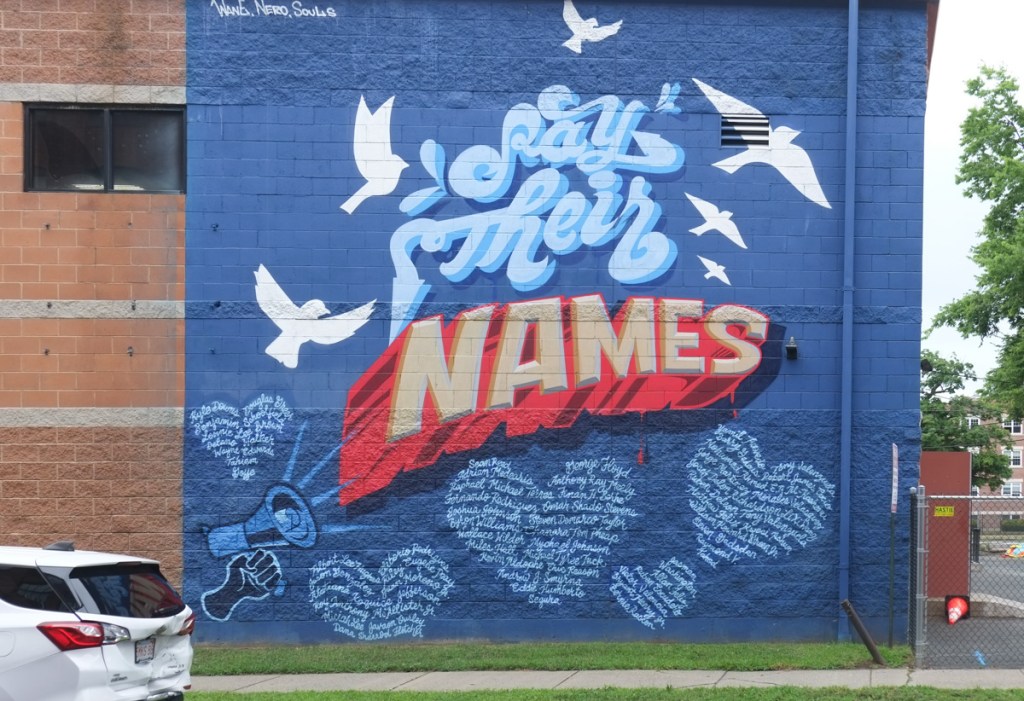
below: Say Their Names – A tribute mural to the more than 60 black and brown people killed in the USA in the year up to 1 June 2020 by the police – a project that was came about in response to the murder of George Floyd. Also included are the names of Springfield MA residents who have been killed in interactions with the police. This project was organized by Common Wealth Murals and Art for the Soul Gallery, and hosted by the Martin Luther King Jr. Family Services of Springfield. The mural was designed and painted by artist Wane One from New York City, with assistance from two other artists, Nero and Souls.
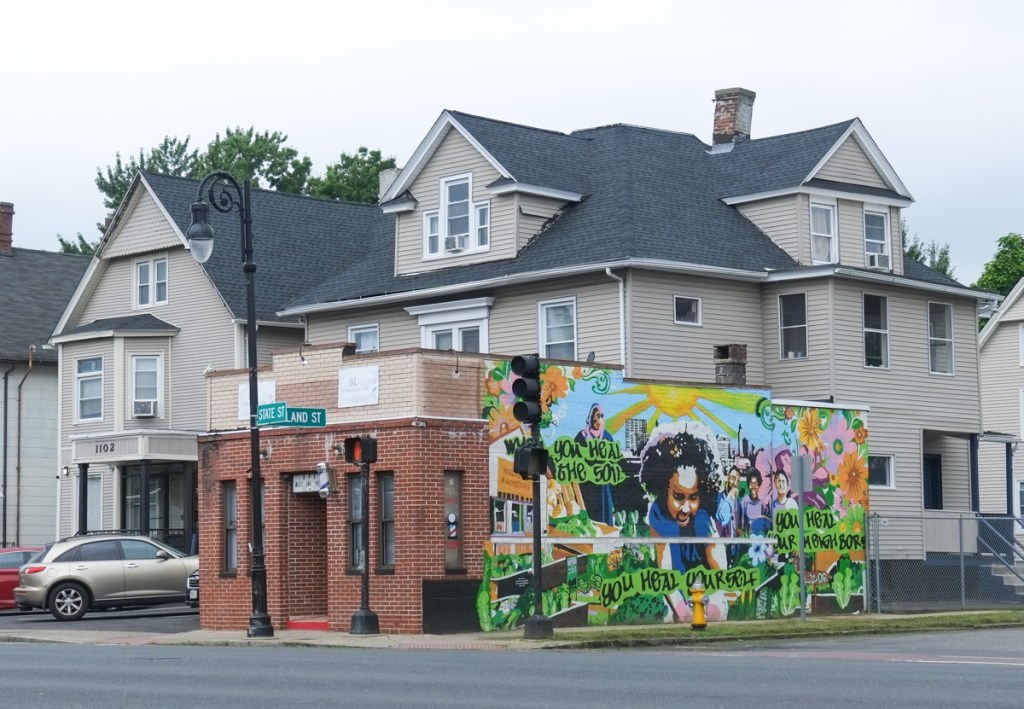
below: A healing mural – “You heal the soil, You heal yourself, You heal our neighborhood”. Another Community Mural Institute mural. The actual title is “Gardening the Community” and was painted by Ryan Murray, 2021.
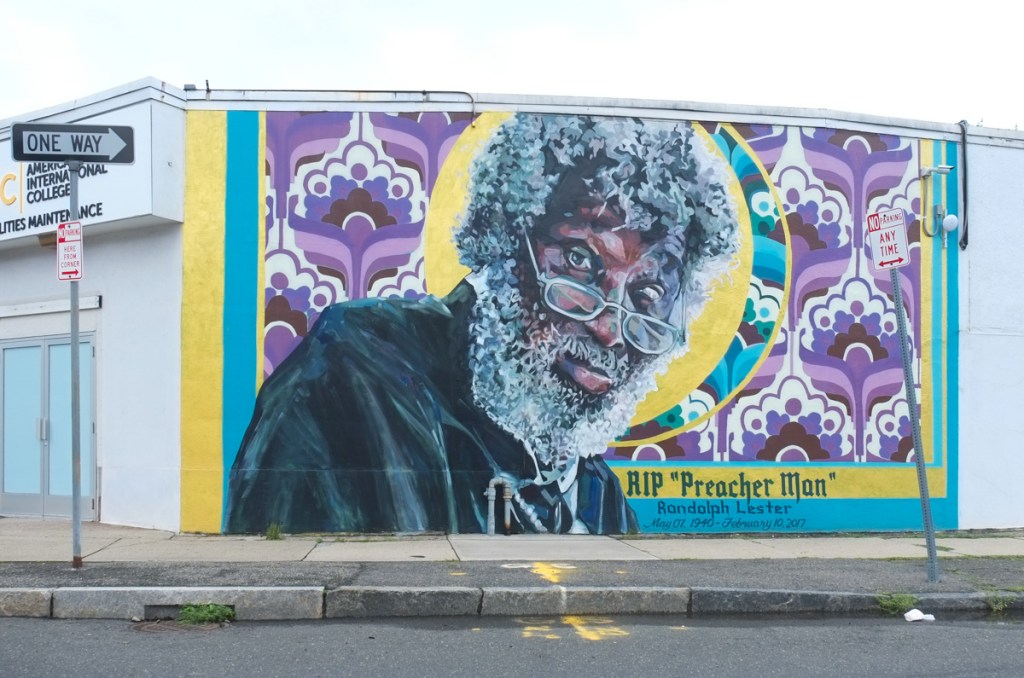
below: RIP “Preacher Man”, Randolph Lester (1940-2017) The mural was designed by GoodSpace Murals for the Community Mural Institute. Three Springfield artists were involved: Frankie Borrero, Emma Mesa-Melendez, and Martin Johnson
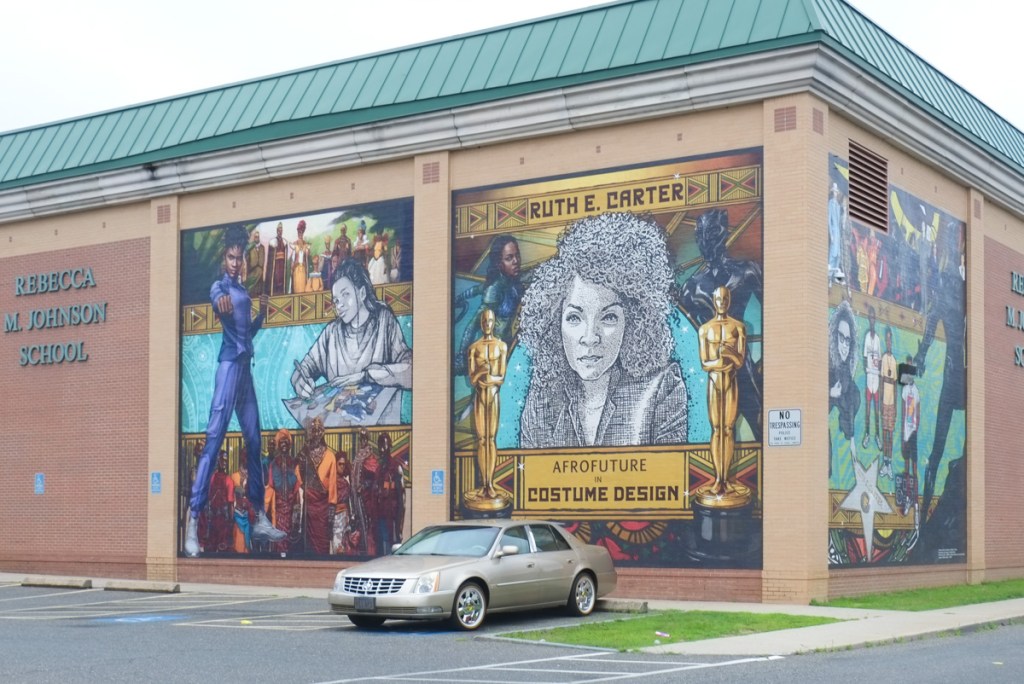
below: On the walls of Rebecca M. Johnson School there is a series of paintings featuring Ruth E. Carter, costume designer, author and Springfield native. The images also show some of the many costumes she designed for films including Black Panther, Coming to America, Do the Right Thing, Malcolm X, and Selma.
below: “Tribute to Black Women”, painted in 1974 by Nelson Stevens and repainted in 2022 by the Community Mural Institute.
I am a black woman, tall as a cypress, strong beyond all definition, defying time and circumstance, assailed, impervious, indestructable. Look on me and be renewed.
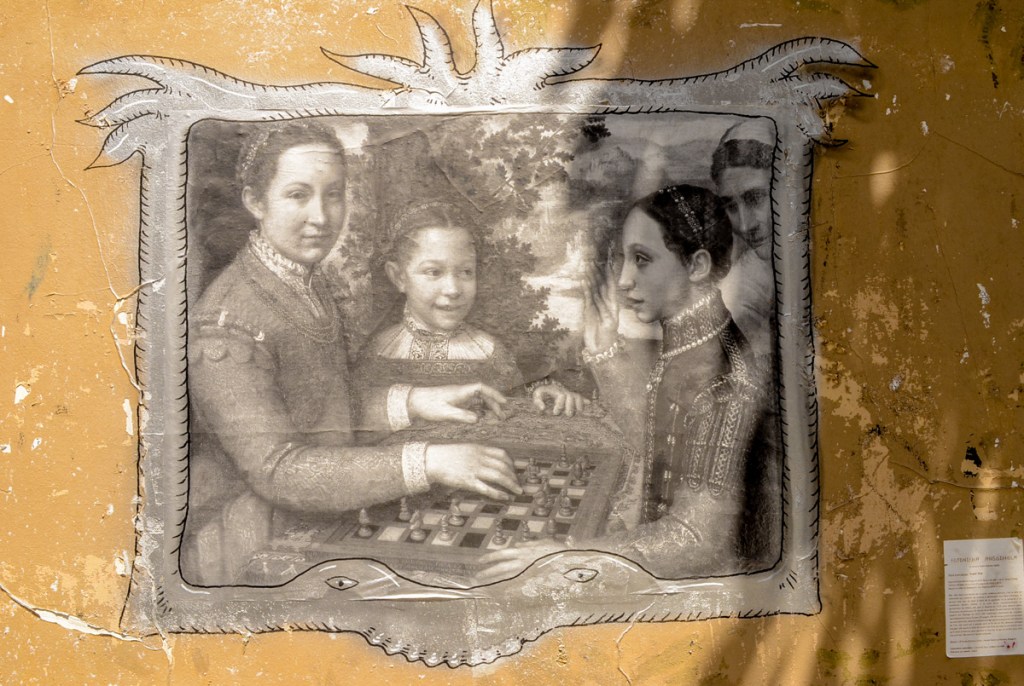
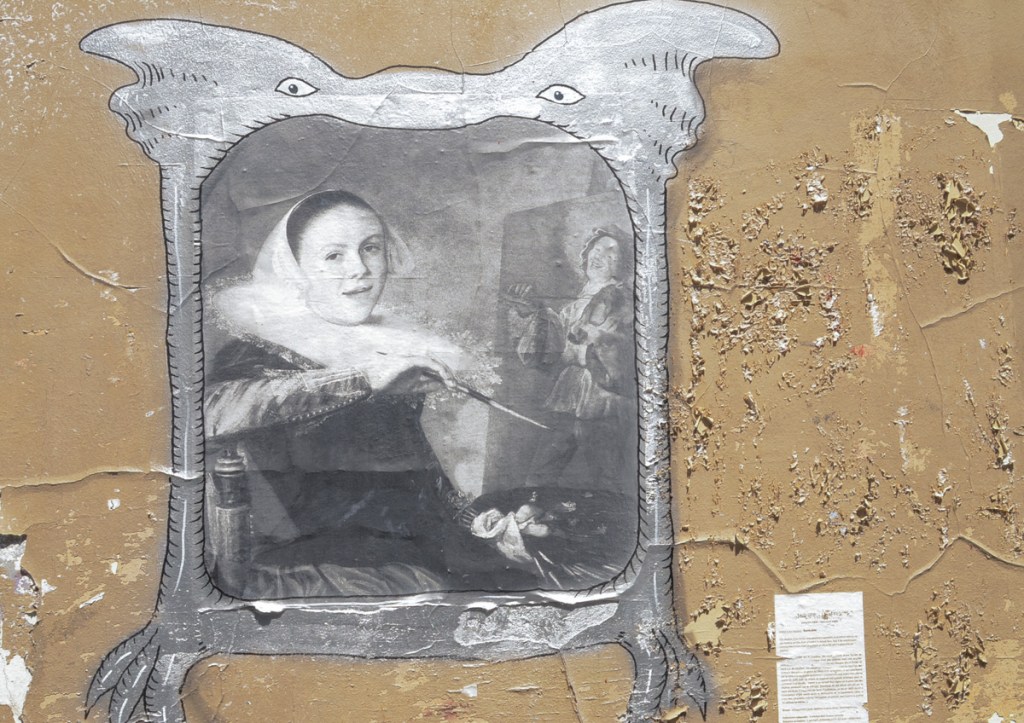
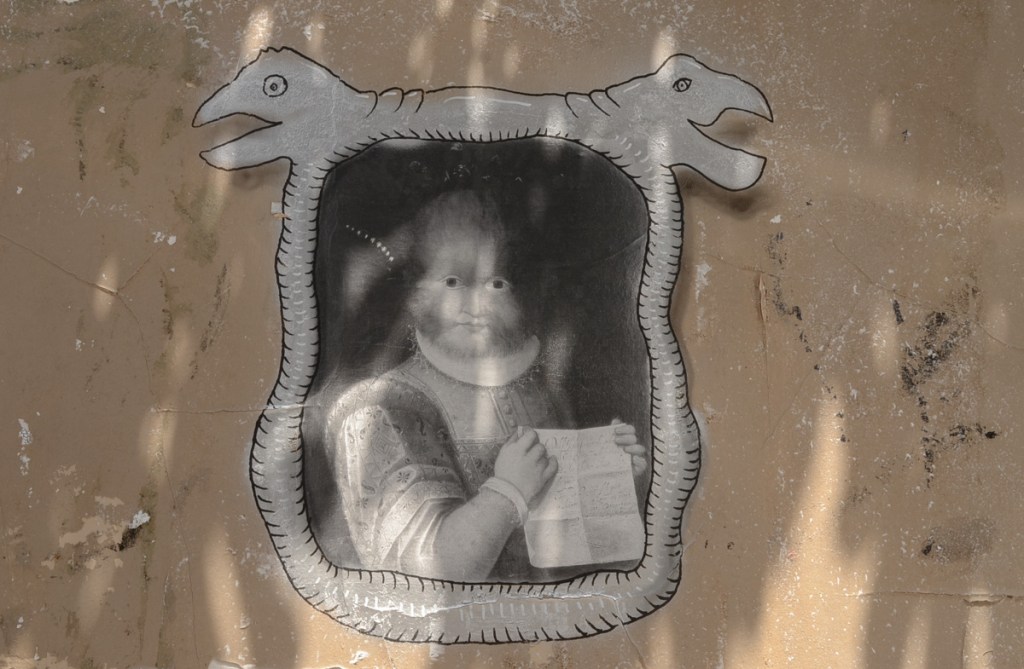
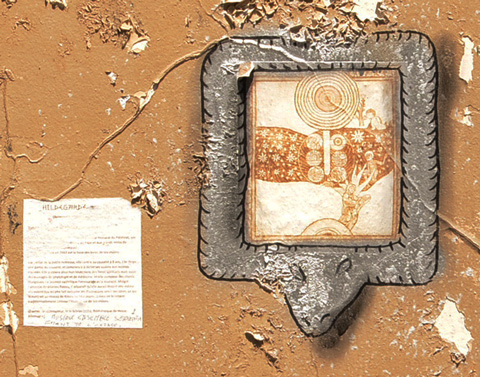
Street art of a slightly different kind…. Seen pasted on a wall on a street in Paris – a display of black and white prints of famous paintings by women artists from over the centuries.
below: ‘Game of Chess’ by Sofonisba Anguissola (c1532-1625, Italian)
below:Self Portrait by Judith Leyster (1609-1660, Dutch)
below: Portrait of Antonietta Gonzales painted by Lavinia Fontana. (1552-1614). She was possibly Italy’s first professional painter. The subject of the painting, Antonietta, suffered from a condition known as hypertrichosis (aka werewolf syndrome), a rare genetic disorder that results in excess body hair. Antonietta’s father also had the disorder as did two of her sisters.
below: A man’s portrait by Rosalba Carriera (1673-1757, Venetian)
below: ‘Portrait of a Lady as a Vestal Virgin’ by Angelica Kauffman (1741-1807), a Swiss Neoclassical painter. Her father was also a painter. He started teaching her at an early age and by 12 she was already known as a painter in her own right. Kauffman was one of only two women founders of the Royal Academy in London.
below: “Still Life with Flowers and Gold Trophies” by Clara Peeters (1589-1657, Flemish)
below:
Another still life with flowers, this one by Rachel Ruysch (1664-1750). She was a Dutch artist whose painting career lasted more than 60 years; she was a master at painting still lifes with flowers.
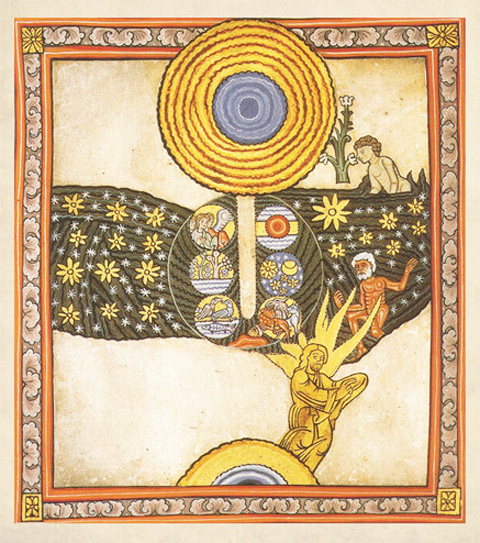
below: ‘The Redeemer’ by St. Hildegard von Bingen (c1098-1179), with a copy of the original (in colour and unfaded) underneath. St. Hildegard, or Sybil of the Rhine, was a German Benedictine abbess with many accomplishments to her name.
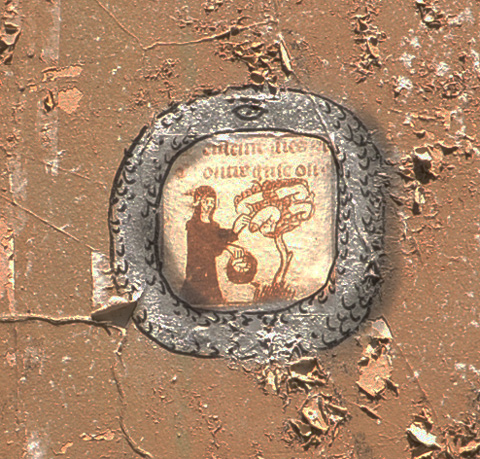
below: ‘The Penis Tree’. Between about 1325 and 1353, Jeanne and Richard de Montbaston printed books and manuscripts including the “scandalous, rude and misogynistic” poem, the ‘Roman de la Rose’. The first 4,058 verses were written by Guillaume de Lorris in the early 1200s and they describe a courtier’s attempt to win over a woman. About 40 years later, Jean de Meun (aka Jean Chopinel) wrote another 19000 lines. This was before the invention of the printing press so each manuscript was hand drawn. The picture shown here of a nun picking penises from a tree is attributed to Jeanne de Montbaston.
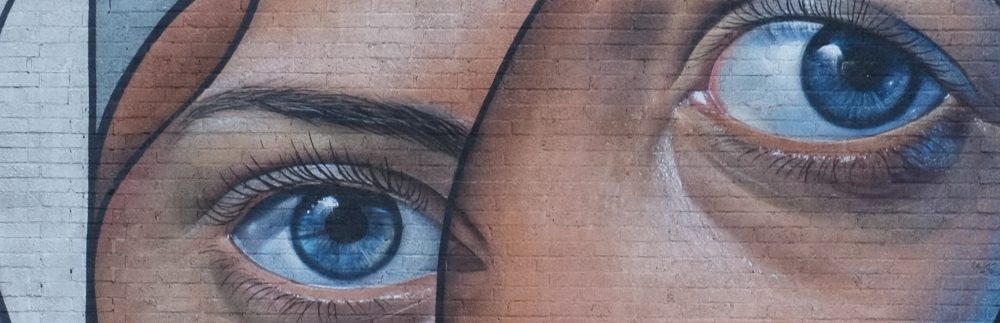
below: A red headed woman wrapped in a blue shawl and holding a white rose. White roses are symbols of purity and innocence as well as love and affection. Traditionally the Virgin Mary is depicted with a blue shawl or similar clothing. The mural is ‘Oblicze Piękna’, painted in 2018 by Paulina Nawrot. The title translates to Face of Beauty, or Vision of Beauty.
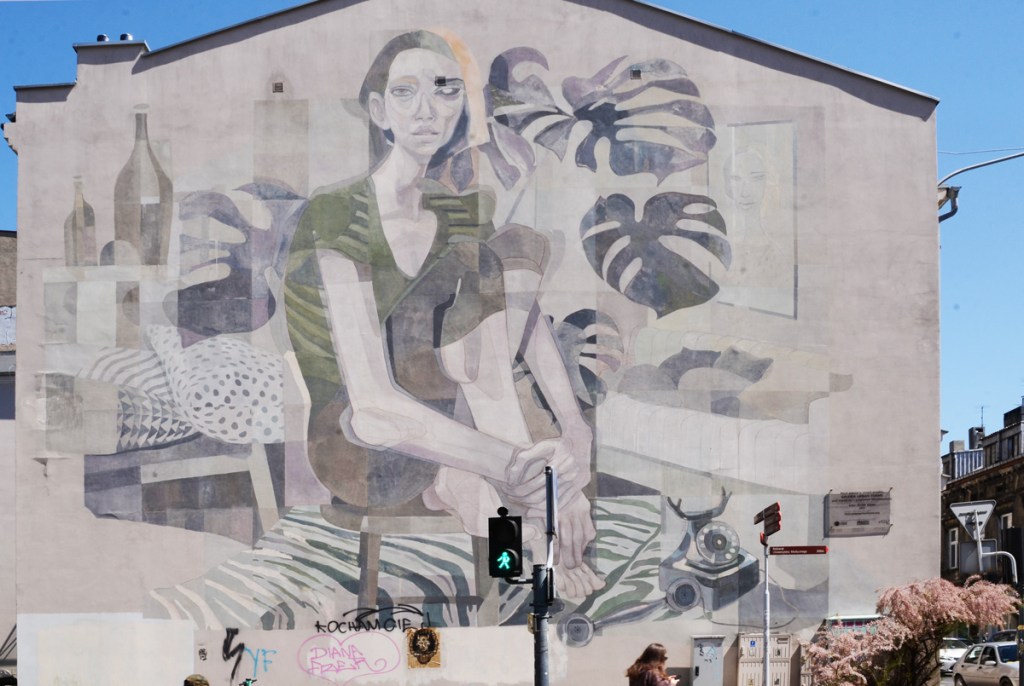
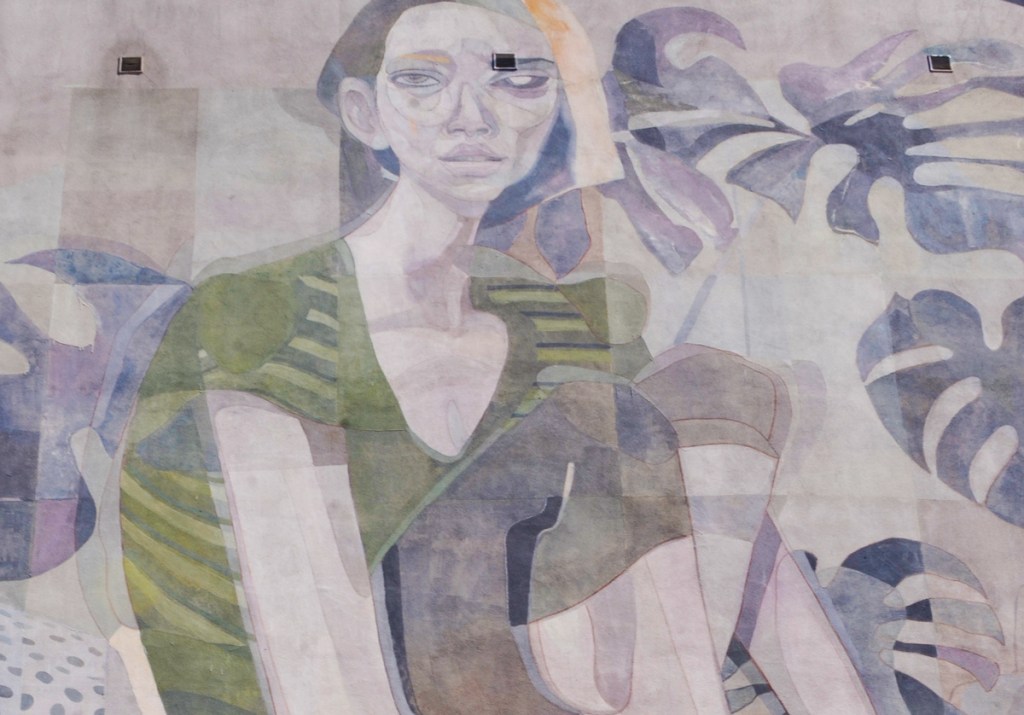
below: A faded woman sits by her telephone in a 2014 mural by Russian artist, Morik as part of Galeria Urbans Forms.
below: Another faded mural, this one shows an anatomically correct heart with half of a butterfly on each side. Above the heart grows a large tree. The mural was painted in 2015 by Puerto Rican artist Alexis Diaz and is titled “Czuć” (or in English, “Feel”)
Before the second World War, about one quarter of the population of Kaunas LIthuania was Jewish – about 30,000 people. Known in Yiddish as Kovno, it was a city As part of the City Telling Festival (Istoriju Festivalis) in 2020 a couple of large murals were painted in memory of a few of these people. This festival was one of the events leading up to 2022 where Kaunas was one of the “European Capitals of Culture”
below: Leja (or Leah) Goldberg, b. 1911, poet. It was painted by Lithuanian artist Linas Kaziulionis and it measures 15 by 10 meters. The text is one of her poems “Oren” (Pine) written in Hebrew and Lithuanian.
Goldberg was the daughter of Abraham and Cilia Goldberg. Her father was an economist at an insurance company before WW1. During the Great War (i.e. WW1), most of the Jews were “evacuated” from Lithuania and sent to the interior of Russia. Lea was three years old when the family was forcibly deported from Kaunas. When they returned after the war and the defeat of Germany, Lea’s father was tortured by Lithuanian soldiers who accused him of being a Communist. He died before Lea emigrated to Palestine in 1935; her mother followed her the next year.
One translation of the poem:
PINE
Here I will not hear the voice of the cuckoo. Here the tree will not wear a cape of snow. But it is here in the shade of these pines my whole childhood reawakens.
The chime of the needles: Once upon a time – I called the snow-space homeland, and the green ice at the river’s edge – was the poem’s grammar in a foreign place.
Perhaps only migrating birds know – suspended between earth and sky – the heartache of two homelands.
With you I was transplanted twice, with you, pine trees, I grew – roots in two disparate landscapes.
below: Another mural with a poem that was also part of the same festival. It was painted by Tadas Vincaitis-Plūgas. The is mural dedicated to another Jewish family that lived in Kaunas before WW2.
The words are those of Hirsh Ošerovičius (1908-1994) written in 1964. The text is in Lithuanian but one English translation is:
Ah, do you really believe, Oblivion has the final say in what is to be forgotten? For it is often only an image from the ashes rising And stand in flesh, in full reality Forever framed for every day to come.
The mural depicts a mother, Greta, and her daughter Rosian Bagriansky. Rosian was born in 1935 in Kaunas. Her father, Paul (or Polis) Bagriansky, was a textile merchant and her mother was a concert pianist and music teacher. Rosian survived the Holocaust after her parents dug a hole next to the fence of Kaunas Ghetto and pushed Rosian through it and into the hands of one of their former employees, Bronė Budreikaitė. Rosian became Irena Budreikaitė
The previous blog post was about a large Montreal mural by Kevin Ledo that was a portrait of a woman called Mary Socktish. There are a number of other murals in the city that have a woman, or women, as the main feature. These are some of them – the following photos were taken on four visits to Montreal between 2015 and 2021 and some of these murals may no longer exist.
below: One of the older murals in Montreal, a graffiti granny, old woman by ASHOP Productions
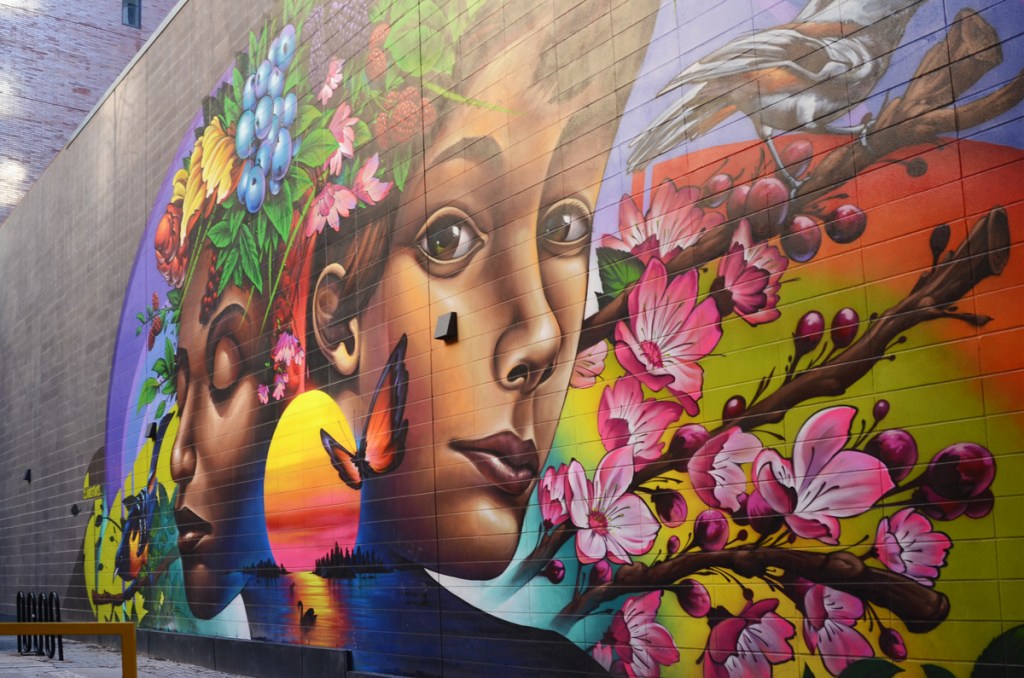
below: A mural by five8art, a young woman looking skyward.
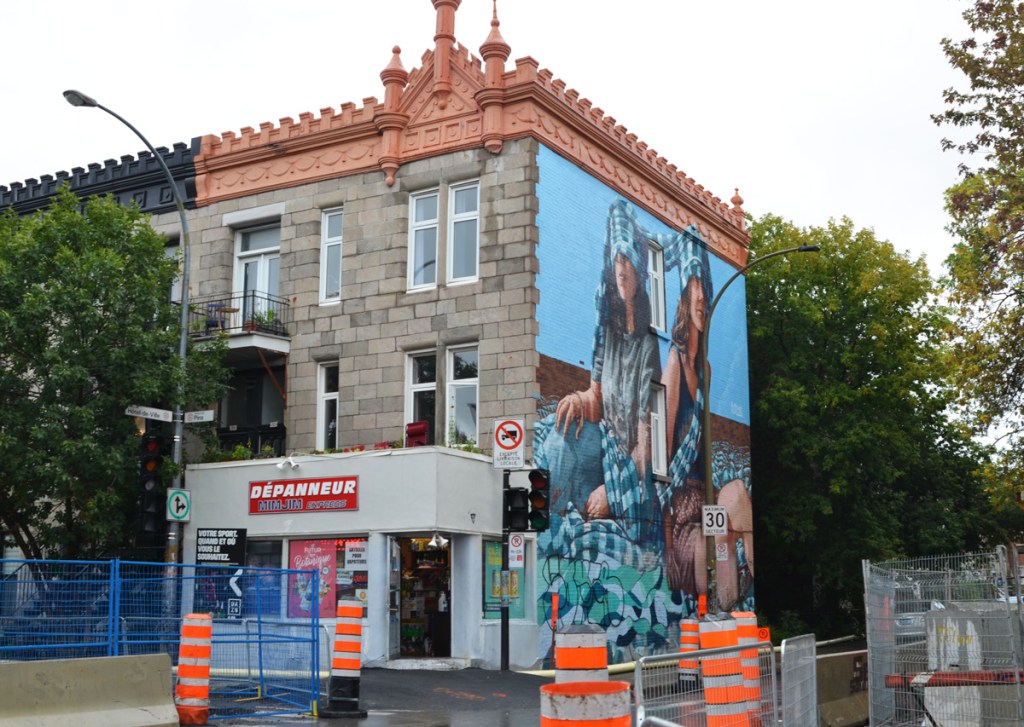
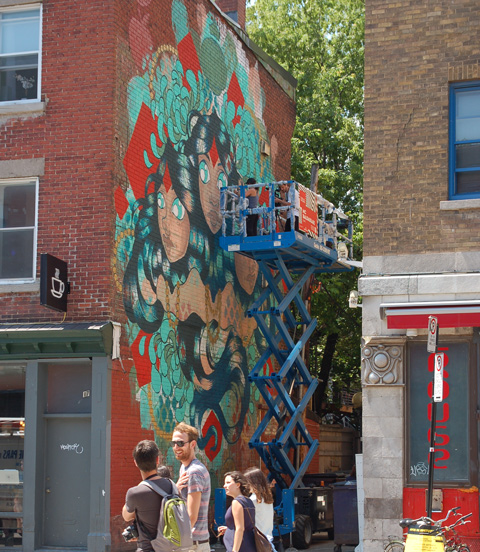
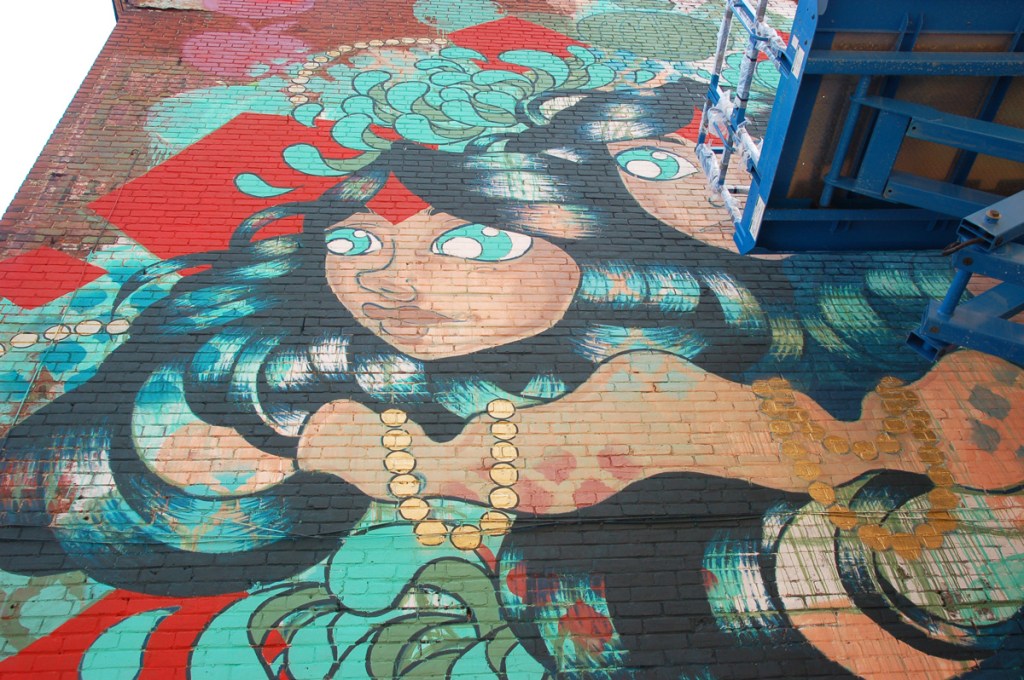
below: By a Depanneur at Pins and Hotel de Ville, a large mural of two seated women and their scarf by Australian artist Fintan Magee.
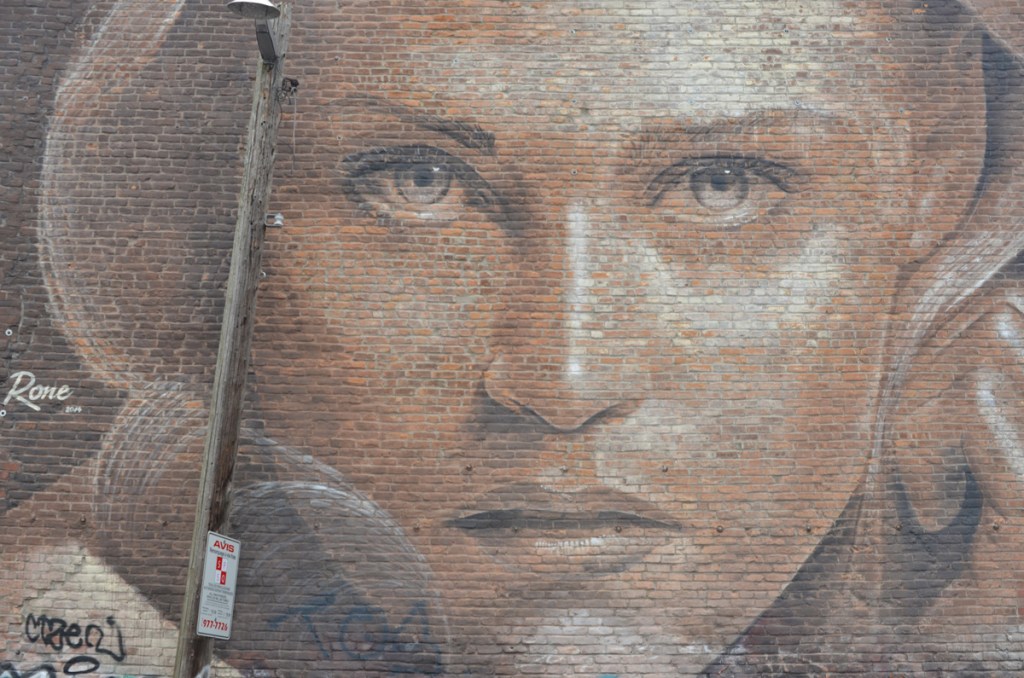
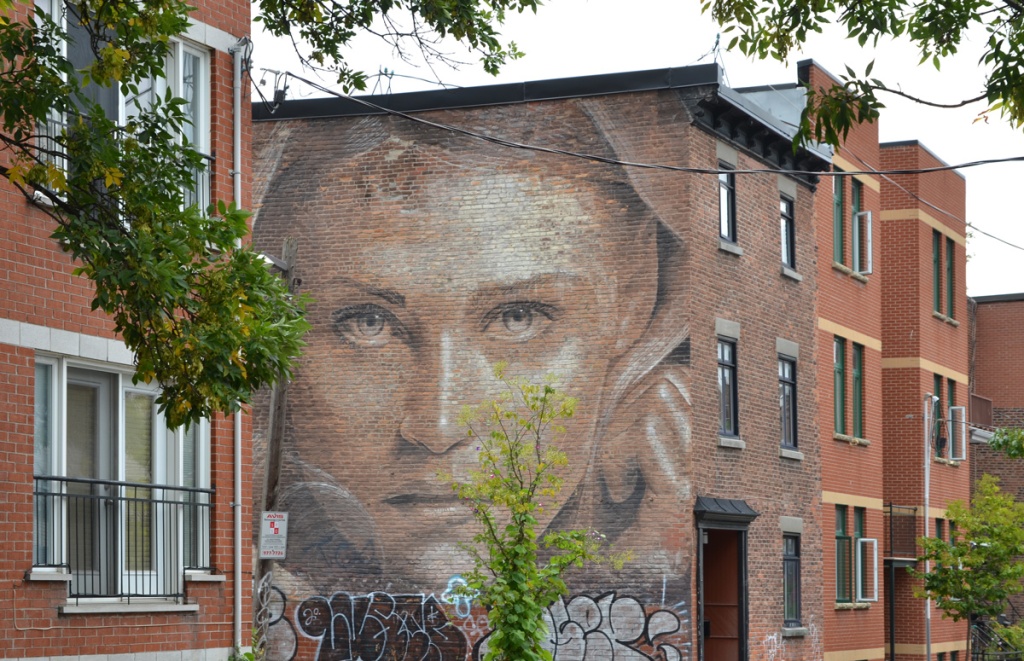
below: A mural by Rone, another Australian artist.
below: Sorry is Not Enough, a mural by Denial (or Enjoy Denial) with a shout out to Black Lives Matter
below: From 2018, this mural by Drew Merritt and Sainte Famille and Milton (photo taken in 2018 as well)
below: A tribute to Lea Roback (1903-2000), by Carlos Oliva (aka Hsix) in 2014. Roback was a textile worker who became a trade union activist, feminist and pacifist (among other things). She fought for woman’s suffrage in Quebec (1936), she played a role in helping to organize 5,000 garment workers who had been on a three-week strike in 1937, and that is only a small fraction of what she accomplished.
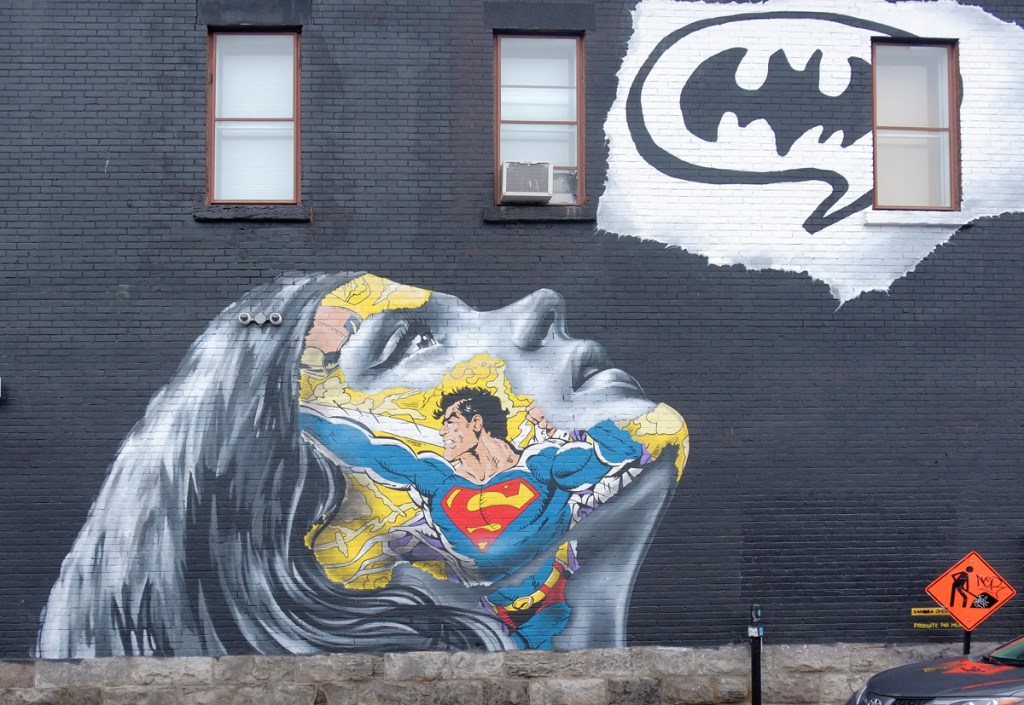
below: by Sandra Chevrier, pop culture references to Superman and Batman
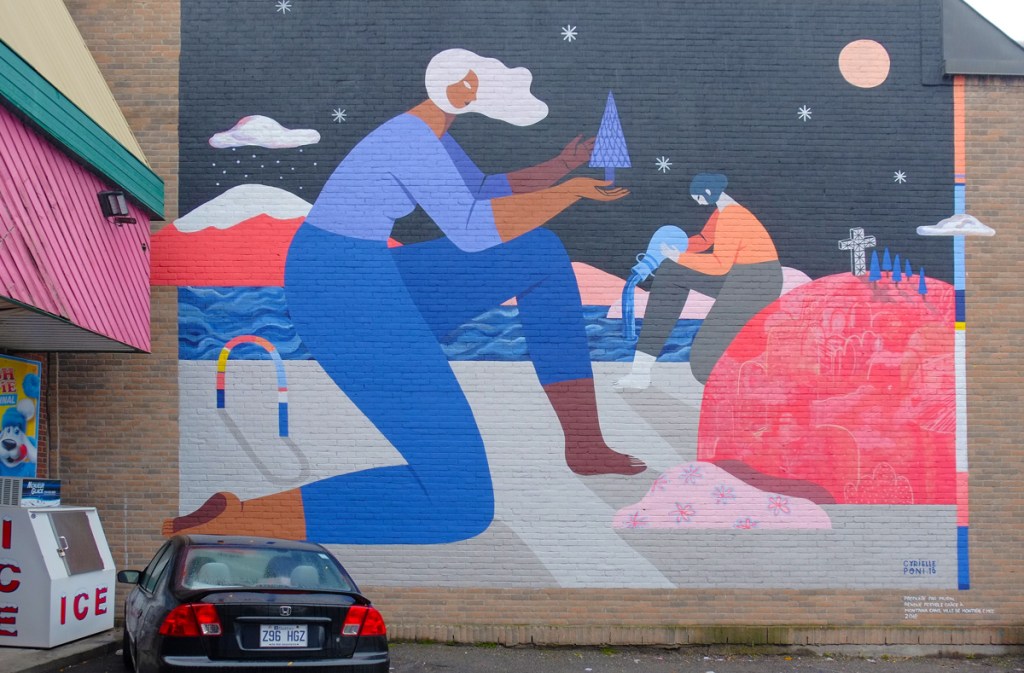
below: A collaboration between Cyrielle Tremblay and Poni (aka Hilda Palafox, painted in 2018. Working in an imaginary garden maybe?
below: A whimsical black and white of women astronauts, guitar players, skate boarders, astronomers, and others. It is the work of Le Monstr, aka Benjamin Tran.
below: A mural from 2014 putting a spotlight on the call for justice for missing and murdered indigenous women.





























 Eyes on the Streets