With over 130 murals in Stornara, it would be a bit daunting to show them all in one blog post so I have been spreading them out a bit. My previous post showed some murals on Via Don Enrico Tazzoli, ‘A Stornara wall’. The first few pieces in this post is just around the corner from those.
below: “Lupin e Jigen” by The Gaetan, a tribute to gay love. Both are characters from a manga series, Lupin III, first written by Monkey Punch (aka Kazuhiko Katō) in the 1960s. Lupin is a thief and Jigen is one of several of his gang members. Throughout the series, Jigen remains Lupin’s loyal and reliable partner to the end.
below: Are those words written across his face in place of his eyes?
below: There are a number of pop culture references in Toni Espinar’s ‘Mondo Patetico’ that was panted during el Festival COMIXSTREET de Stornara in 2022
below: Nearby, there are a few more walls that were (or could have been) painted during Comixstreet such as this image – she wears Wonder Woman’s clothes but carried Captain America’s shield. It was also painted by The Gaetan.
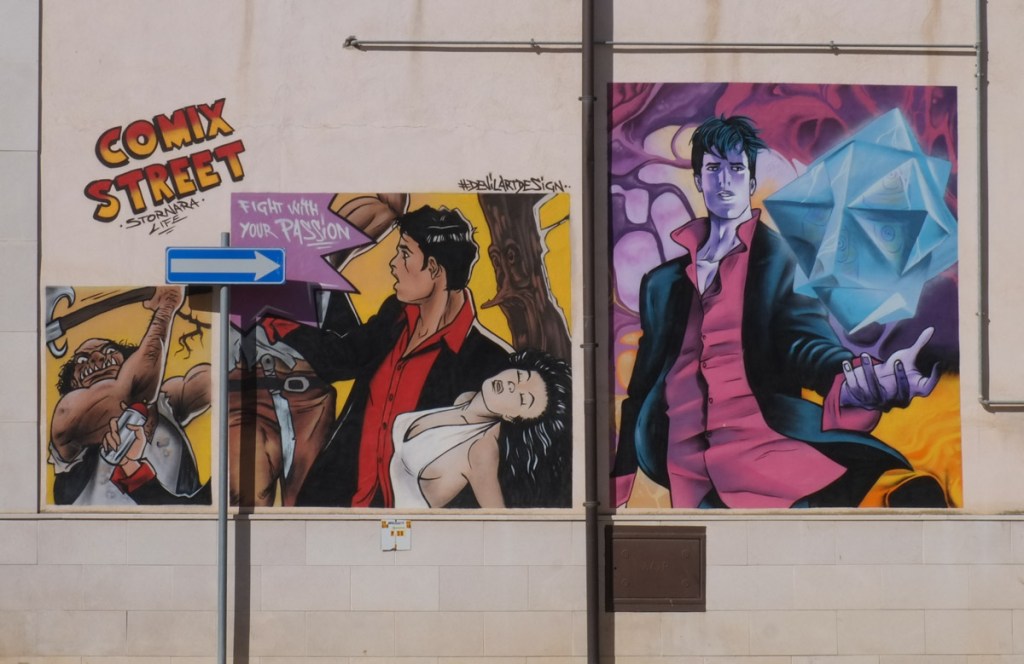
below: A couple of “comic book” type illustrations by Devil Art Design
below: by Kris Rizek “Donatrix (The great red riding hood)” – she carries a basket of spray paint cans to grandma’s house and no wolf is going to stop her!
On Viale Tor Marancia in Rome there is another residential area that has had murals painted on the four storey apartment buildings. There are 21 or 22 of them in total. Many of the murals are now at least ten years old so some of the colours have faded. Like most projects involving residential areas and mural, there is an organization behind them. In this case it is ‘Big City Life’ which is turn is a product of 999Contemporary. There was also collaboration with ATER – Azienda Territoriale per l’Edilizia Residenziale and Comune di Roma
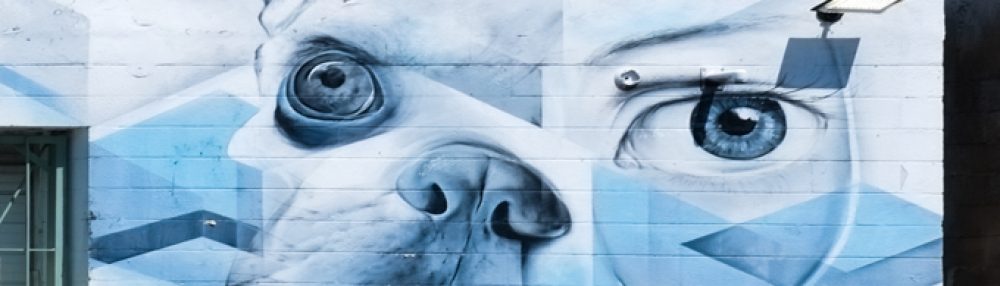
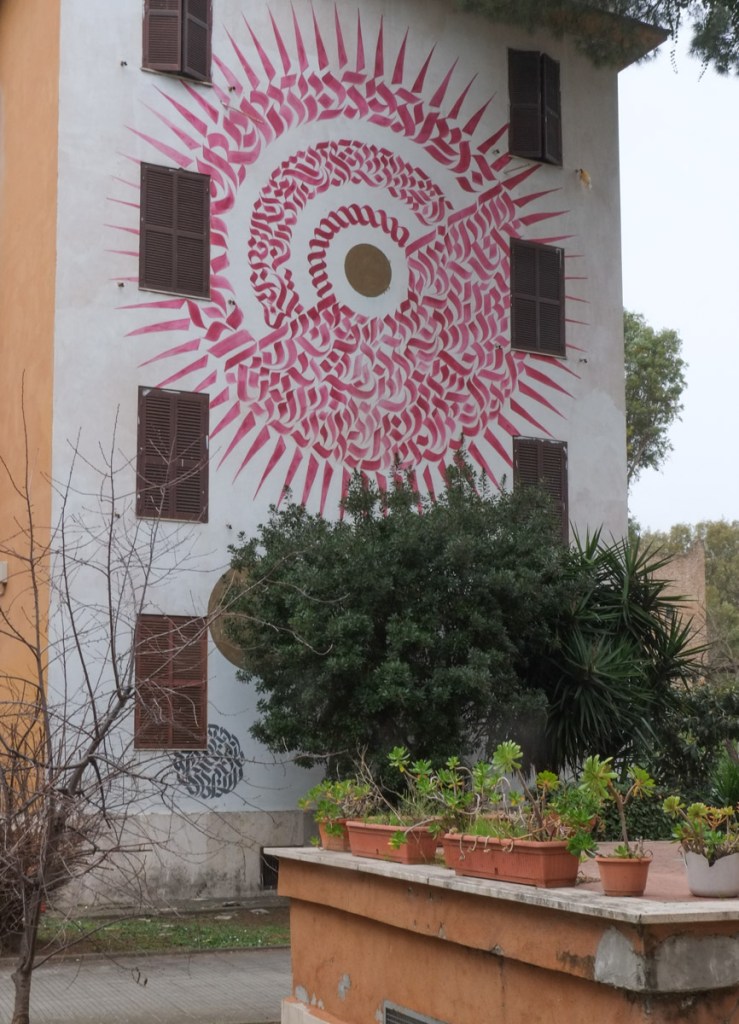
below: An eye along with a partial face was carved into the wall on this building back in 2015. This is a method that Portuguese artist Vhils (aka Alexandre Farto) has used to create images.
below: This is “Bambino Redentore” (which translates to “Redeemer Child”). painted by French street artist Seth in 2015.
below: A look at part of the public housing development on Tor Marancia. The buildings date from the 1960s. They replaced earlier housing that was provided for the people who had been displaced from areas near the Vatican decades earlier.
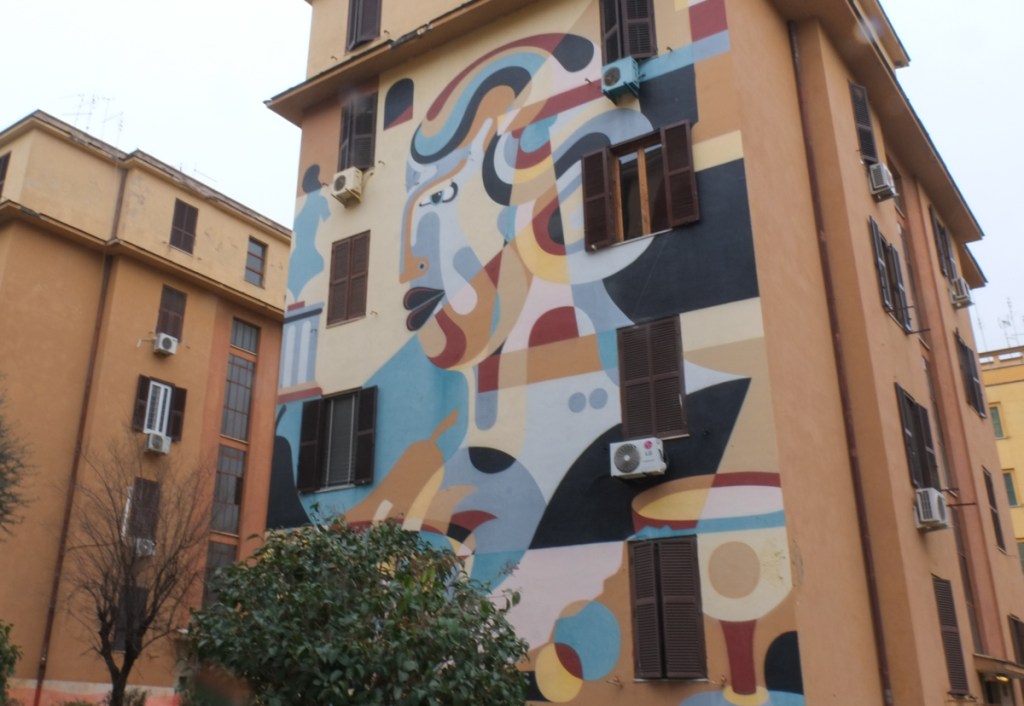
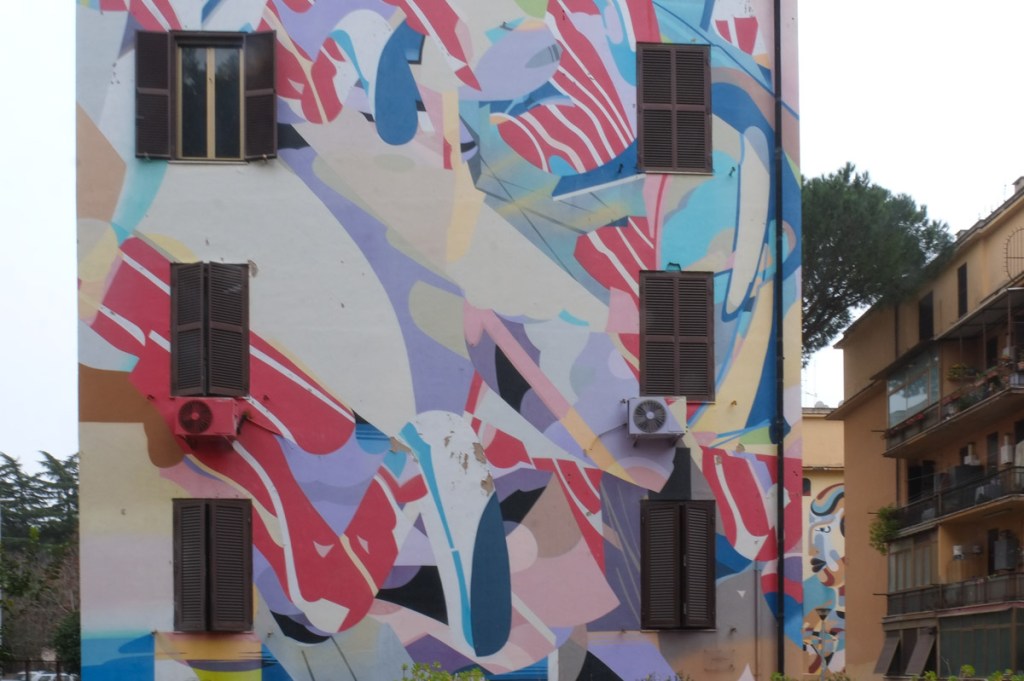
below: Clemens Behr’s abstract figure.
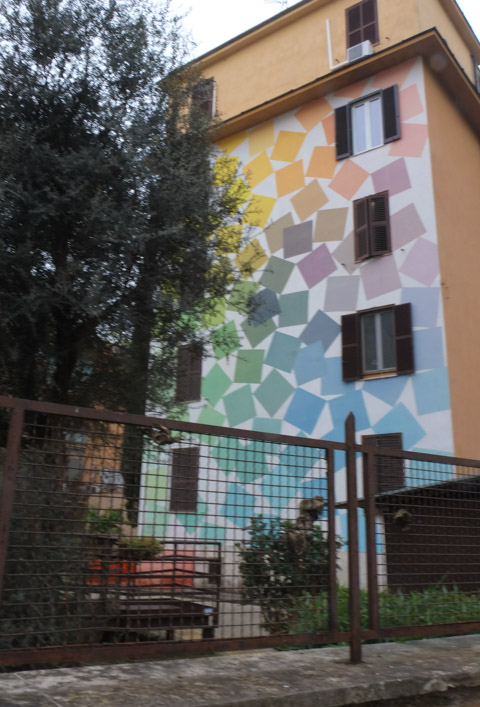
below: A collection of many squares of different colours, by Italian street artist Alberonero (aka Luca Boffi). In fact, it’s title, “A Carlo Alberto 93 Colori” (“To Carlo Alberto 93 Colours”) suggests that there are 93 squares.
below: “Alme Sol Invictus” by Domenico Romeo; the title references the ancient Roman god of the sun, Sol Invictus.
below: Natura Morta by Reka (aka James Reka) – people, curly hair, fruit, flowers, a wine glass.
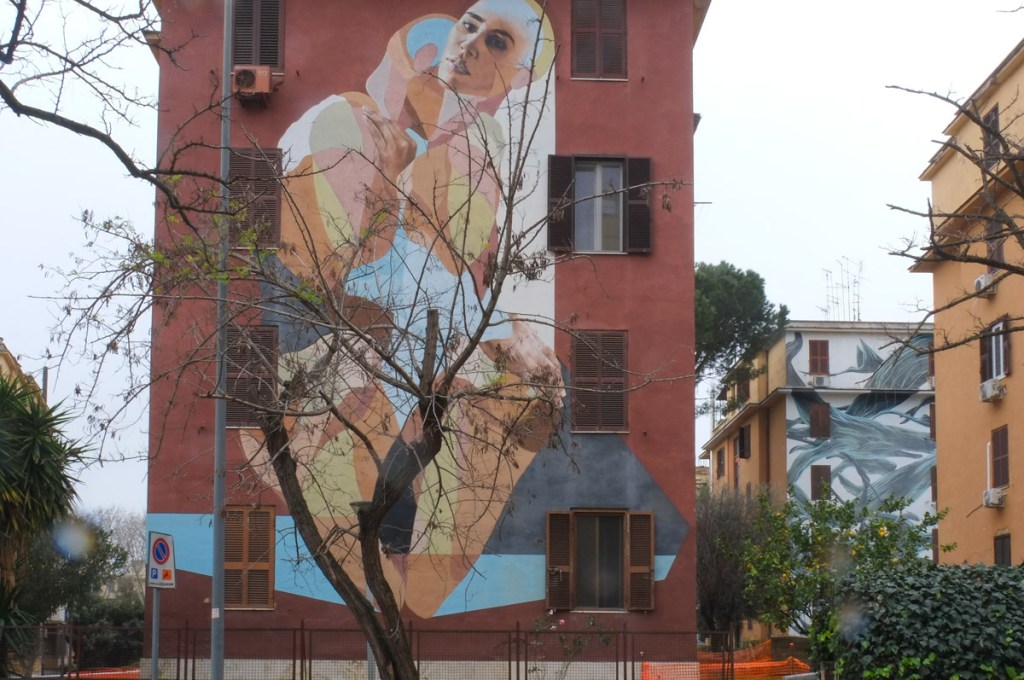
below: Just peeking out is one of the faces in “Nostra Signora di Shanghai” by Mr Klevra. The whole mural shows a mother holding a child, a religious image that is seen over and over again in Rome (and in all of Italy). One could also say that it is Rome (the mother) holding Tor Marancia (the child). The title translates to “Our Lady of Shanghai” as once upon a time this neighbourhood had the nickname of Shanghai.
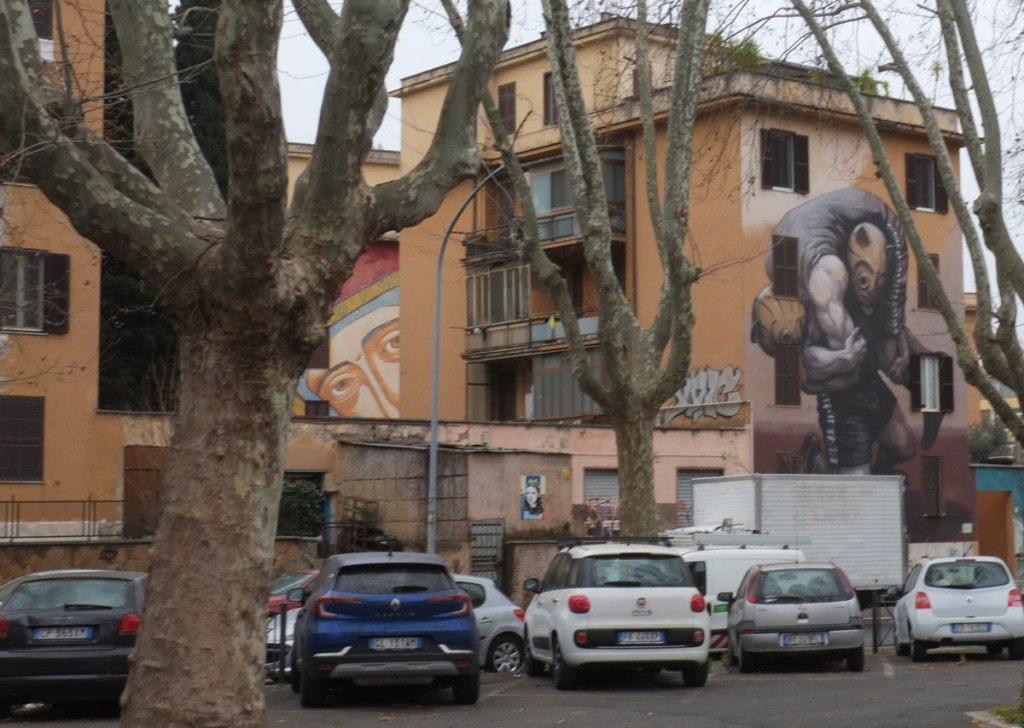
below: Argentinian artist Jaz’s (aka Franco Fasoli) work, “Il Peso della Storia” (The Weight of History) depicts two wrestlers in the middle of a fight. One wrestler is carrying another on his back, representing the weight of Tor Marancia’s history. It was the first Big City Life mural (2014).
below: Another mural from 2015, is “Hic Sunt Adamantes”, by local street artist Diamond. Ancient Romans used to write on maps “Hic Sunt Leones” (“Here Be Dragons”) to describe the areas that had not yet been explored. Diamond turned the popular sentence into Here Be Diamonds to highlight the great potential of the area. In this mural, Diamond painted in his iconic, Art Nouveau style a representation of Rome: a sleeping beauty unable to wake up from her numbness. And there is also a Shanghai reference: a Chinese dragon inside a golden garland that sparkles in the sunshine.
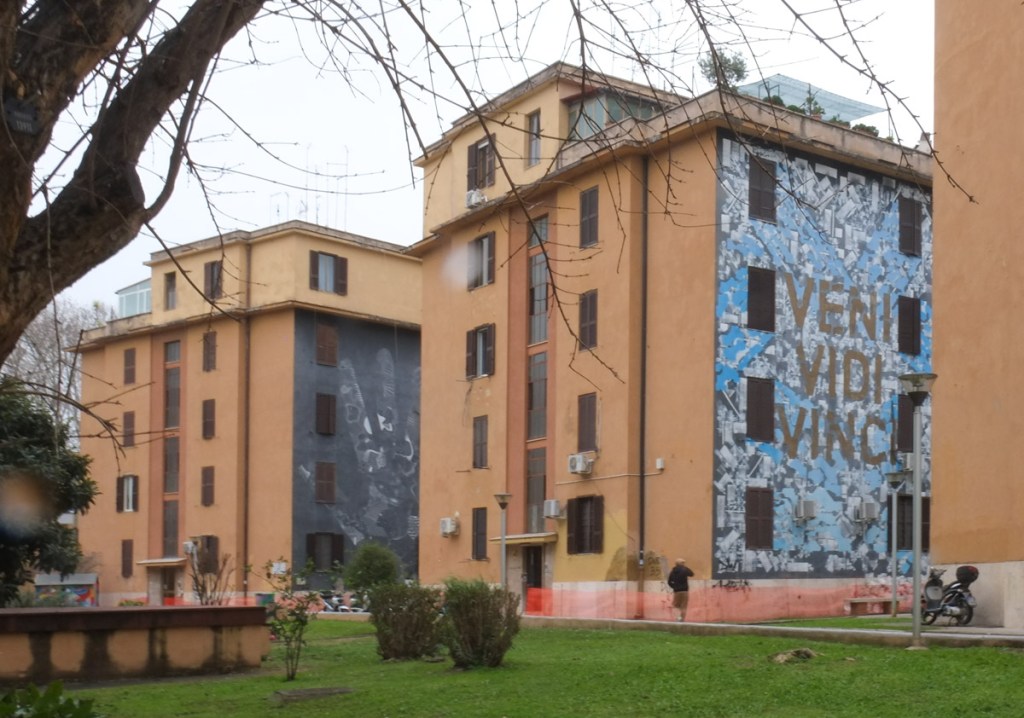
below: Lek (aks Frédéric Malek) and Sowat ( Mathieu Kendrick) working together since 2010. painted “Veni, Vidi, Vinci.” This is not a typo, but an intended twist of Giulio Cesare’s famous sentence to tribute another notable Italian: Leonardo da Vinci.
below: An orange, part of a building, and a head? Does that head have a body? This is “Spettacolo, Rinnovamento, Maturità” (translation: “Performance, Renewal, Maturity,” 2015) by Gaia (aka Andrew Pisacane). Perhaps the orange makes more sense in Italian where it becomes ‘anancia’ and here we are in Tor M’arancia’. (more of Gaia’s work can be seen in a blog post from Heerlen Netherlands, Four for Community)
below: She may be involved in an intimate encounter but she seems more interested in what’s happening elsewhere. This is “the Pyramid”, a hug, by English twosome Best Ever (aka Neil Edward and Hadley Newman)
below: The now familiar face of Greta Thunberg.
below: “The Hand of God” by Jerico (aka Jerico Cabrera Carandang) obviously inspired by Michelangelo’s “The Creation of Adam” in the Sistine Chapel. ceiling frescoes) except here the fingers are surrounded by cherry blossoms
below: Bluish grey snake-like fish (whales?) school together, in “Il Ponentino” by Pantonio
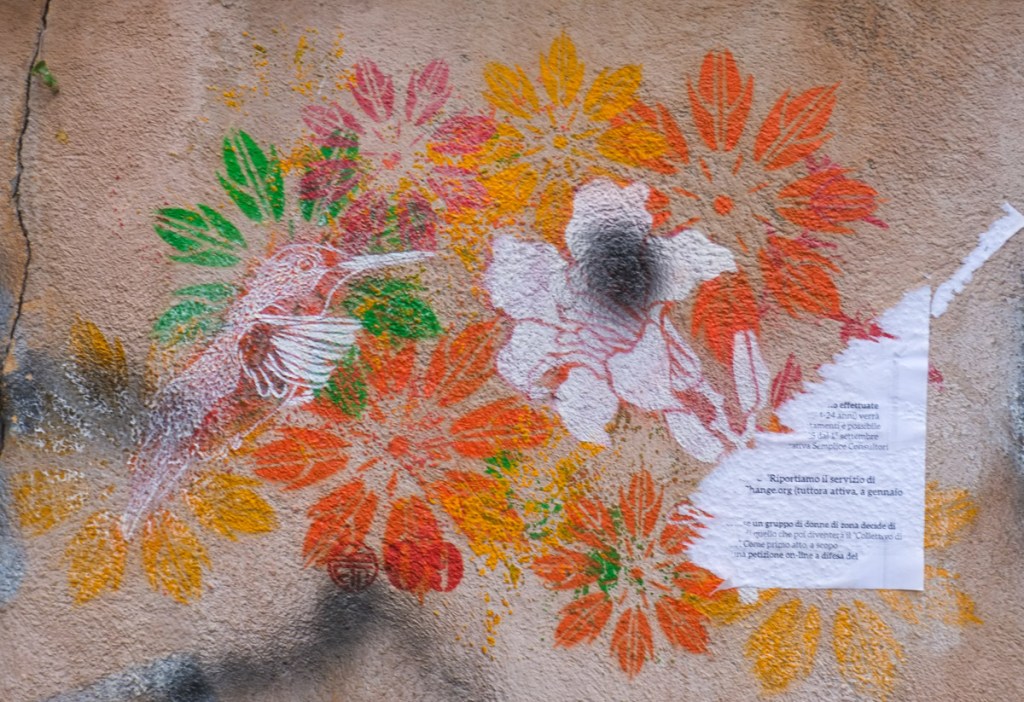
below: And lastly, not a mural but a delight to find – a small collection of colourful flowers and a little white hummingbird was stenciled onto one of the walls, by STEW.
While walking around the old part of Vieste, an Italian town on the Adriatic coast, I spotted three paste-up collages by Demetrio Di Grado, his “Frammenti Sparsi” (Scattered Fragments)
below: In each collage there were old black and white photos of people with words covering their eyes. This one has not survived very well. I am not sure what word obscures the girl’s eyes (my Italian is not good enough) and it appears that she was not alone in the beginning.
below: Put it all together to get “Cambiate le vostre idee ma conservate i vostri principi.” (Change your ideas but keep your principles).
below: Combining spray paint and collage, “odiao amarmi” – They hate to love me. The little girl in the collage has lost her words, once they were “amano odiarmi” – The love to hate me.
Di Grado’s artwork was part of the local Collateral Maris Festival in September 2022.
This blog post is a sample of the murals that I found while visiting a section in northeast Lecce around three streets – Via Raguso, Via Novara, and Via Agrigento
below: Dimitris Trimintzios aka Taxis painted this image of a woman harvesting what appear to be olives. Lecce is in the province of Apulia where olive groves dominate parts of the landscape; about 40% of Italy’s olive oil is produced in Apulia.
167B Street is a group that promotes art and community – to improve the look of neighbourhoods and to promote interactions between the residents. It is named after the multi-ethnic residential area in Lecce Italy where many of the murals have been painted, Neighbourhood 167 is a collection of apartment buildings that was built in the late 70’s to meet the demands for social housing at the time. It is also the neighbourhood where these photos were taken
below: “Mamma perdono” by Sabotaje al Montaje – here a fisherman catches plastic caps instead of fish, a comment on water pollution.
below: Two large murals on adjacent buildings, both painted by Chekos.
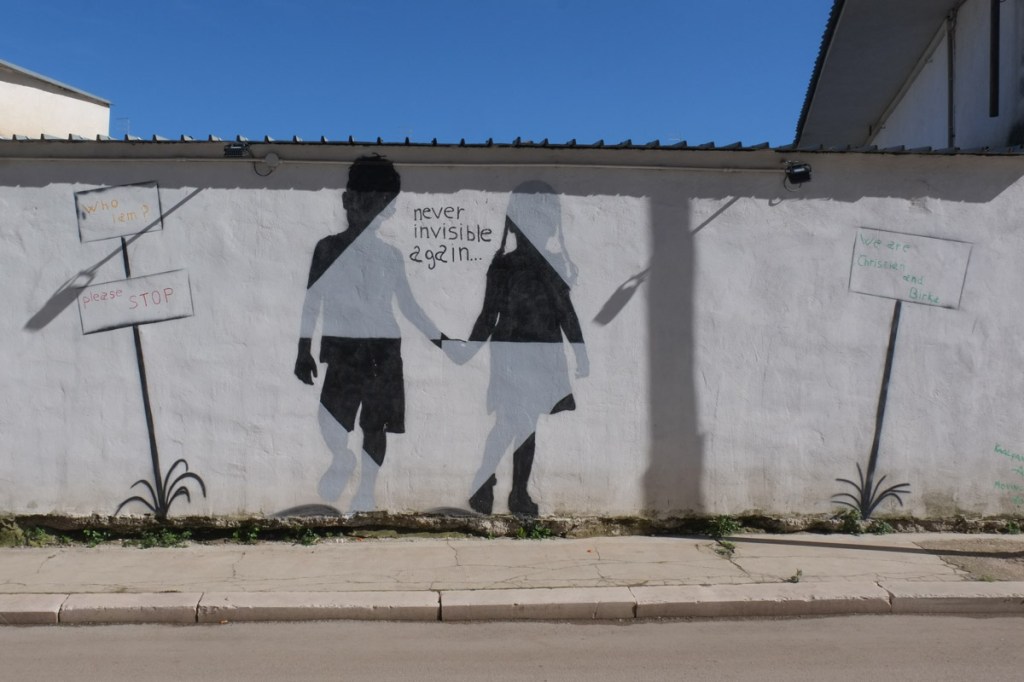
below: It’s their world – Children who are friends in real life too, Andrea and Fatou.
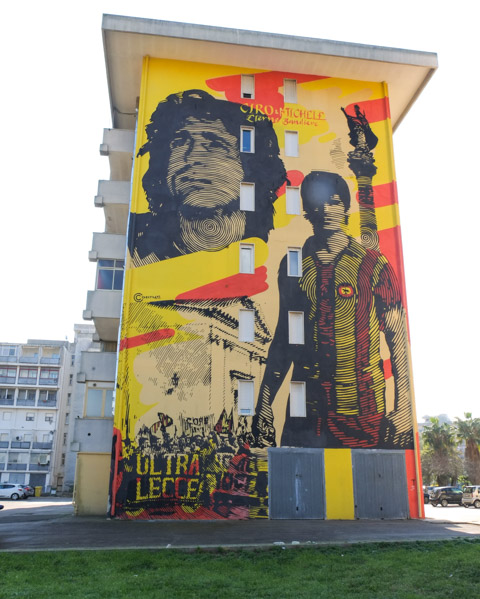
below: This mural is a tribute to two football players, Michele Lorusso and Ciro Pezzella, who played in Lecce in the 1970s and 1980s. Both died in a car accident in December 1983.
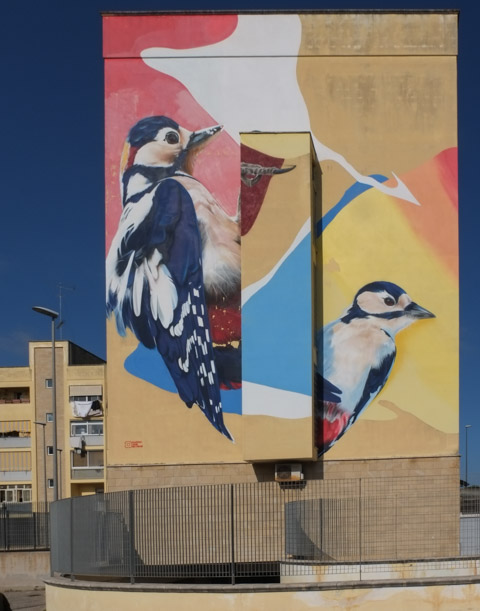
below: Two Great Spotted Woodpeckers painted by a pair of Dutch artists, Karski (aka Roy Valk) and Beyond (aka Roelof Schierbeek) These birds are known for creating the perfect home and environment and for defending their territory.
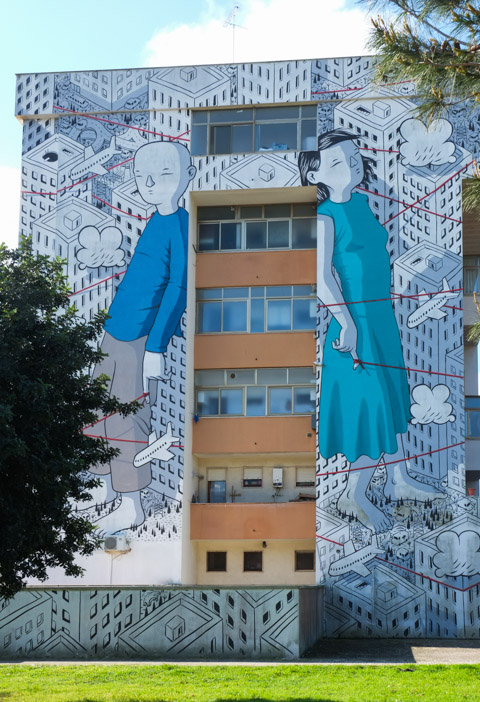
below: Wish by Millo (Millo also has a mural in the nearby town of Monopoli that I included in a previous blot post – Monopoli’s Millo). Here, the couple are tied down and tied to each other by red strings attached to their fingers. Are they wishing for travel (airplanes)? housing? dreams? each other?
below: The Italian words, “L’amore non è amato” translate to Love is not Loved, a quote that is attributed to Saint Francis of Assisi. The artist, Igor Palminteri, says on his instagram page, “I dedicate this wall to all residents of the 167 neighbourhood in Lecce. Let’s rise up, overcome all prejudice and open new paths to self-determination.”
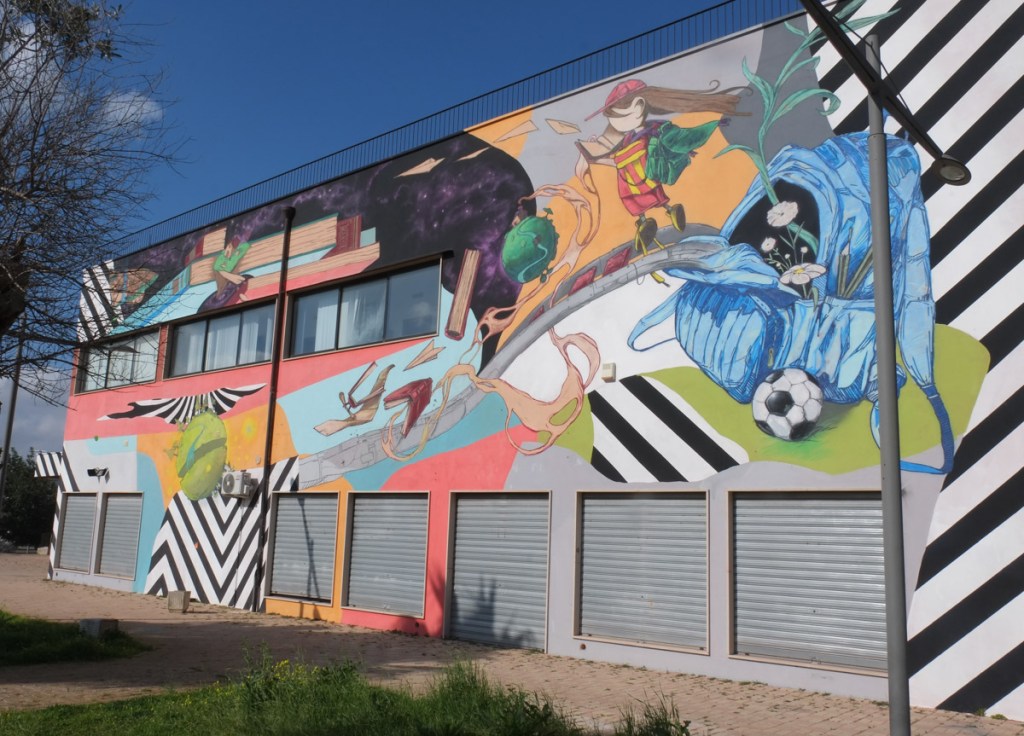
And last, there is a lowrise building in the neighbourhood that has been fully decorated by a team of artists – Chekos (aka Francesco Ferreri), Gabriele Quarta, Ania Kitlas, and Simon De Filippi. The murals were created from ideas provided by a Lecce City project called “Libri per la pelle – interventi artistici di arte urbana” (generally translates to Books for the Skin, interventions in urban art). Ferreri and Kitlas are the artists that founded 167B Street.
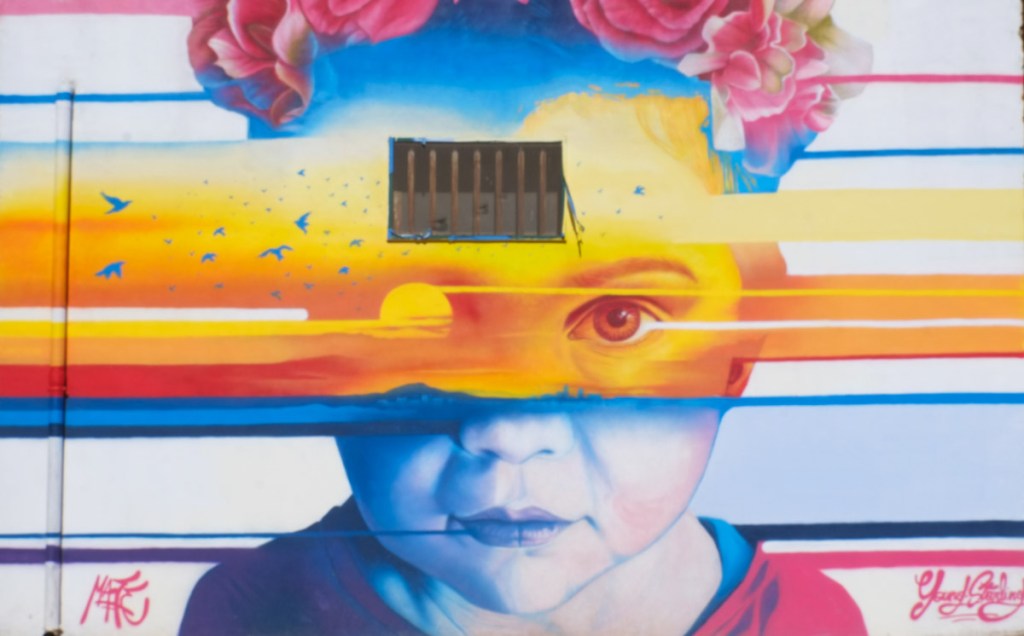
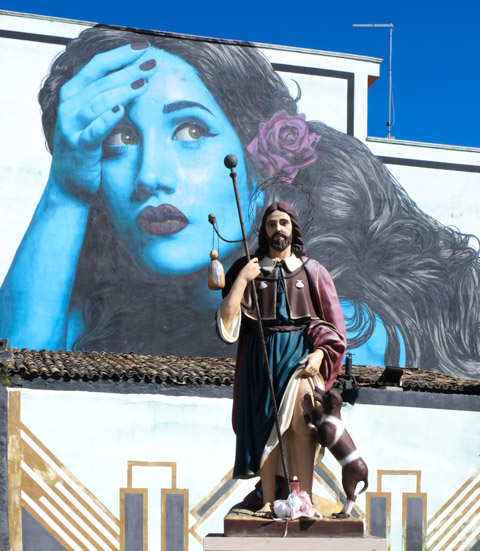
A large blue portrait of a woman, painted by Leticia Mandragora in 2020, dominates the center square in the small Italian town of Stornara.
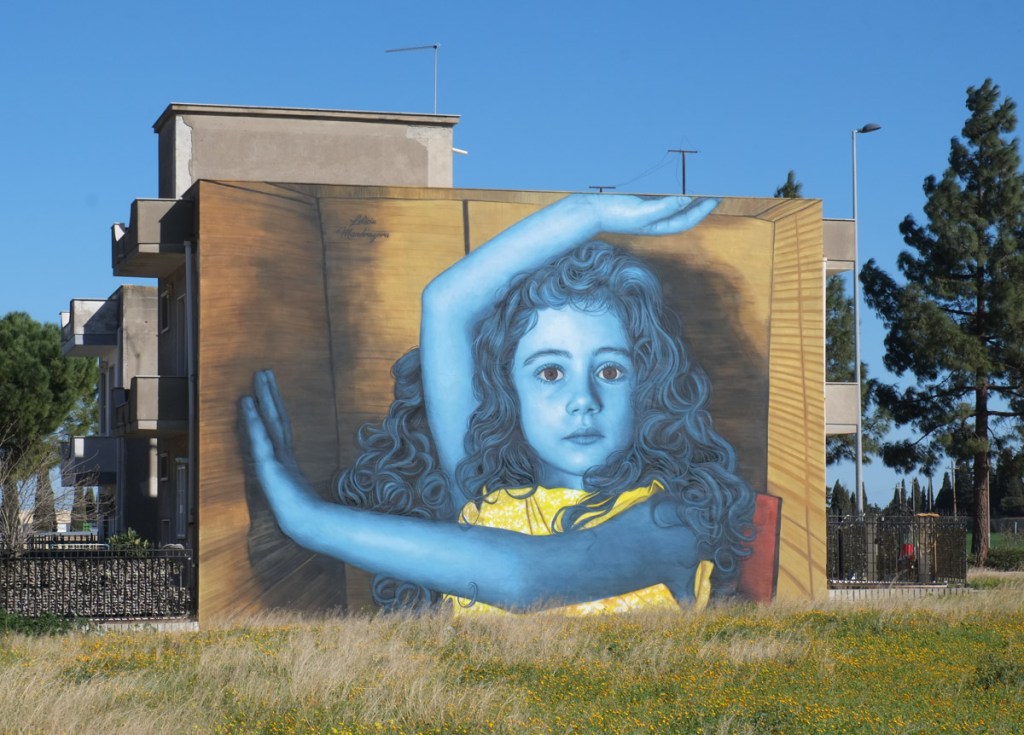
Over the past few years, the organization Stornara Life, has been responsible for bringing artists to the town to paint murals. There are now more than 100 of them. Mandragora’s blue portraits are now on three of the walls in this town including this young girl on the side of a residential building. It was painted in 2023 as part of the annual Stramurales festival.
“Reginae Mater Natura” from August 2021
He is San Rocco, a 14th century pilgrim who was known for his ability to cure those with the plague…before he himself died of it
below: On the left is a little Nuno Costah character with a bird on its hand and the world on its back, all showing más love. Beside it is a portrait of Domenico Modugno by bio dpi (aka Fabio della Ratta). Domenico Modugno (1928-1994) was an Italian singer, actor and, then, a member of the Italian Parliament.
below: On the south side of the city is this old wall.
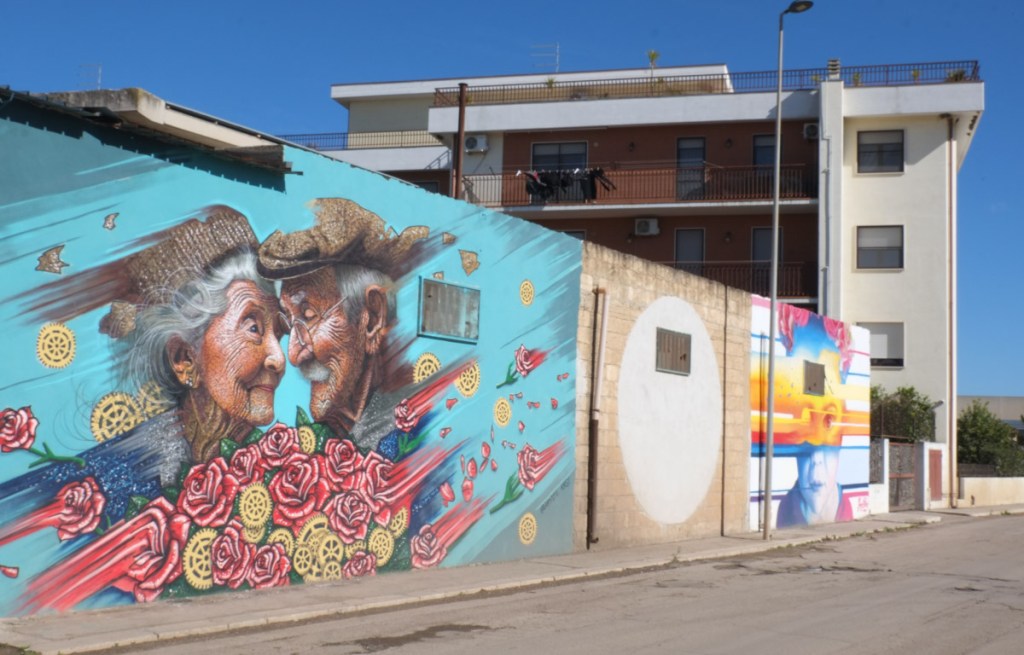
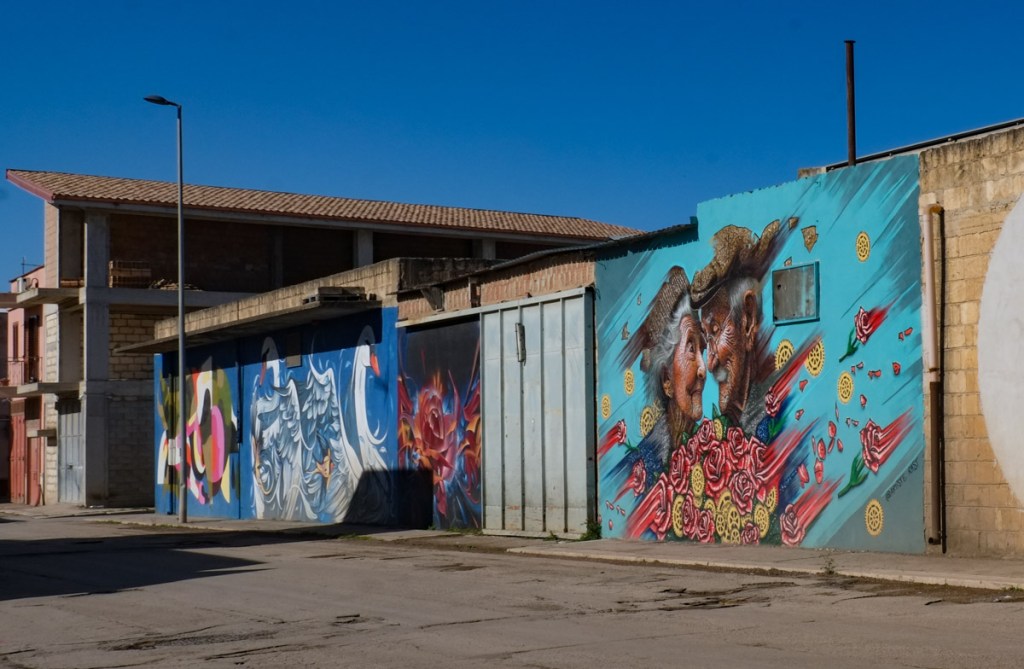
below: Two old reddish faces
below: A crab with its insides exposed takes on a squid
below: A boy and his cat.
below: A little black Qwerty figure partially obscured by a scowling blue man from Beijing Tattoo China.
below: Ti apprezzo – I cherish you.
below: Tiny coloured drawing of a young woman with three flowers, along with what looks like another woman in profile drawn with parallel black lines. Also, at the bottom, an AU OSCE sticker
below: And last, a little yellow feathery bird with skinny legs and a cap with a W.
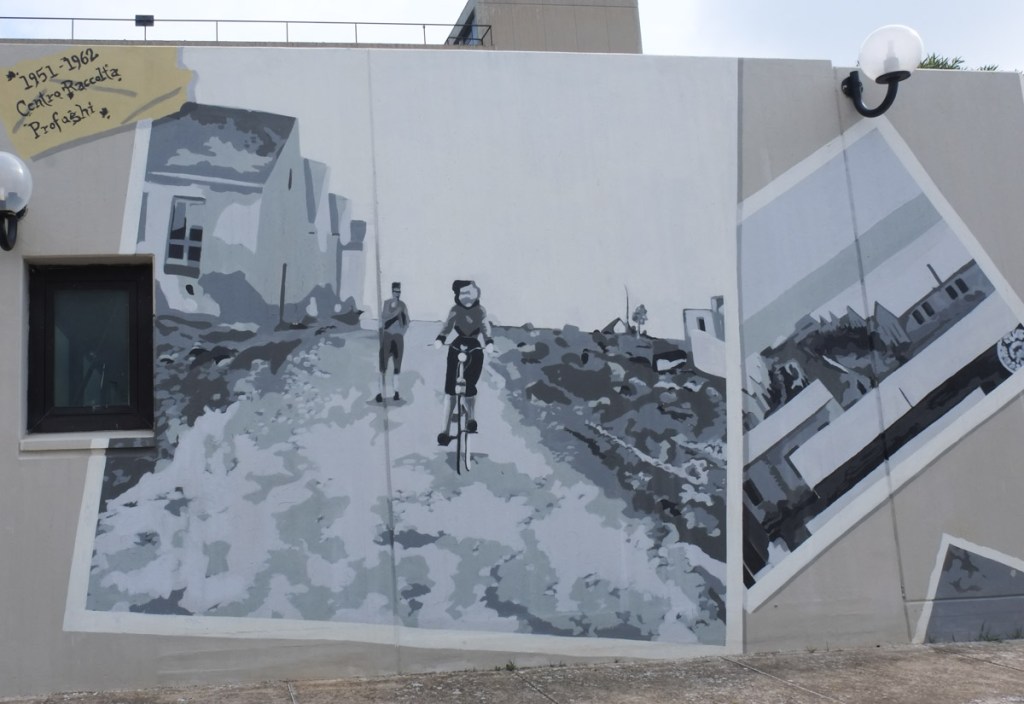
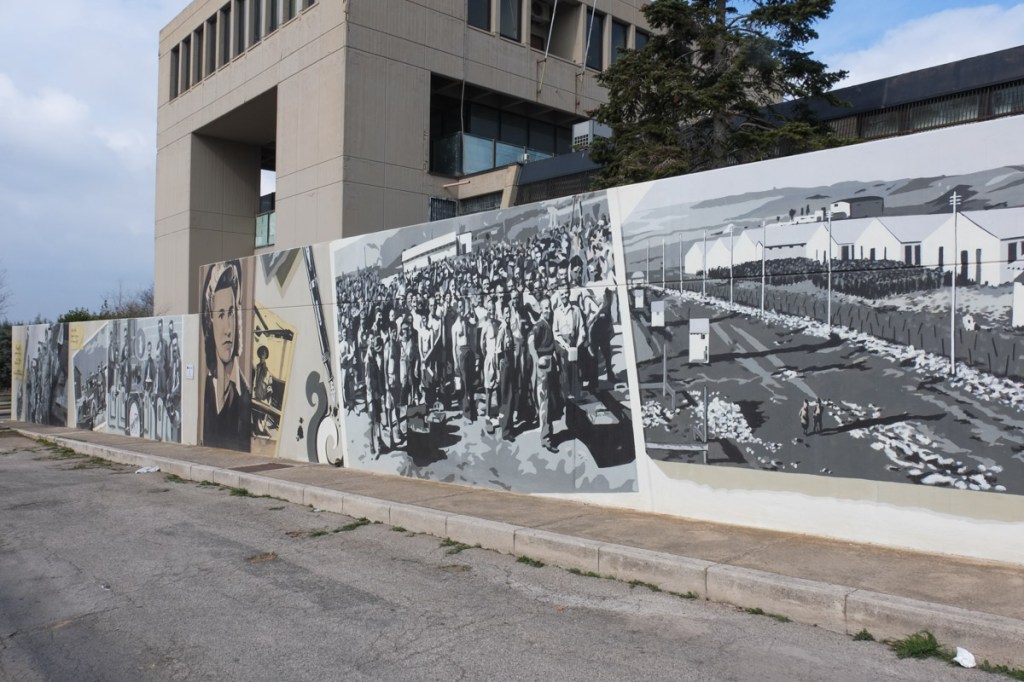
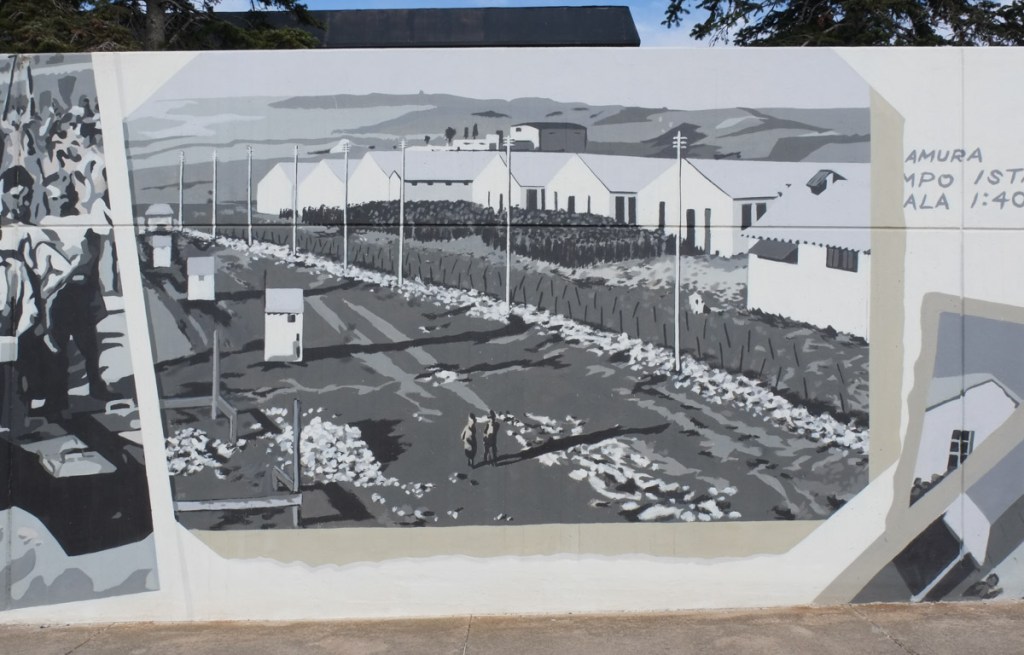
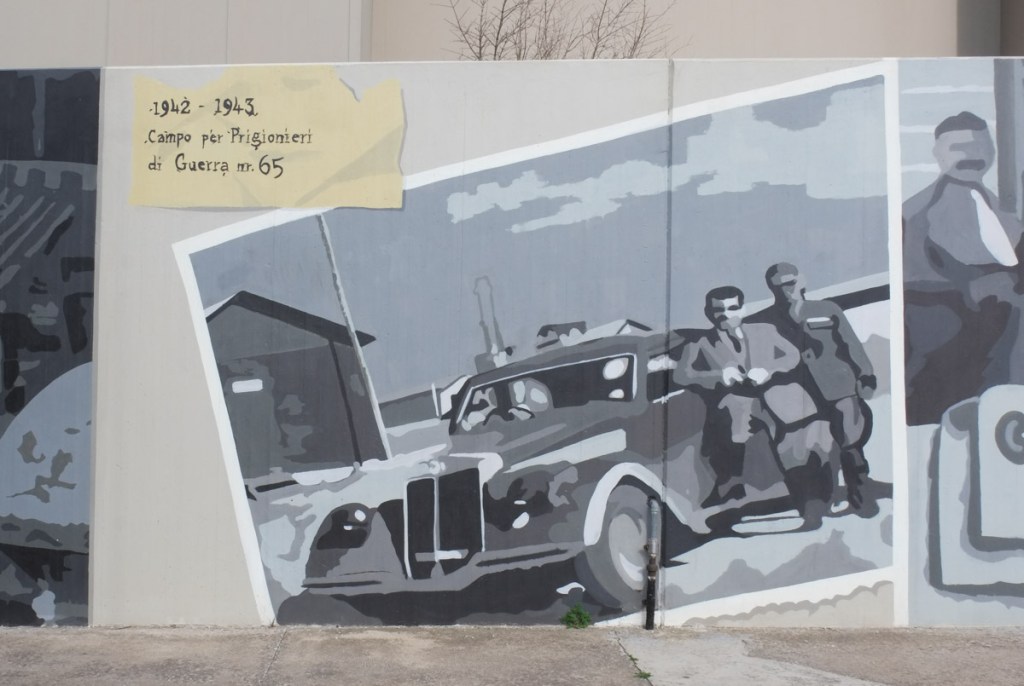
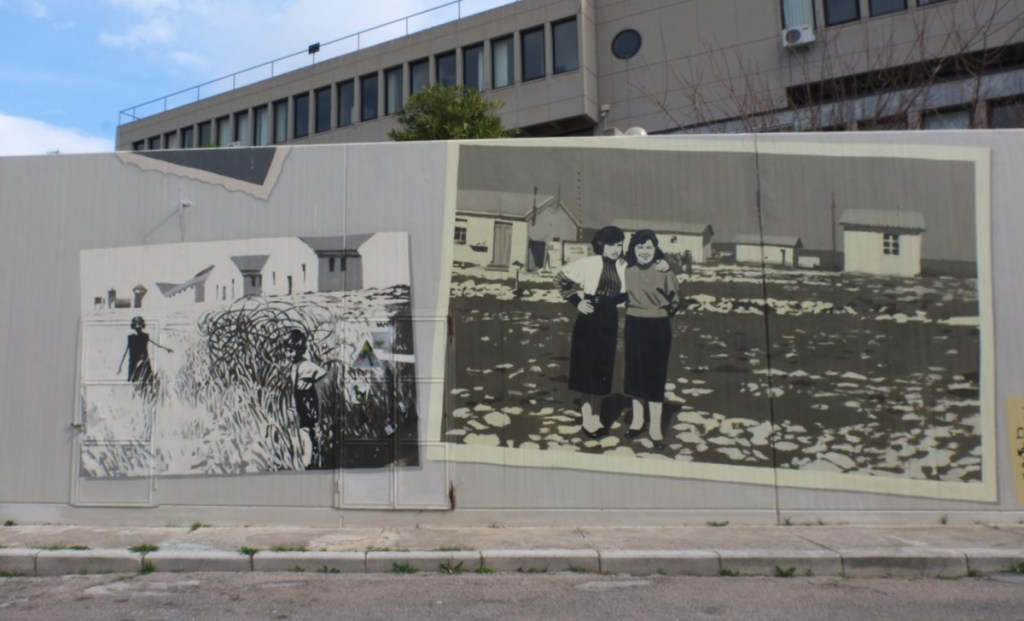
In Altamura a wall has been painted with copies of old photographs of Campo 65. This camp, or center, began as a Prisoner of War camp during World War 2. Allied POWs were held here in 1942 and 1943. It was also a training center for troops that liberated Yugoslavia in 1945. After the war was over, it was then used to house refugees.
below: The 36 barracks contained up to 12,000 Allied prisoners of war: British, South African, New Zealand, Canadian, Cypriots, and Palestinians mainly from the North African war front. It was the largest Italian WW2 prisoner of war camp.
Murals painted by: Donato Lerusso, Marco Forte, and Mattia Pellegrino, 2022
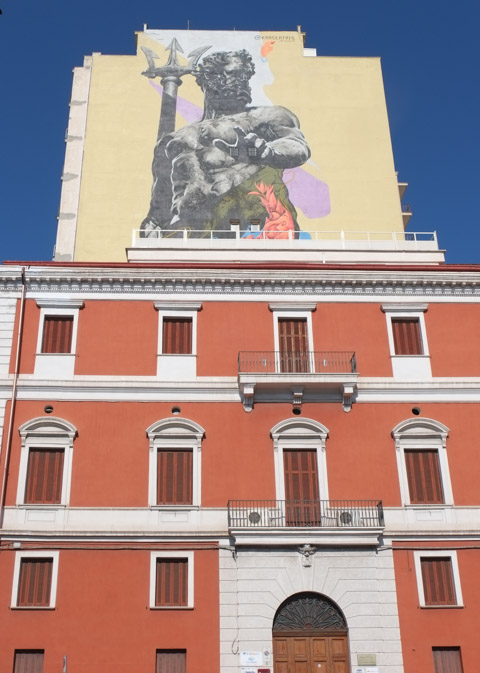
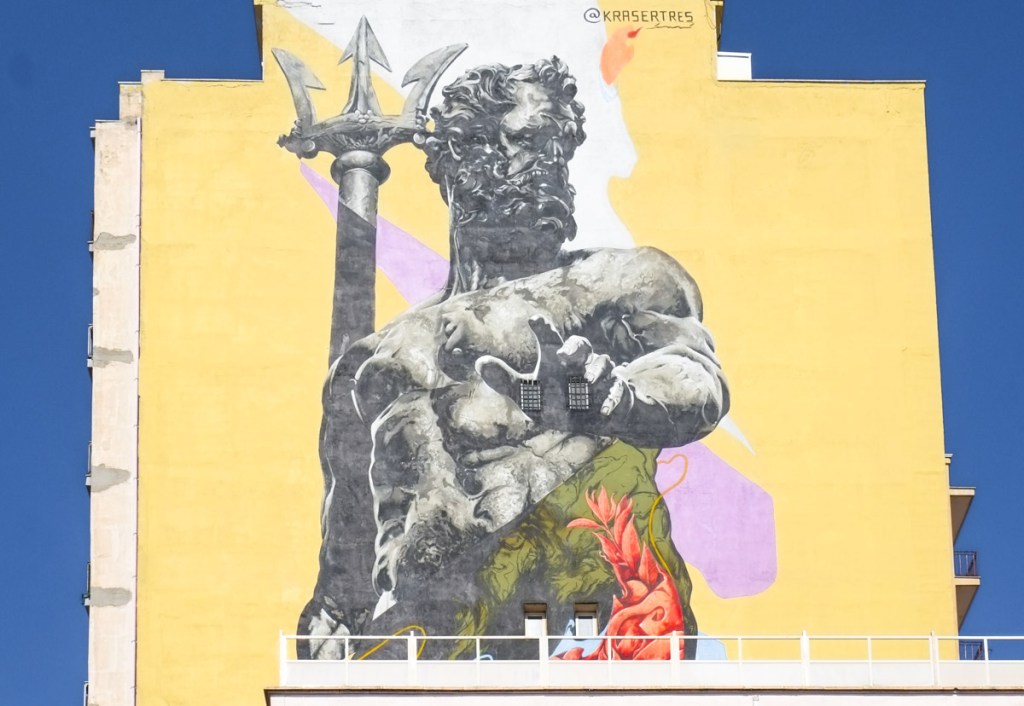
Nettuno, or Neptune as he is known in English, is the Roman God of the sea who controlled the winds and storms encountered by sailors. This large mural by Kraser Tres stands over part of the waterfront in the Italian city of Taranto – Neptune holds his trident as he looks out toward the Ionian Sea. Nettuno tiene il suo tridente mentre guarda verso il Mar Ionio.
The mural was part of a Gulìa Urbana project. This organization has been bringing murals to Italian cities for 12 years.




























 Eyes on the Streets