Murales Campo 65

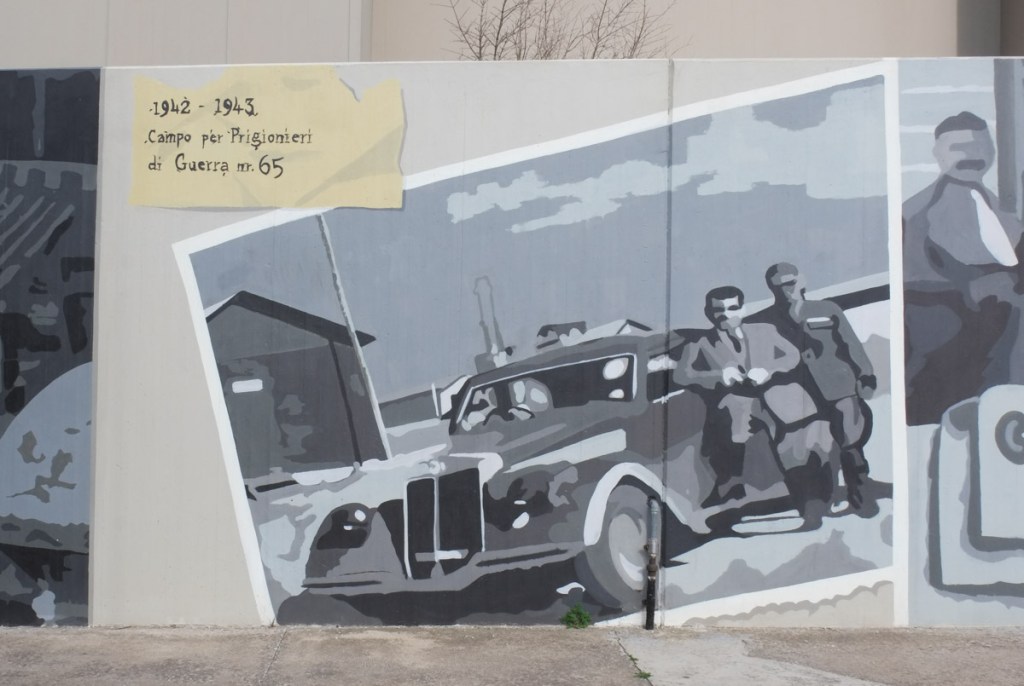
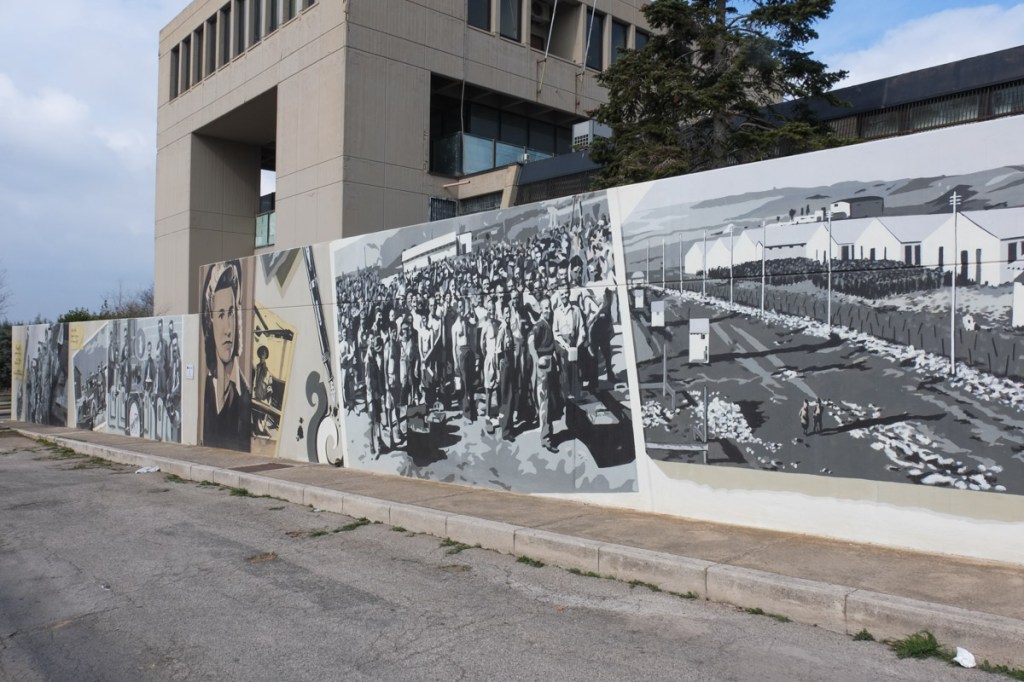
In Altamura a wall has been painted with copies of old photographs of Campo 65. This camp, or center, began as a Prisoner of War camp during World War 2. Allied POWs were held here in 1942 and 1943. It was also a training center for troops that liberated Yugoslavia in 1945. After the war was over, it was then used to house refugees.
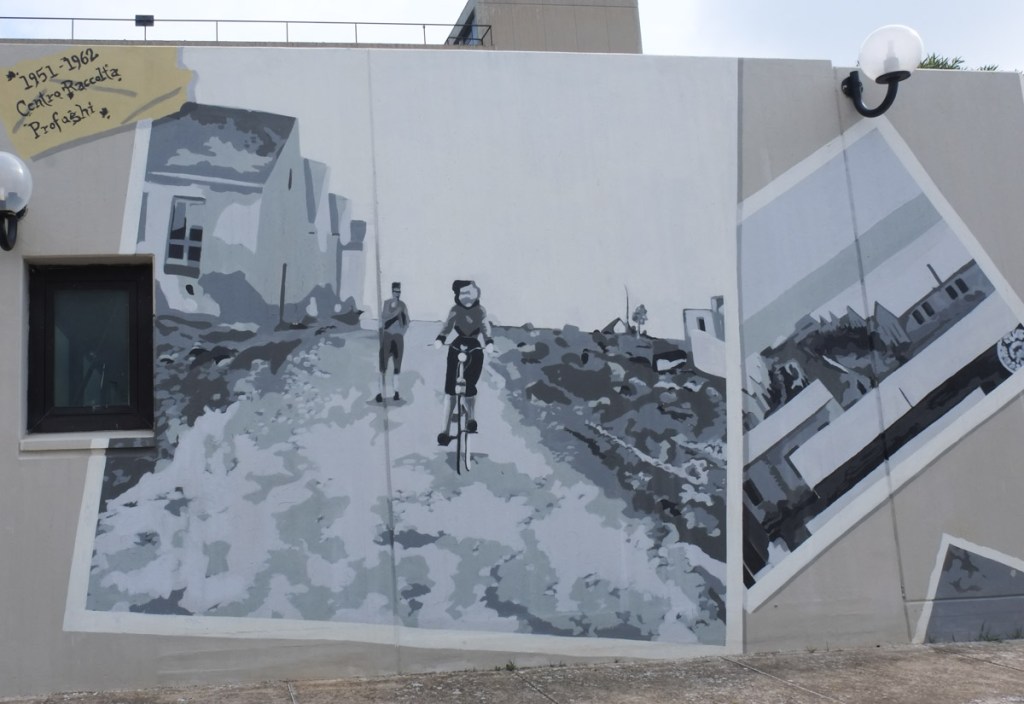
mural in shades of grey using images of old photographs from Camp 65 from WW2, one is a woman on a bicycle
mural in shades of grey using images of old photographs from Camp 65 from WW2, a group of 6 images in a row

below: The 36 barracks contained up to 12,000 Allied prisoners of war: British, South African, New Zealand, Canadian, Cypriots, and Palestinians mainly from the North African war front. It was the largest Italian WW2 prisoner of war camp.
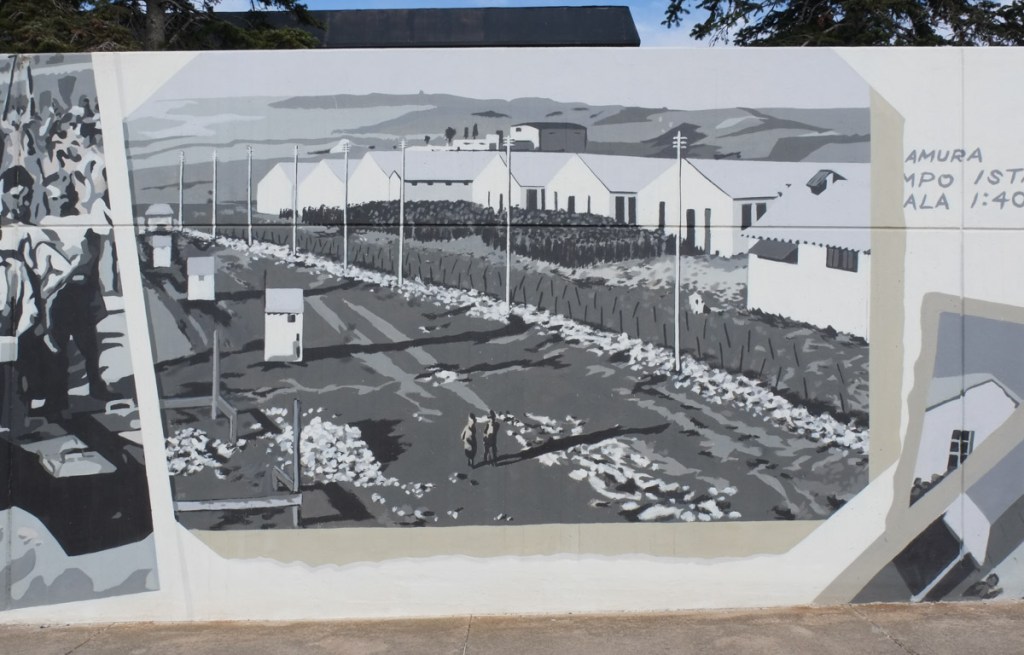
mural in shades of grey using images of old photographs from Camp 65 from WW2, row of white buildings, barracks
mural in shades of grey using images of old photographs from Camp 65 from World War 2, one image is a woman's portrait, the other is a man in a pith helmet type hat
black and white image in a mural, a group of men playing in a band including an accordion, a drum and a trombone
two men standing by a car from the 40s, black and white image on mural
mural in shades of grey using images of old photographs from Camp 65 from WW2, group of men
group photo of women in military uniforms, including hats, made into a mural in grey tones

mural in shades of grey using images of old photographs from Camp 65 from WW2

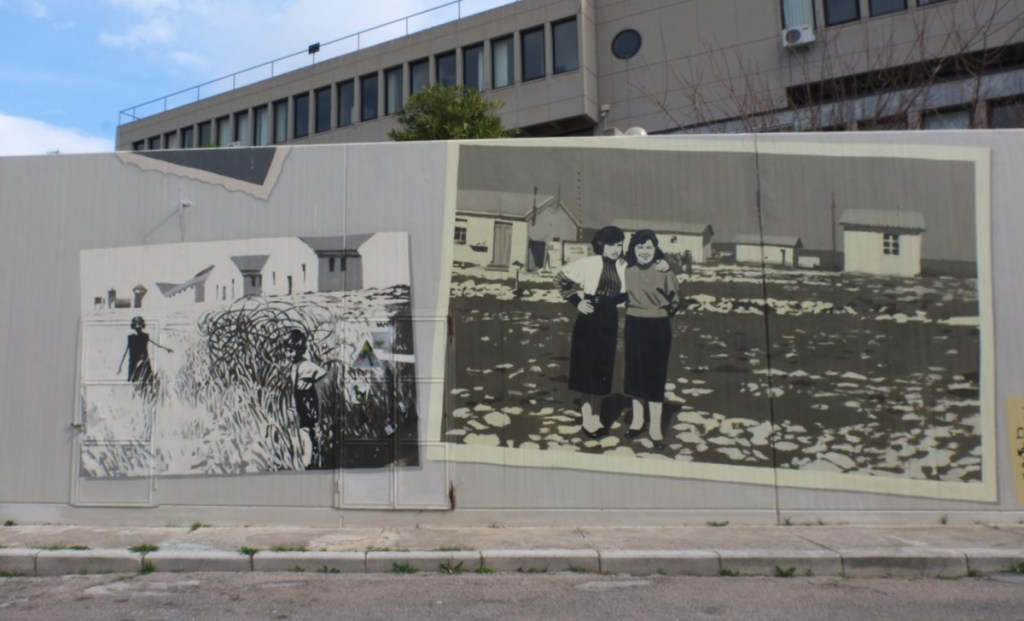
two black and white photographs of people and life at camp 65, turned into images on a mural painted on a wall, one shows two women standing in front of small white buildings
campo 65

Murals painted by: Donato Lerusso, Marco Forte, and Mattia Pellegrino, 2022

Photos taken February 2024

Resistance Tributes by C215

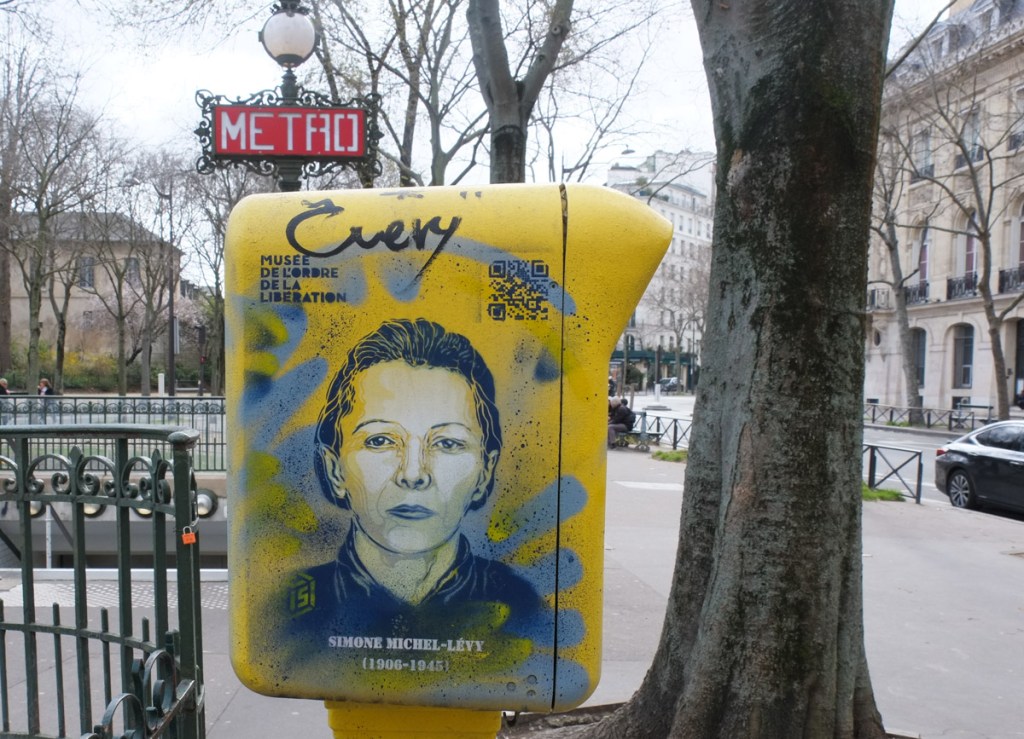
In a small park at Place Salvador Allende (7th arr.) there is a yellow Paris post office mailbox on which there are some portraits by C215 (aka Christian Guemy). Guemy has painted tributes to many people including some on other yellow post office boxes. The box pictured here is close to the Musee de l’Ordre de la Liberation (located in the Hotel National des Invalides) and features people seen in the museum who played a role in the French Resistance during WW2.

below: Gabriel Brunet de Sairigné (1913-1948) was an army officer in the French Foreign Legion. He died “in the line of duty” in Vietnam on 1st March 1948.

below: Marcelle Henry (1895-1945) was active in the Resistance during WW2 and is one of the six women recognized among the “Compagnons of the Liberation”. She was arrested by the Gestapo in 1944 and sentenced to death but spent the remaining months of the war in concentration camps. She lived to see freedom but died shortly after from the effects of her incarceration.

below: Simone Michel-Levy (1906-1945) was also a French Resistance worker. She had quite a few aliases including Emma, Françoise, Madame Royale, Mademoiselle Flaubert or Madame Bertrand. She too is one of the six women recognized among the “Compagnons of the Liberation”. She was arrested by the Gestapo in November 1943 and sent to a concentration camp. At the camp she help organize an uprising against the guards. She was hanged for this – 10 days before the camp was liberated.

Nikola Jorga’s portrait

a large mural in Tirana Albania on a concrete wall, a portrait of Nikola Jorga, a Romanian historian who died in 1940, along with some text in Romanian

He was born Nicu N. Iorga in Romania on 17 Jan 1871. He was a prolific writer and cultural historian. His biography is long and it gets complicated when discussing his scholarly works and opinions so I will leave that for you to read on Wikipedia (or similar) if you are interested. I haven’t figured out why he is featured on a mural in Albania. He was murdered in 1940 by the Iron Guard, a Romanian militant revolutionary fascist movement and political party.

top part of mural, head and portrait of Nikola Jorga

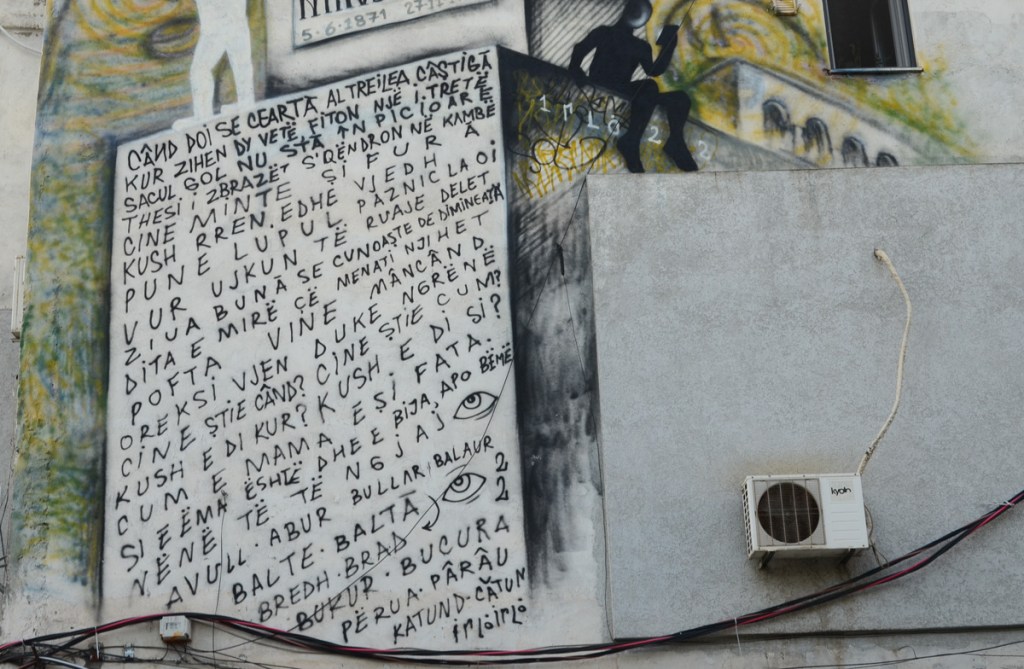
The text is written in Albanian (or Romanian, google translate had trouble with this) but the first few words translate as “When two quarrel, the third wins”

long text in Romanian from a mural

This mural was painted by Irlo Doidoi for MurAL Fest 2019.