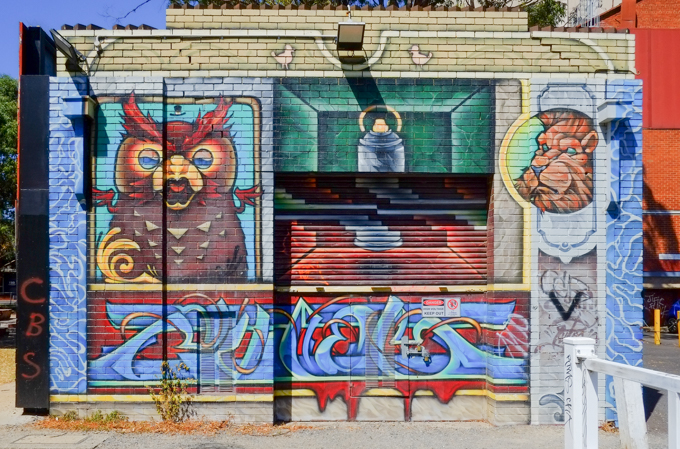
This structure stands in a park in Port Phillip (St. Kilda) Melbourne.
below: An owl on the left and a lion’s head on the right – with a can of spray paint in the middle.
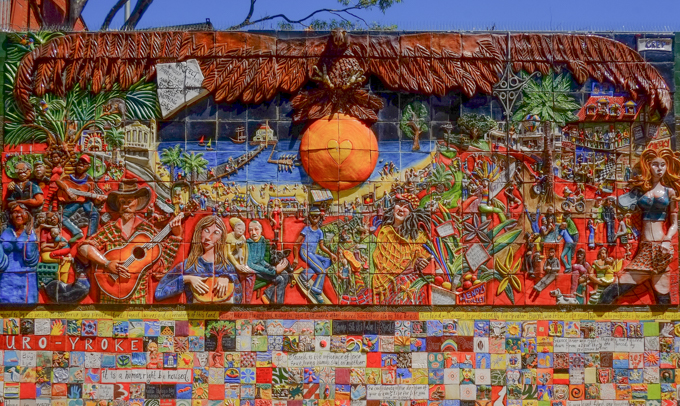
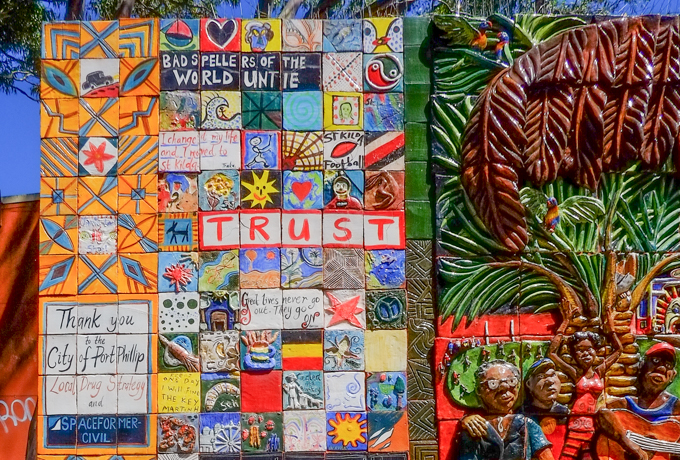
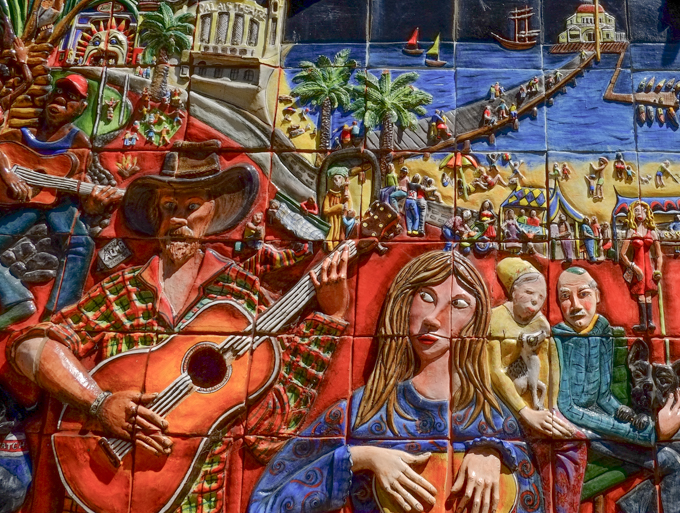
below: The interesting part of the artwork is the other wall. Here there is a large image made of ceramic tiles. You can find many familiar St. Kilda landmarks in the picture – the pier, Luna Park, and the beach for instance. The central image is surrounded by squares decorated with various symbols, pictures, and/or words.
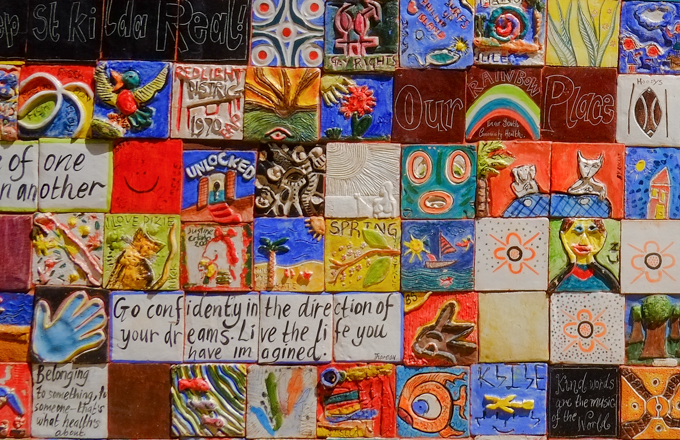
below: “TRUST” as well as “Bad Spellers of the world untie”
below: “Go confidently in the direction of your dreams. Live the life you have imagined.” as well as “Belonging to something, to someone, that’s what health’s about”
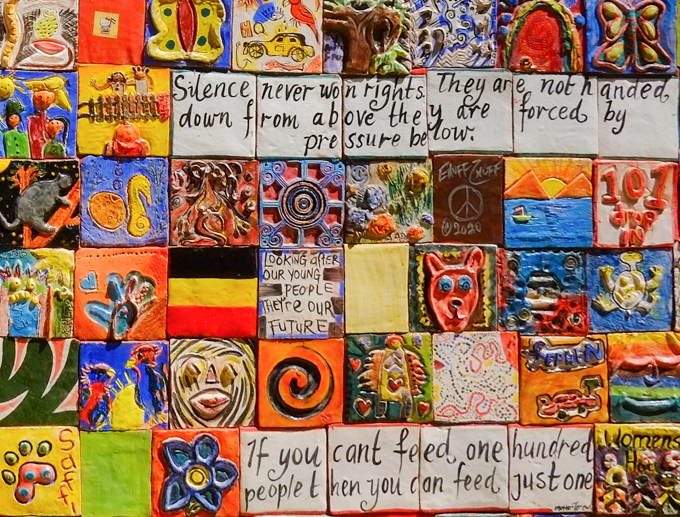
below: “Silence never won rights. They are not handed down from above, they are forced by pressure below.”
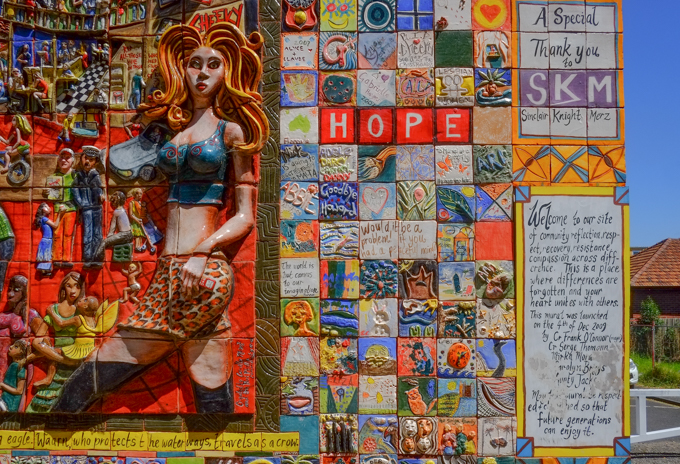
below: “HOPE” as well as as Thoreau quote: “The world is but canvas to our imagination.” It also asks a question: “Would it be a problem if you had a peaceful mind?”.
“Welcome to our site of community reflection, respect, recovery, resistance, compassion across difference. This is a place where differences are forgotten and your heart unites with others. This mural was launched on the 4th of Dec 2009 by Frank O’Connor (mayor), Serge Thomann, Mirka Mora, Carolyn Briggs, Aunty Jacks.
Delft is a lovely city with a large public square by an old church. There are some old houses along a few canals as well as some narrow lanes. There is also some street art there.
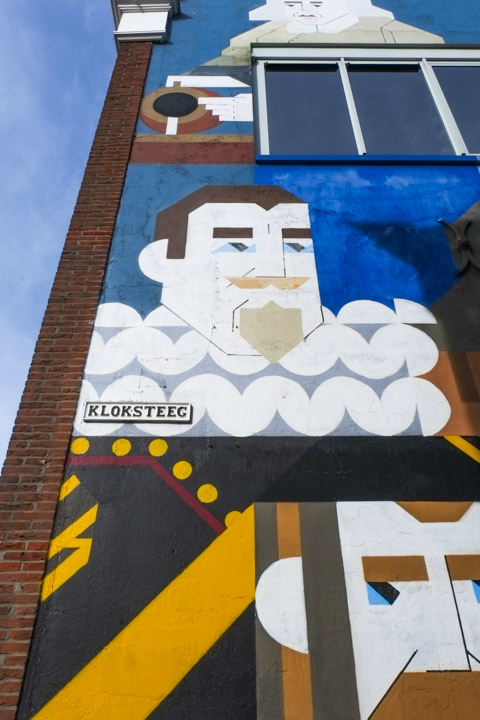
below: In a very narrow lane, Kloksteeg, is a large mural by Micha de Bie
below: The mural contains portraits of characters from Delft’s past such as Hugo de Groot (1583-1645), Antoni van Leeuwenhoek (1632-1723), “The father of microbiology”) and Vermeer’s Milkmaid (from the famous painting).
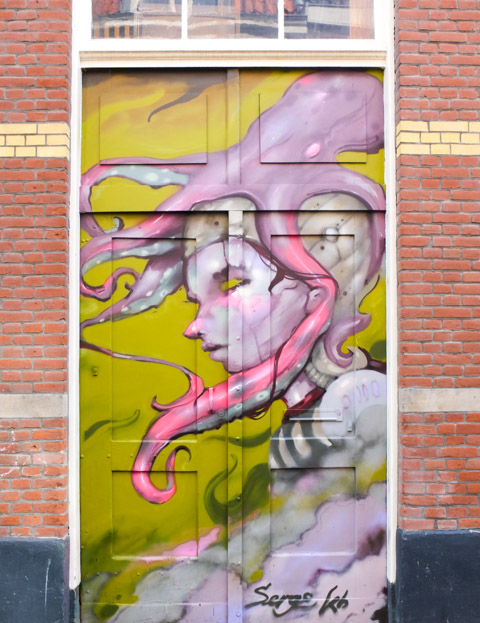
below: A mural by Serge KB (aka Serge Kortenbroek), a handful or two of little creatures.
below: Another Serge KB painting, biomechanical. Ectoplasmic ooze. paints surreal creatures, animals, cyborgs and androids.creates grim scenes with a twist.
below: On a wall in Papenstraat is a map of Delft in the 17th century and it is made entirely of mosaic tiles. It is the work of Nan Deardorff McClain and Colja de Roo.
below: A closer look at part of the map. At the top, close to the left side is Antoni Van Leeuwenhoek’s house (mentioned in the Kloksteeg mural above). The word “microscoop” appears beside it.
below: Catching and eating fish.
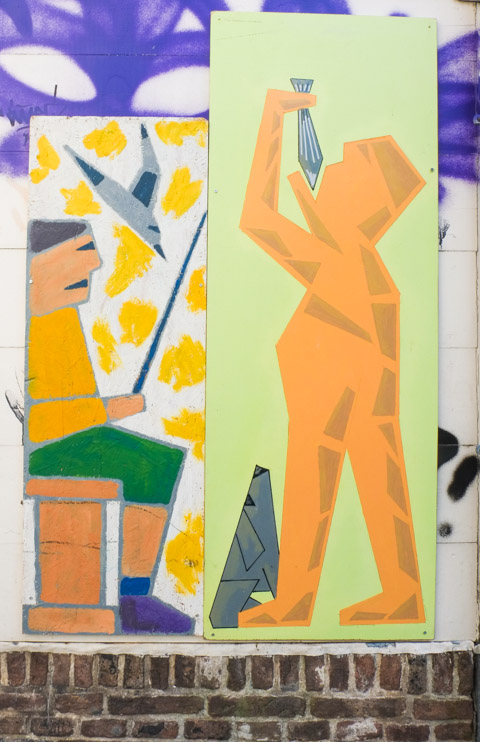
below: Are you sure they fit? Poor Henk
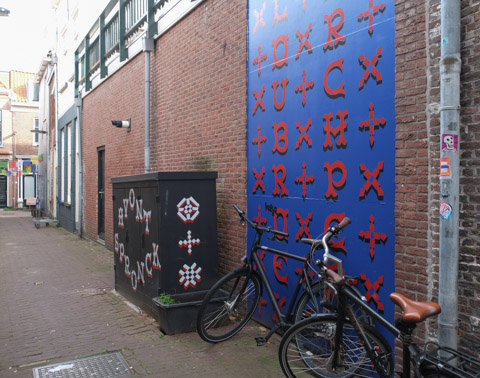
below: A decorated lane
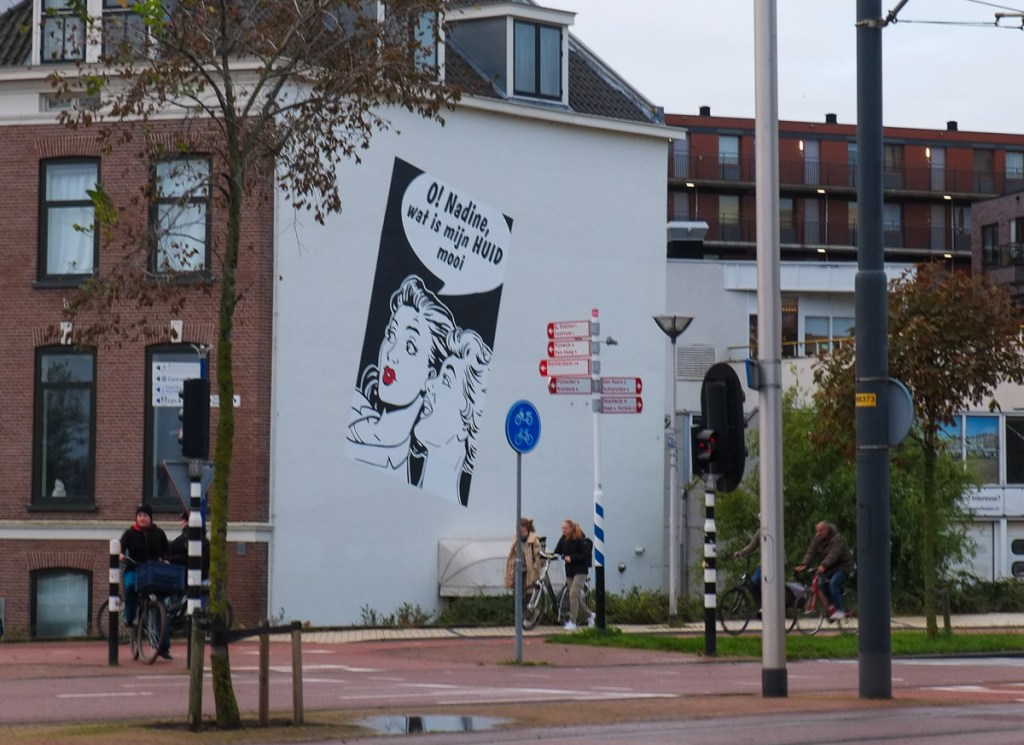
below: “O! Nadine, wat is mijn HUID mooi” or Nadine, my skin is so beautiful (or nice). This replaces a very similar painting that featured a man and a woman with the text, “O Jan wat zit je haar mooi (Jan, your hair is so beautiful”)… But wait…. this is also an ad for beauty products?
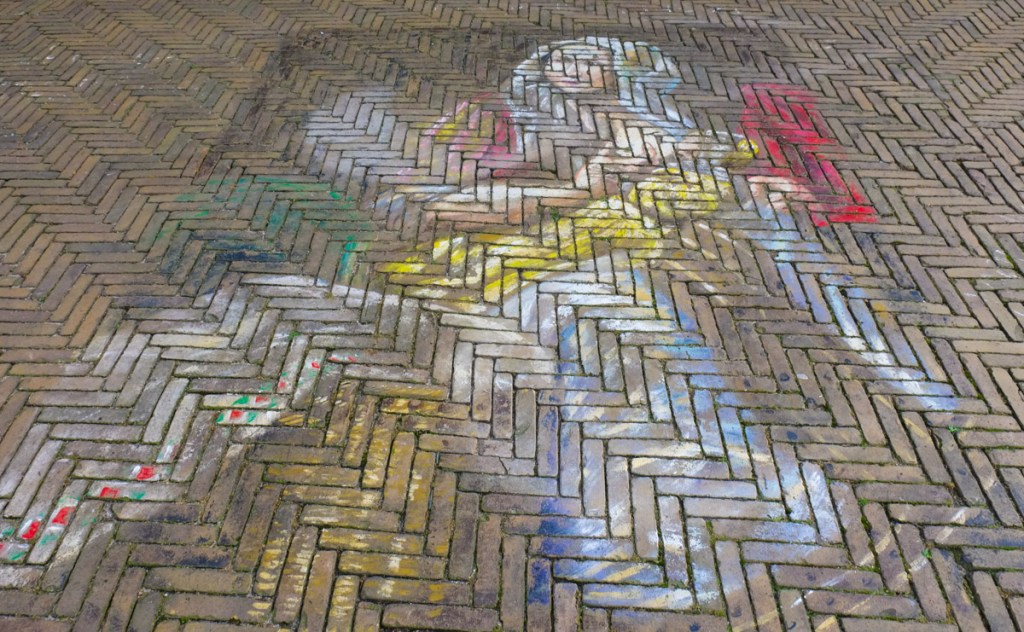
below: Literal street art – chalk (paint?) on the paving stones.
below: Stand with Ukraine, a sticker in the main square.
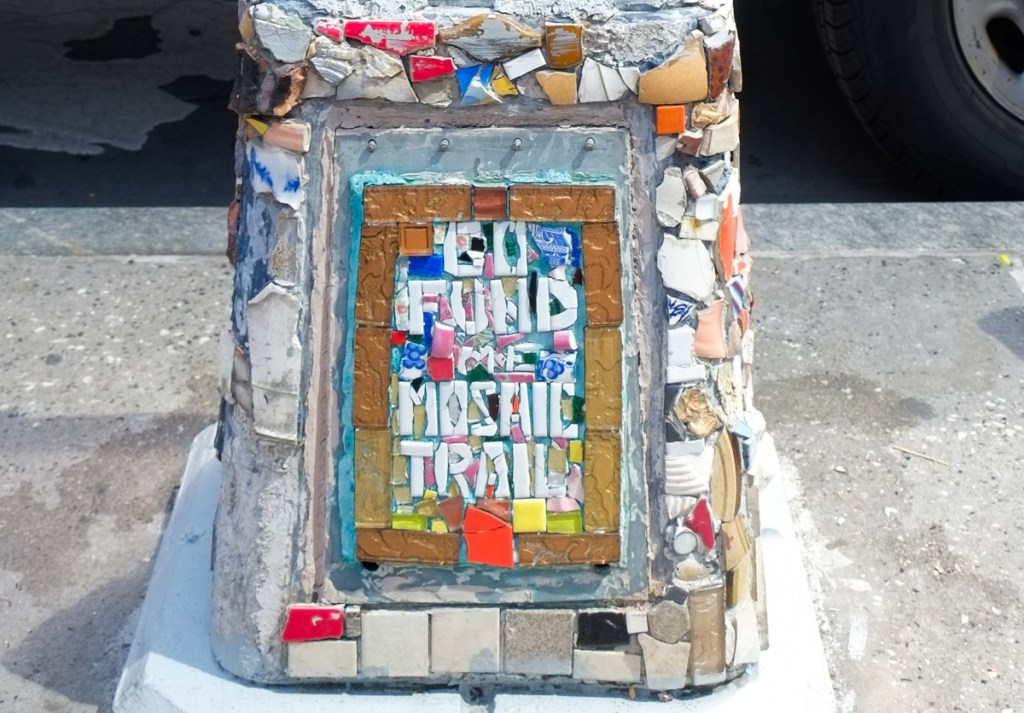
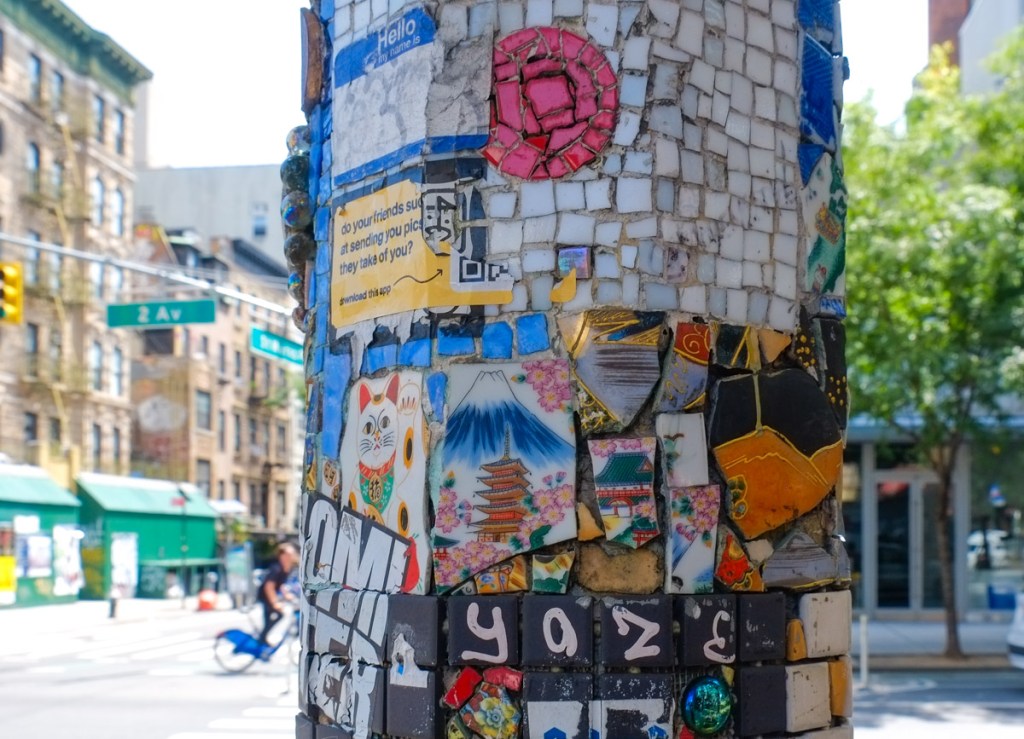
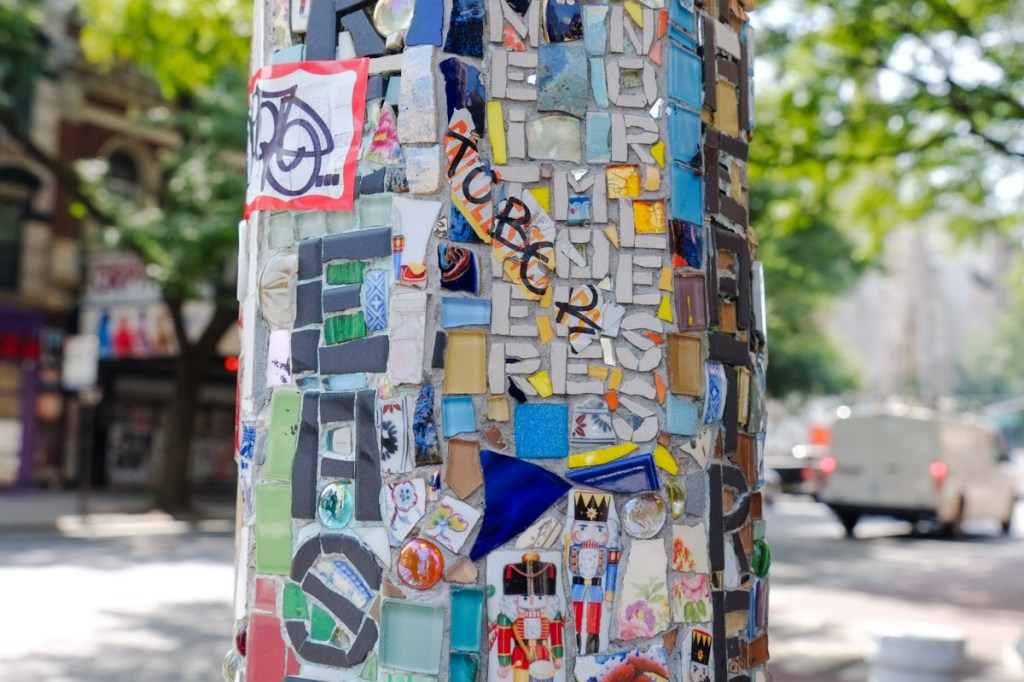
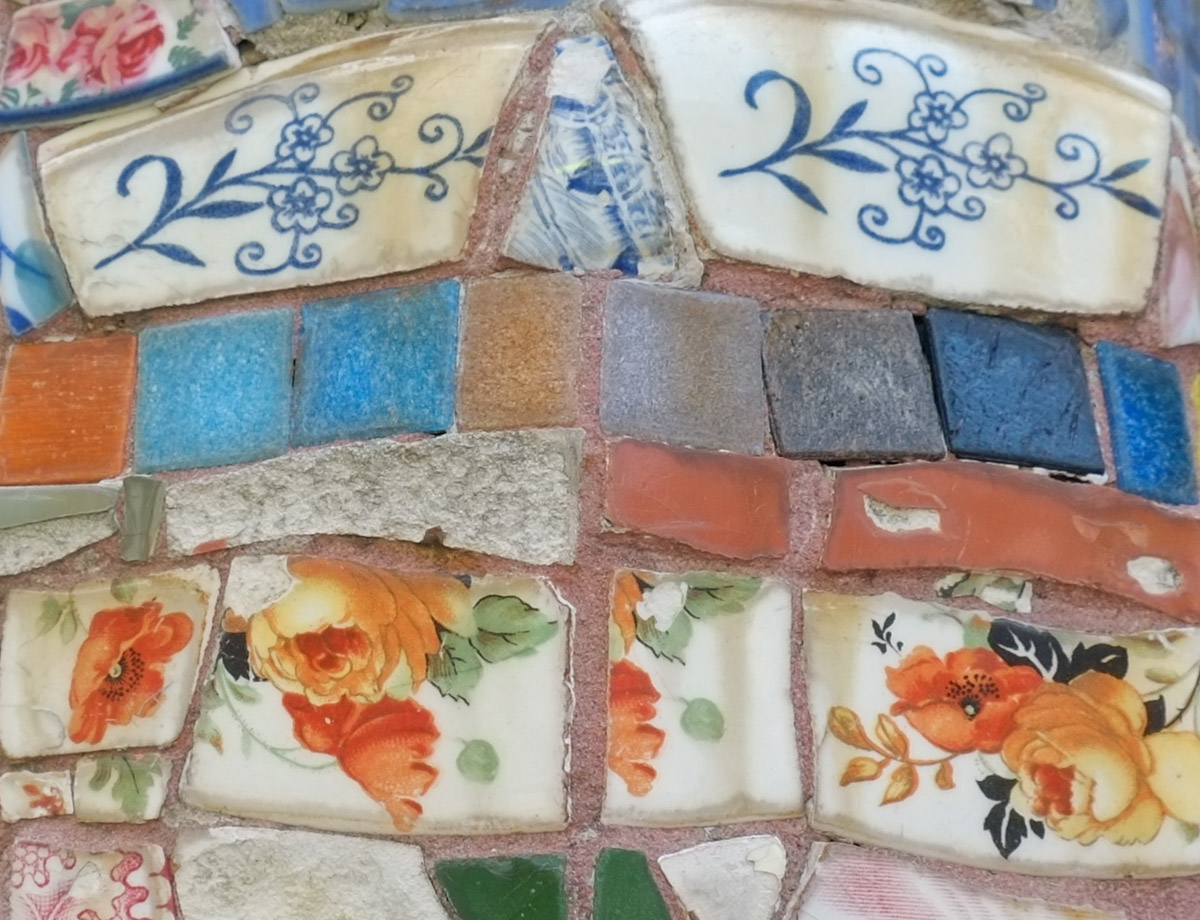
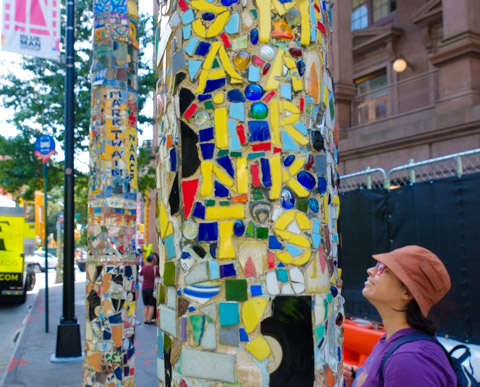
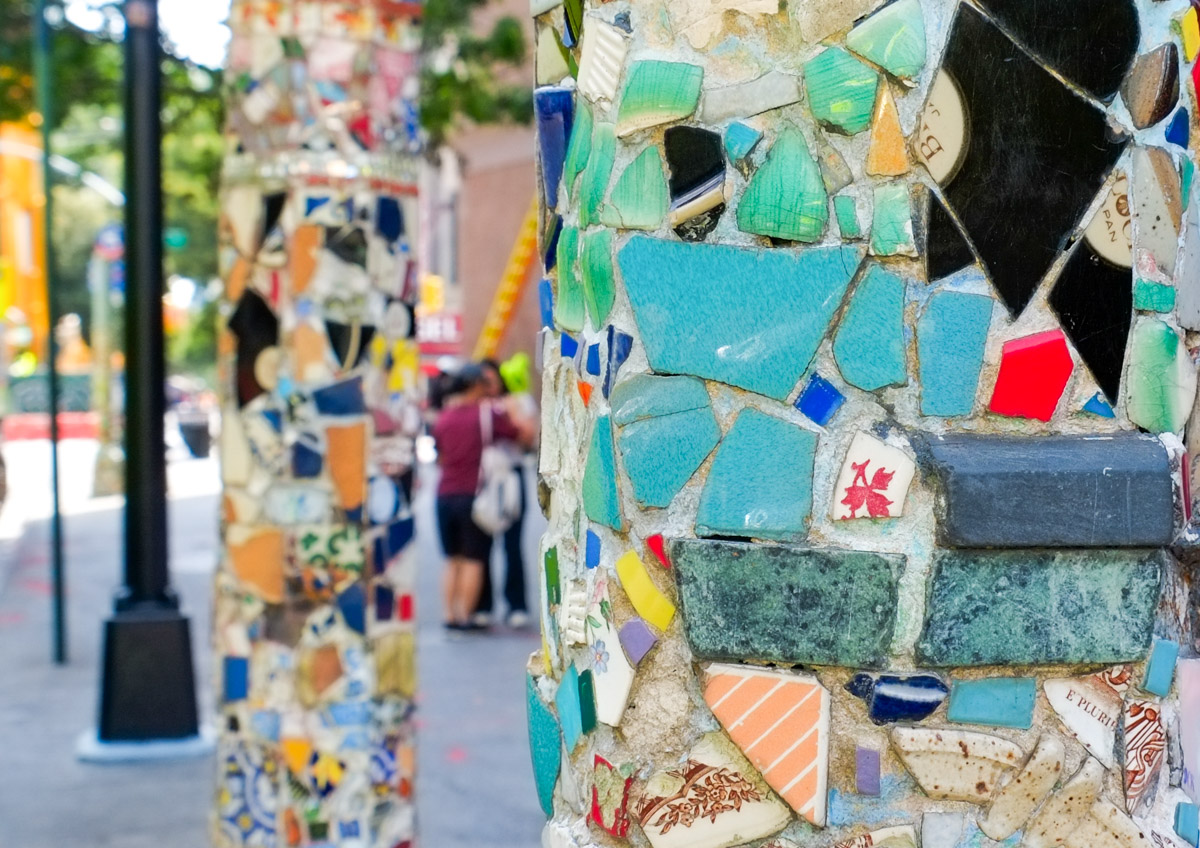
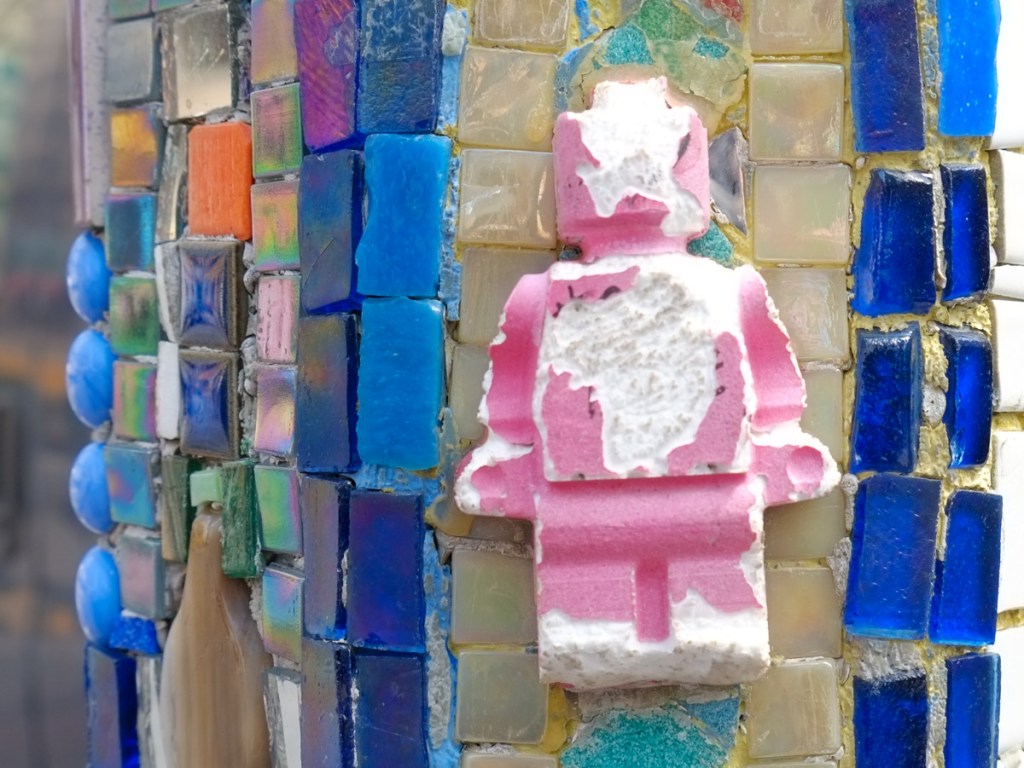
Starting back in 1985, “Mosaic Man” Jim Power began covering street poles in East Village (New York City) with mosaics of broken pieces of ceramics, coloured glass, bits of mirror, and other little treasures. The trail follows E. 8th – St Marks Place between Broadway and Tompkins Square Park.
below: Over the years, some of the poles were removed by the city and others were damaged. Back in 2017 a Go Fund Me page was set up to help Power restore the poles.
below: At the corner of 2nd Ave and East 8th Street (where it is St. Marks Place).
Carrer Petritxol is a narrow street in the Gothic Quarter (Bari Gotic) section of Barcelona. It dates from the 15th century when it was a shortcut through the backyard of a local property owner. It runs from Portaferissa to Plaça del Pi. Today it has many small unnique stores including chocolate stores.
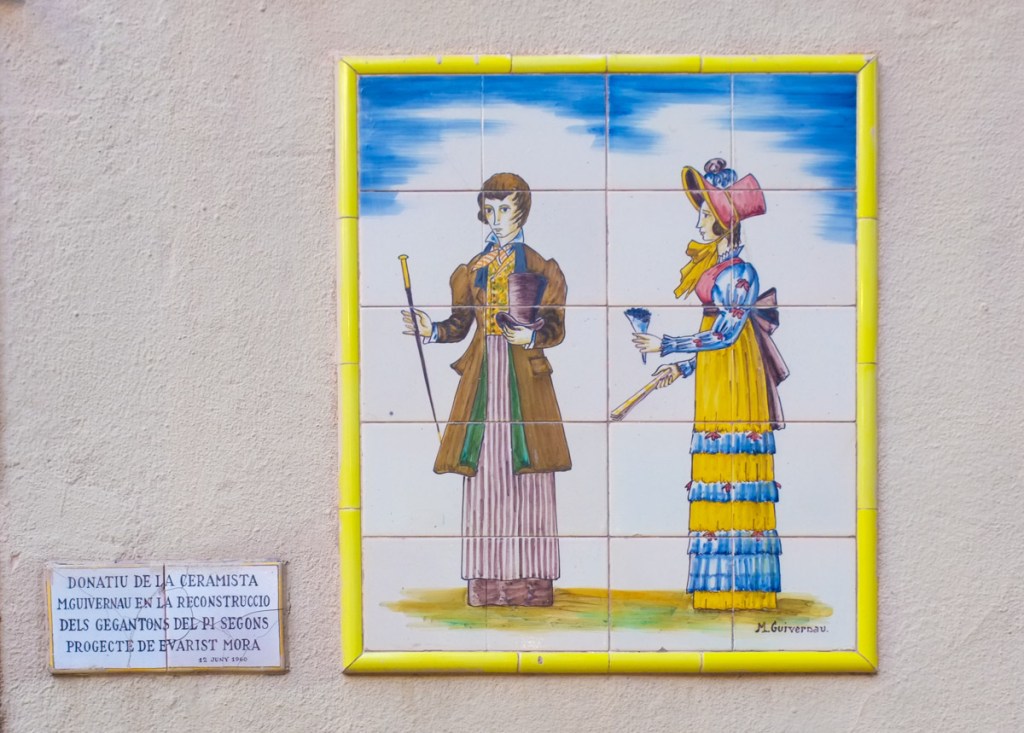
below: Catalan text: “Donatiu de la ceramista M. Guivernau en la reconstruccio dels gegantons del pi segons progecte de Evarist Mora.” Translation from Catalan: “Donation of the ceramist M. Guivernau in the reconstruction of the “Giants of Pi” according to Evarist Mora’s project. Note: The Giants of Pi – On display at the parish church of Santa Maria del Pi are two wearable puppet costumes, one male and one female, known as the Giants of Pi. They have a long history but the part most relevant to this blog post is the fact that they were restored in 1960 by the artist Evarist Mora. In 1985 they were named Mustafa and Elisenda. They are two of the many “gegants” that are brought out for special events in Barcelona such as the Corpus Christi procession and the Santa Eulalia festival.
M. Guinervau signed the above plaque but there are many other ceramic pictures on this street, all unsigned. They tell stories about the street including famous residents or visitors. What follows here are photos and a few details about some of them.
below: “Aci la mare de Déu ens diu que el temps passa lleu” , translation: “Here the mother of God tells us that time passes easily (or easily)”
below: “Amb capa i barret llue cada nit “peius” gener”, translation: “With cape and hat, shine every night “Peius” Gener”. This image shows the Spanish writer, journalist and playwright, Babot Gener Pompey (1848-1920), often known as Peius wandering the streets after dark.
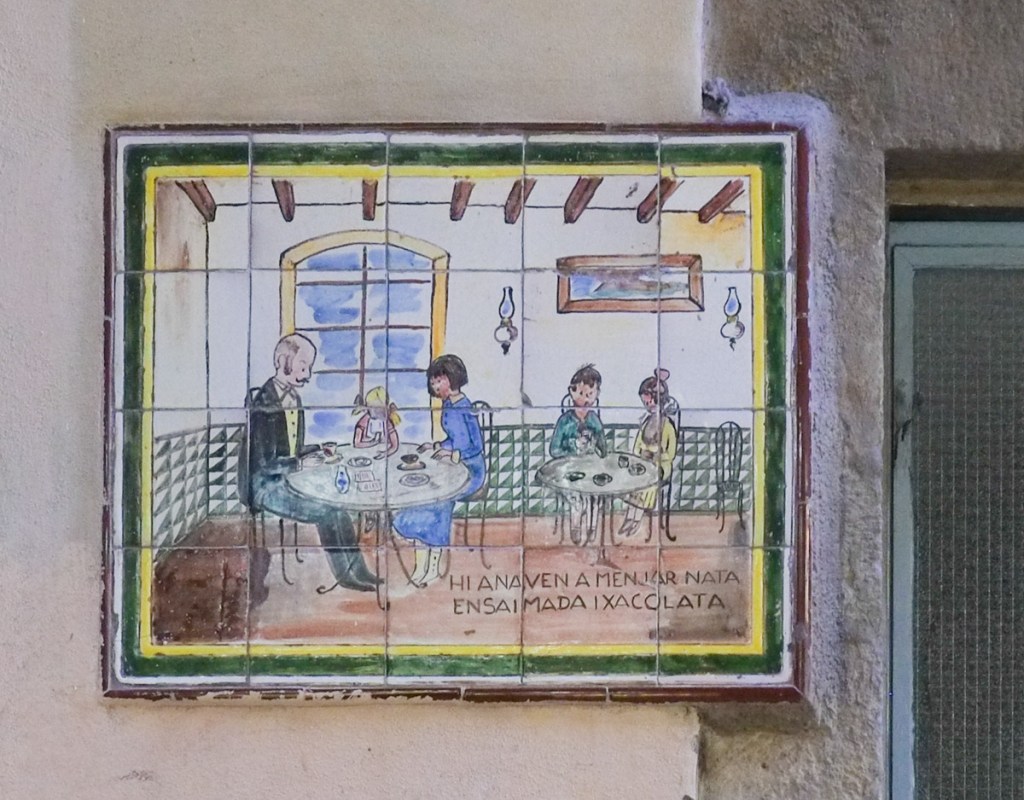
below: “Hi anaven a menjar nata ensaimada xocolata”, translation: “They were going there to eat chocolate cream” Carrer Petritxol has been a destination for chocolate for many years; there are at least 4 stores specializing in chocolate on this short street, two of which have a long history – Granja La Pallaresa and Granja Dulcinea. Granjas (Granges) were once shops specializing in dairy products.
below:Upper “De quant encara era nou i romantic el dinou”. The translation could be either “how new and romantic the nineteenth was still”, or “From when the nineteenth was still new and romantic” Lower: “De llavent ide ponent tot el da hi passa gent”, translation: “From dawn to dusk, people pass by all day”. This presumably refers to people walking along this street.
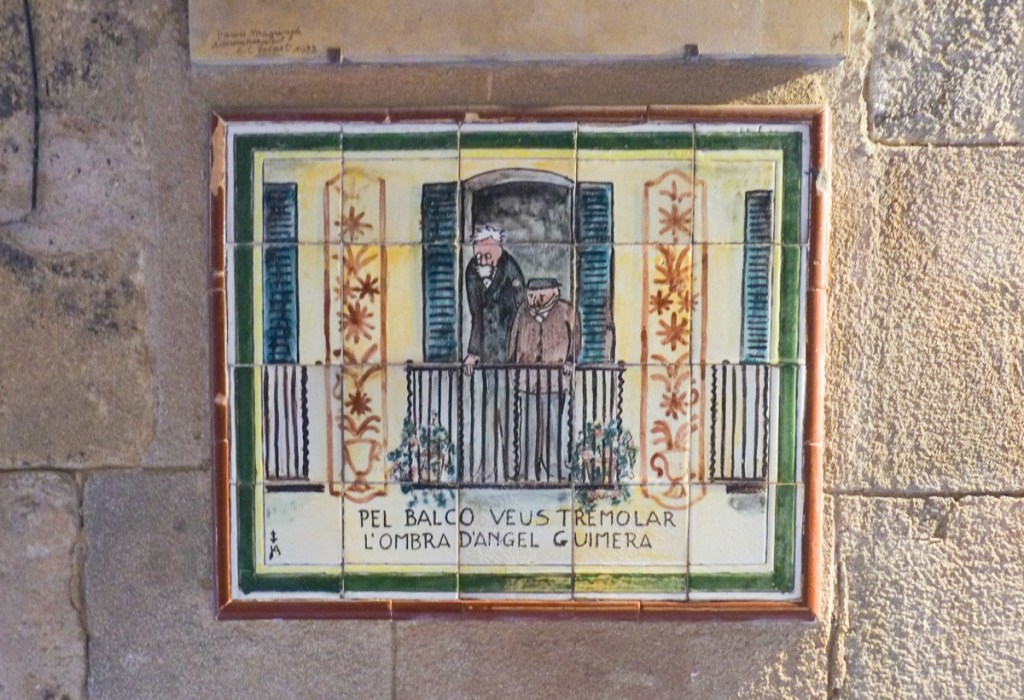
below: Catalan text: “Pel balco veus tremolar l’ombra d’angel Guimera”, translation: “On the balcony you see the shadow of Angel Guimera trembling”. Note: Angel Guimera (1847-1924) was a Catalan playwright.
below: “En un pis no sabem quin hi va viure Moratin” translation: “We don’t know which apartment Moratin lived in” . Note: Probably the writer Leandro Fernandez Moratin, (1760-1828) who lived in a hostel on this street in July 1814.
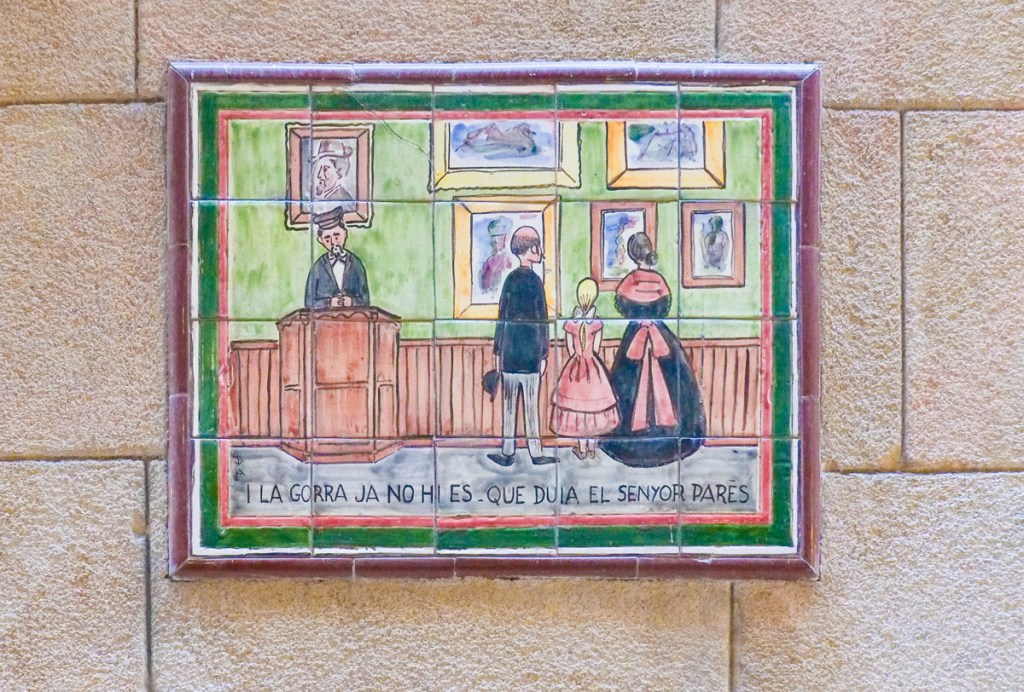
below: “I la gorra ja no hi es… que duia el Senyor Pares”. Transation: “And the cap is no longer there… that Mr. Pares wore” In other words, Sr Pares took off his hat when he and his family were at the art gallery.
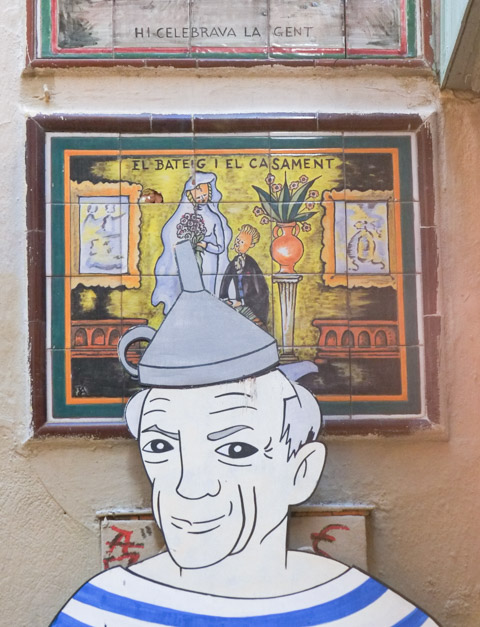
below: “El bateig i el casament”. Translation: “The baptism and the wedding.” That’s a rather short looking groom? The cutout of the man in the blue and white shirt with the funnel on his head is an added bonus!















 Eyes on the Streets