There is a large mural (40′ x 50′) in downtown Toronto on the west wall of the St. Lawrence Centre for the Arts on Front Street East. It was painted by Quentin Commanda, aka Que Rock.

below: Commanda’s “Artist Statement” – see below the picture to read the transcription.

Artist Statement:
This mural is meant to be a visual healing experience. The seven rings around Grandfather Sun represent the seven Grandfather teachings of the Anishinaabe people: Wisdom, Love, Humility, Respect, Honesty, Courage, and Truth. There are many layers of sacred geometry patterns on the mural.
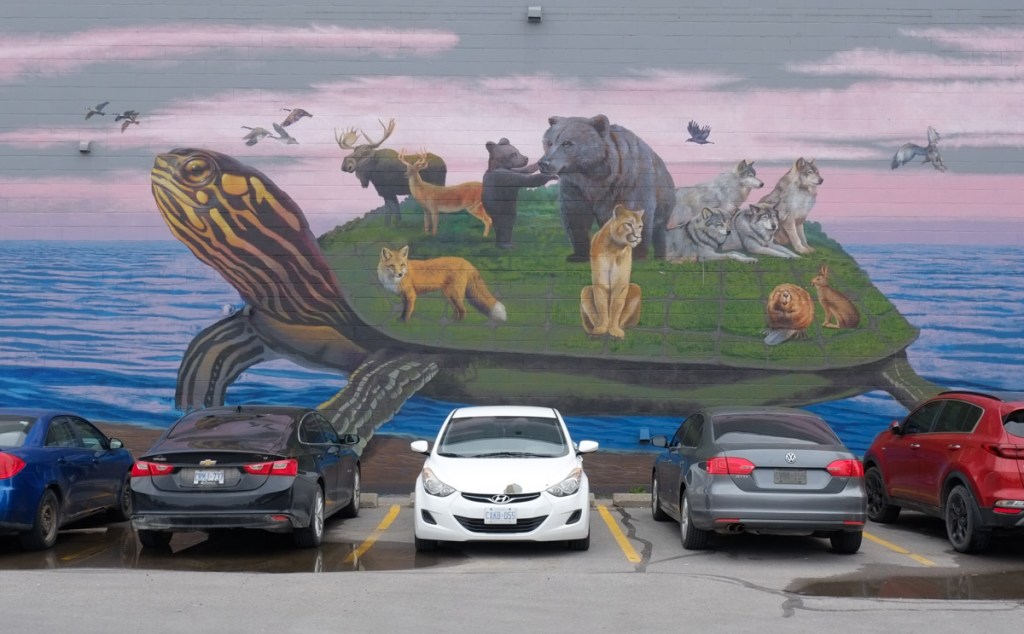
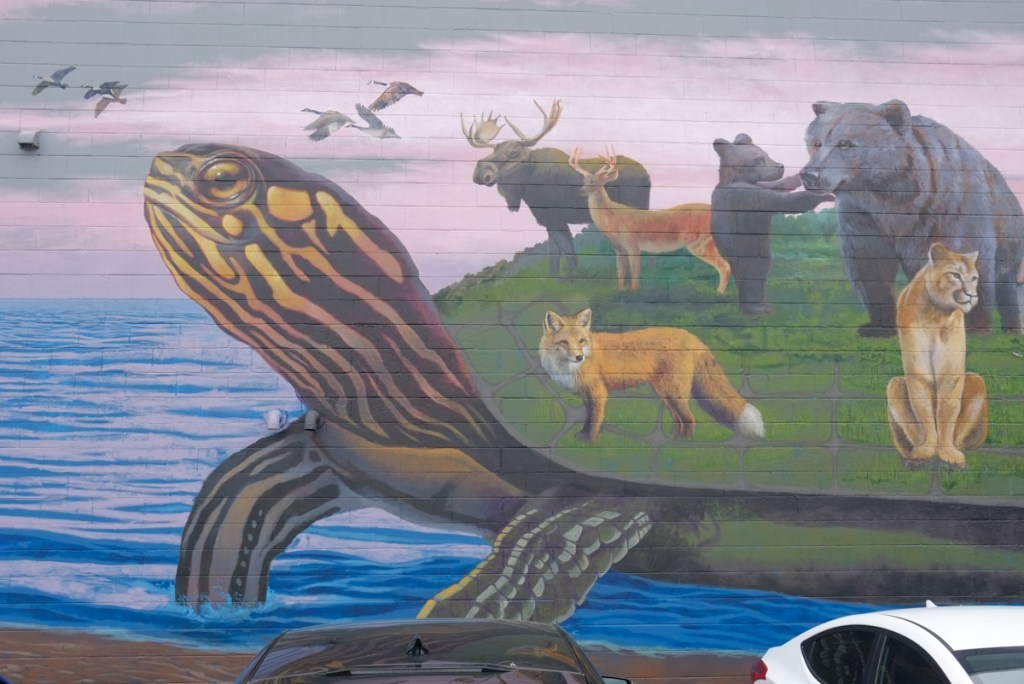
The skyline includes the medicine-wheel teachings, Grandmother Moon and the 13 grandmother clan systems. The turtle shell represents North America’s creation story, the 13 full moons per year, and the seven grandfather teachings.
The entire mural also represents the original Peace Treaty of the Six Nations on Turtle Island (North America). The story of the Six Nations Treaty starts with the original five Nations of Turtle Island: the Plant Nation, the Insect Nation, the Bird Nation, the Fish Nation, and the Animal Nation. All five Nations had to agree to let the Human Nation live here on Mother Earth. All five Nations agreed to be humanity’s teachers and the Human Nation was invited to share the land.
The Human Nation was given instructions on how to live on Mother Earth, walk gentle on Mother Earth, learn one new thing every day, and share with one another. These are some of the original instructions given to the Anishinaabe people. The bear represents a Medicine Clan. The Mukwa (bear) is a healer, it is the only animal who communicates with all Six Nations.
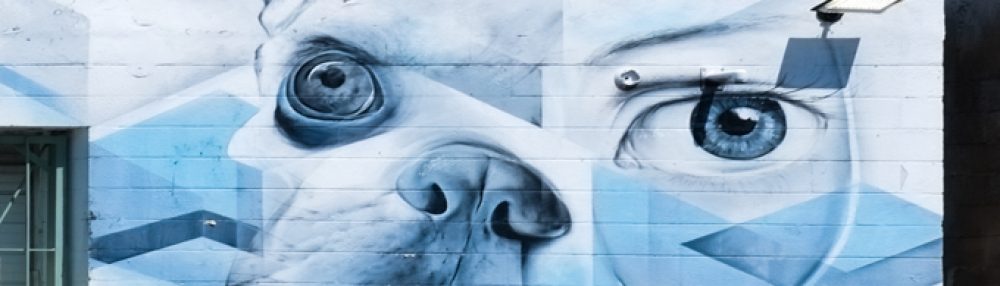
The bottom panel represents my story from the past, present, and future. The first character with the microphone is the future and present me. The second character represents my past as a native child with my dog Miangun and the path of healing I have taken to decolonize myself back to the Anishinaabe child I was born to be.
My mother is a residential school survivor and so was my father. I am no different than the 215 children found in Kamloops, B.C. I survived to tell you this story and share my experiences. My community is still here and so am I.
The Artist is from Nbiising or Nipissing First Nation, his traditional name is Manitou Nemeen (Spirit Dancing) and he is from the Miangun Dodem (Wolf Clan).
The orange background on the mural represents the missing/murdered Indigenous peoples of Turtle Island.
The mural was commissioned by TO Live


 Eyes on the Streets