small town Ontario murals

As I find more, I will add them here in alphabetical order by town name.

Burnt River: Two halves of the same mural. Rural life – cows, horses, and the old CN train that no longer runs here. The land where the railway tracks ran has been repurposed into a walking trail in summer and a snow mobile trail in winter.
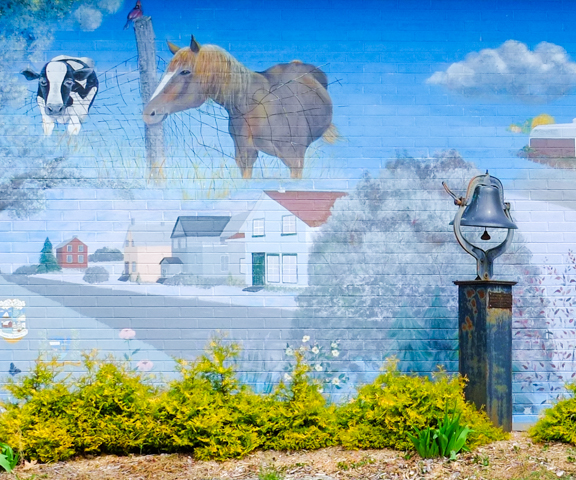
part of a mural on exterior wall of Burnt River post office, some houses, a cow, and a horse

part of a mural on exterior wall of Burnt River post office, a train stopped at a station, a snow mobile.

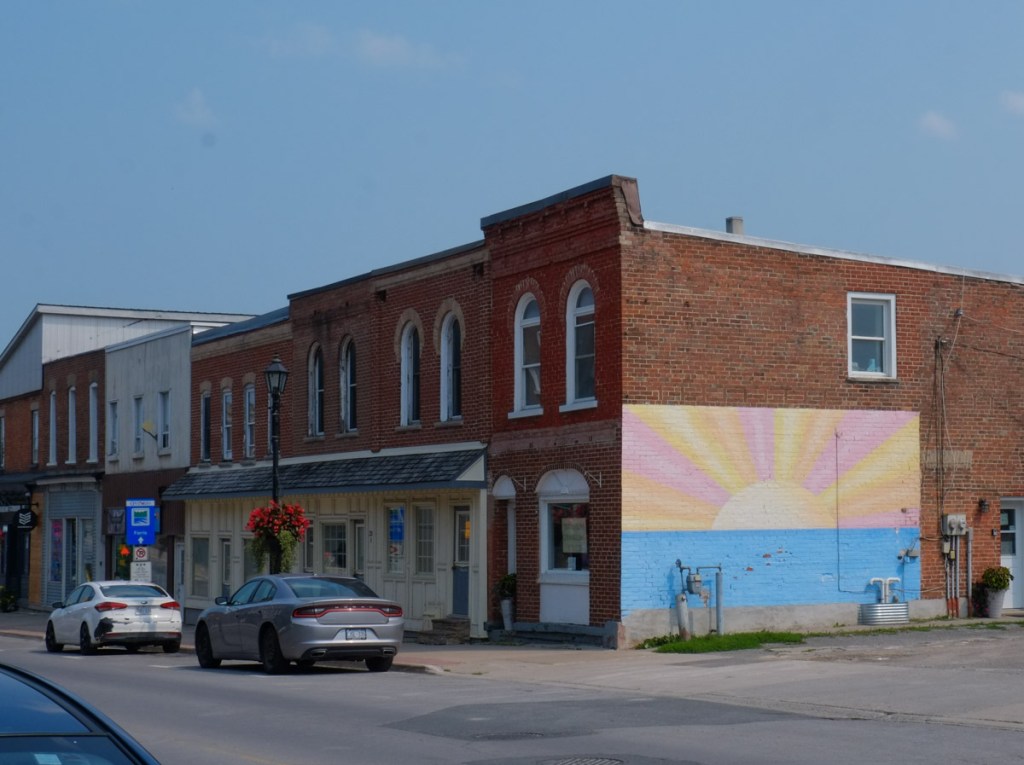
Campbellford: Sunrise over the water. Campbellford is on the Trent River.
Goderich: Butterflies and rainbows on the corner of Courthouse Square and Montreal Street, downtown.

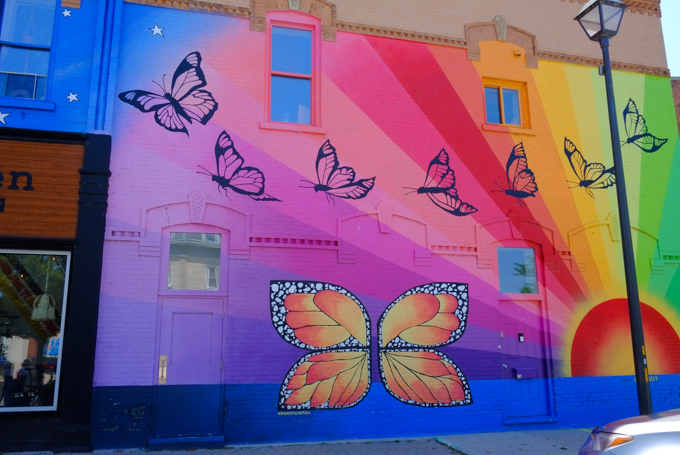
butterflies and a rainbow in a large mural on the side of a brick building in downtown Goderich

Lafontaine: Profile of a wolf… Legend of Loup Lafontaine – part legend and part true story, written by Thomas Marchildon, a parish priest, in 1955. Since 2002 the town has held an annual Festival du Loup.

mural, wolf head in profile, leaves, berries, nature scene

Parham: “59th Annual Exhibition of the Parham Agricultural … A glimpse into the past – just some of the people who made the 1950 Parham Fair another memorable event.”
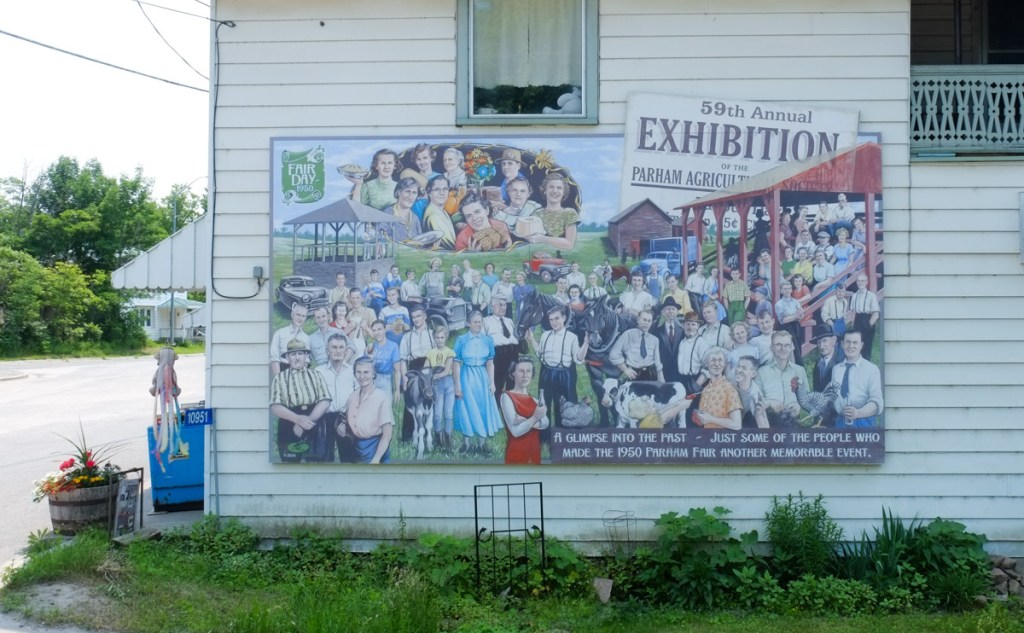
large mural on the side of general store in Parham Ontario, image of a group of people at the 59th annual Exhibition and Parham agricultural fair, early 1900sm

Sharbot Lake: “The Final Journey”, On June 6, 1891, Sir John A. Macdonald died at his residence in Ottawa. After a state funeral, his body was taken by train to Kingston from the mainline to the K&P at Sharbot Lake.

mural on wall in sharbot lake, portrait of Sir John A Macdonald as well as a train, tells story of Macdonald's trip in the train after he died

Sharbot Lake: Kingston and Pembroke Iron Mining Company. Incorporated 1887. The Railway’s Influence: with the arrival of the railway in 1876 came new prosperity. Sawmills and mines now had easy access to markets. Sharbot Lake soon had several stores, hotels and 3 doctors. This building, built in 1901, was originally the Farmers Bank of Canada.

mural about Kingston and Pembroke iron mining company incorporated in 1887, and the railway's influence in the area, saw mills and mines and easy access to markets.  On the side of building from 1901, the Farmers Bank of Canada

Tiverton: The Watchman – this was the name of the local newspaper. At the top of the oval, “Incorporated in 1879” and at the bottom, a portrait of John Patterson, one of the first settlers. Also shown, the Masonic Lodge, local church, an old car and pickup truck at the B A gas station, horses pulling a plow, and an old fire wagon on the main street. It was originally painted by Allen Hilgendorf in August 2001 then restored by Ruth Hurdle in 2010, and by the looks of it perhaps it is being restored again (photo taken June 2025). Other notes: Although the town was incorporated in 1879, it took the name Tiverton in 1860 when the post office opened there. “The Watchman” newspaper was founded in 1874.
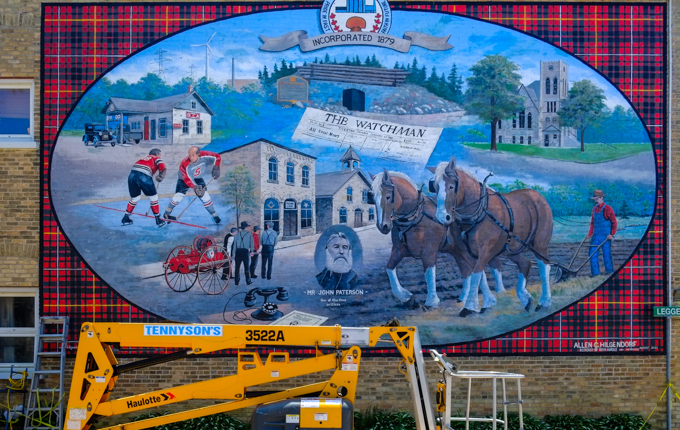
large mural, outdoors, black watchman plaid background with large interior oval containing many images of pioneer life, horses pulling a plow in a field, men playing hockey outside, a church, a wagon on a street with a couple of stores,

Tiverton: Tiverton Platoon 1917, group picture

large photograph of men in uniform, 1917, group shot, about 50 men, title is Tiverton Platoon 1917, on brick wall, outside

Wallaceburg: The S.S. Superior, a large boat. “1889-1960, Typical of the Great Lake Steamers that visited Canada’s Inland Deep Water Port, this 250 ft package freighter, a familiar sight loading local products, made it’s last call in 1958 thus ending an important chapter in local heritage. “
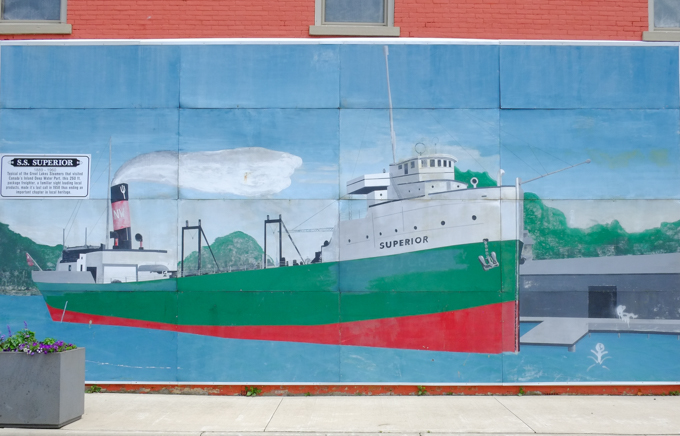
painting on an exterior wall in Wallaceburg, a large image of the S.S. Supperior, a package freighter built in the 1880s.

Smiths Falls

small graffiti of a cat crouching, on a yellow wall, immediately above and beside a small concrete set of stairs

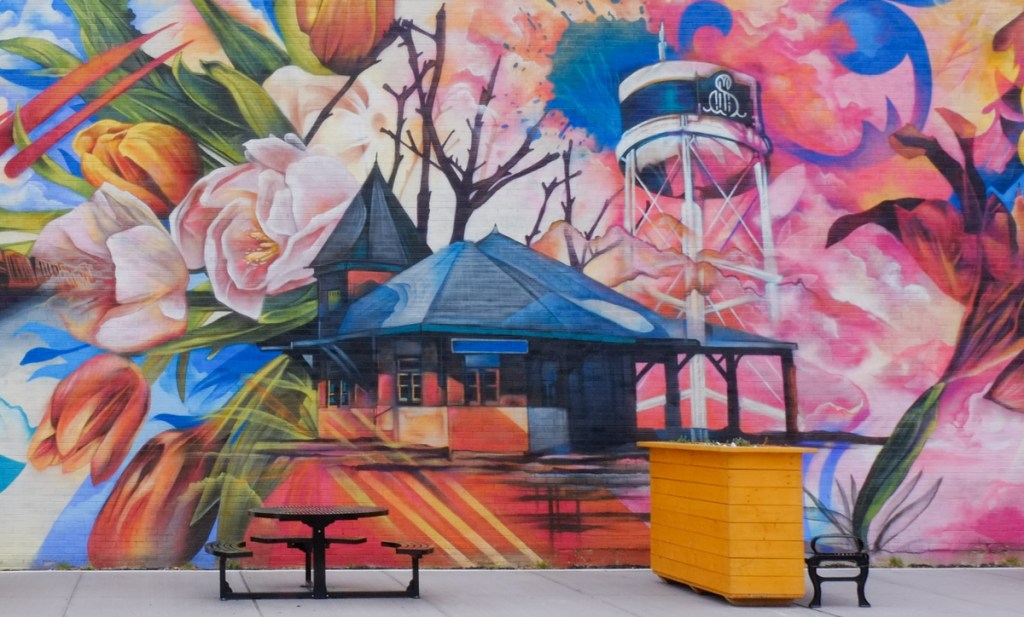
below: A large mural by Dom Laporte featuring a Locomotive 2037 pulling a long freight train. The history of Smiths Falls was always closely tied to the railways. In February 1859 the first train arrived in town – on the B & O (Brockville & Ottawa) railway, pulled by a wood burning locomotive. In the 1880’s B & O was amalgamated into the CPR (Canadian Pacific Railway)network. a few years later a second rail line, the Canadian Northern, came to town.

a large street art mural by Dom Laporte featuring a large locomotive pulling a train, a train station, a water tower, and many flowers
street art mural, a locomotive, by Dom Laporte

below: Smiths Falls railway station with its distinctive turret – built in 1912 for the Canadian Northern line on their Toronto to Ottawa route.  It is now a National Historic site.

mural, train station, old Smiths Falls station now an historic site

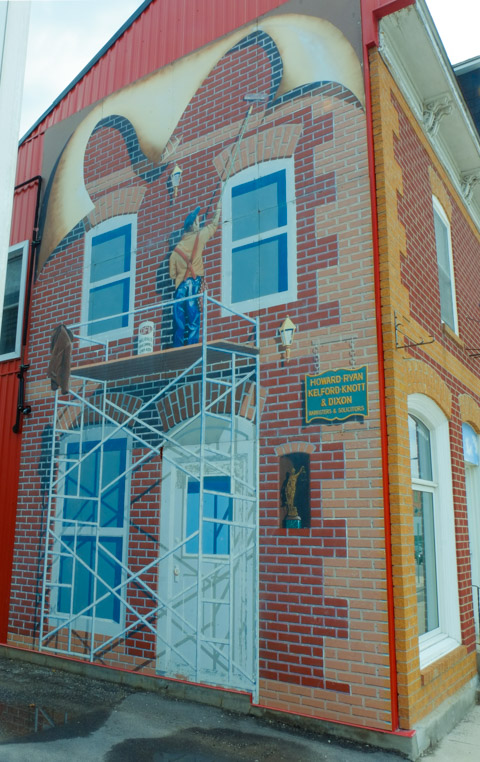
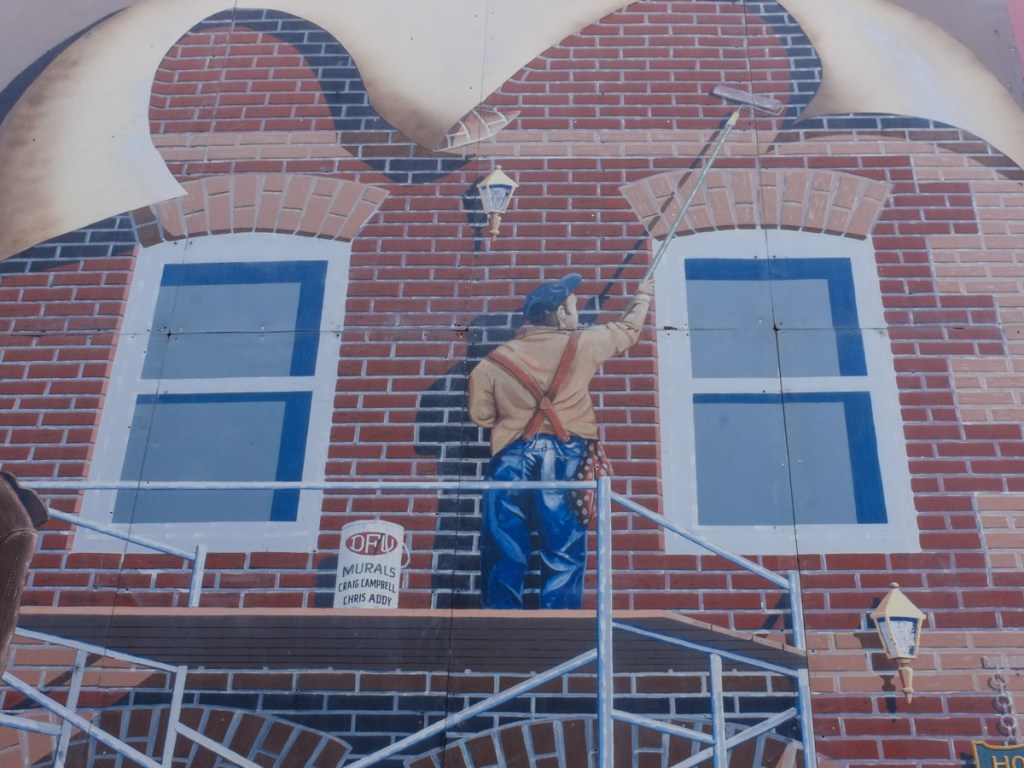
below: High above the street on scaffolding, working to “renovate” the lawyer’s office – a twist on the historic mural. Ryan, Knott & Dixon would probably be quite happy with the facelift that Craig Campbell and Chris Addy have given their brick building.

mural showing man painting the front of a two storey brick office building, standing on scaffolding
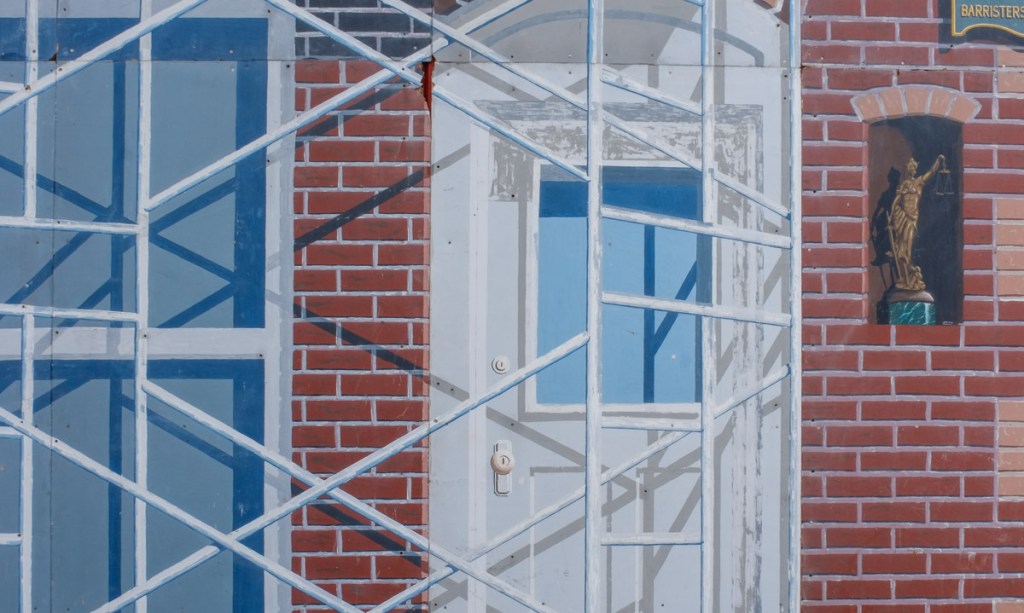
close up of mural, front door with scaffolding beside it

below: An older mural painted on wood and then attached to the wall. A winter scene on a downtown street.

small mural on the side of a building, an history scene of a street in winter, horse drawn wagon, people in period clothing

Barreiro train station vicinity

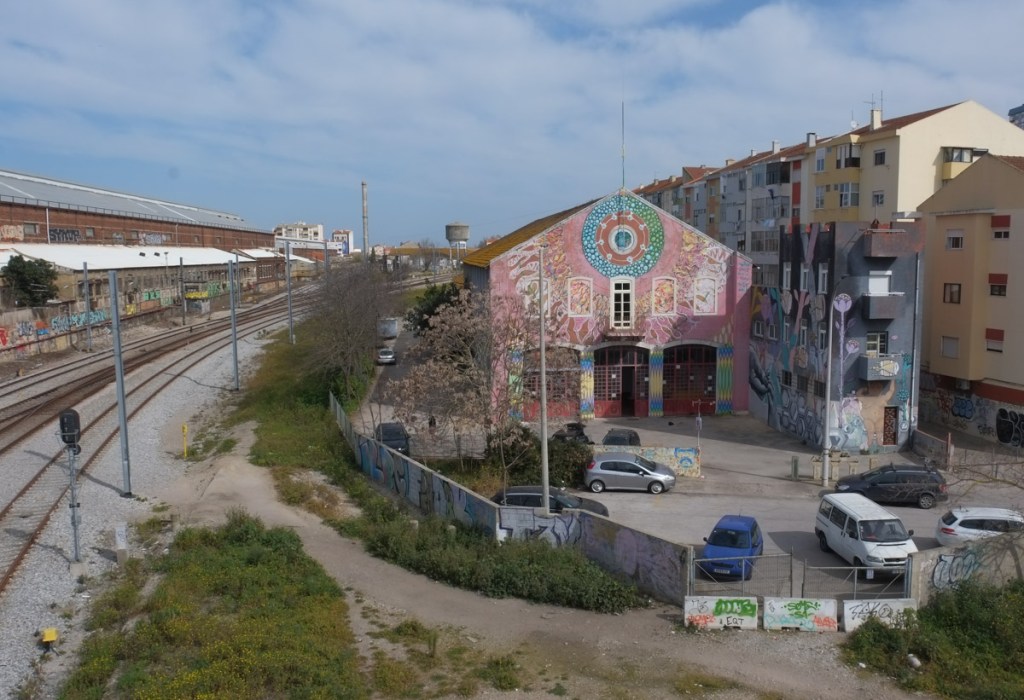
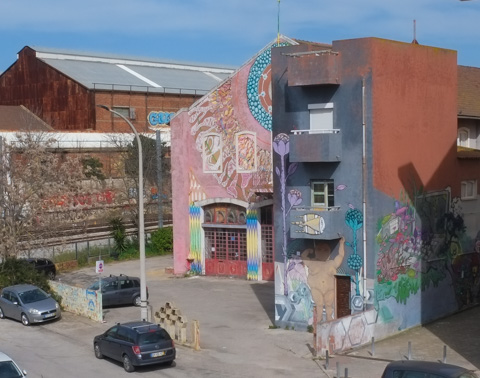
Although it is a city in its own right, Barreiro seems like a suburb of Lisbon.  It is most easily accessed by a short ferry ride across the Tagus River from central Lisbon. The Barreiro  train station is next to the ferry dock.  There are now numerous murals in Barreiro in part because of a project called Art in Town run by the City Council and ADAO.

The building in the middle is ADAO Headquarters (Associação Desenvolvimento Artes e Ofícios, translation: Assoc for the Development of Arts and Crafts)

view from bridge, ADAO headquarters, an old industrial site, with street art murals on it

below: A hole in the concrete wall provides a short cut across the tracks as well as a different view of the murals painted by Gonçalo Mar (aka Gonçalo Ribeiro) and Odheit

concrete fence with part removed for a walkway, building with murals in the background

below: On the fence, a owl keeps a watchful eye on passers-by

on a concrete block wall, a street art painting of an owl's face

graffiti on a small metal box beside the railway tracks, line drawing of a man's face, frowning or scowling

black stencil on old concrete wall, portrait of a man with a mustache

below: A closer view of the ADAO Headquarters mural . The fish-like figures swimming on the walls appear frequently in Mar’s work.

mural by Mar on A D A O building by the train station in Barreiro Portugal.  Hands.  Fish like creatures, a big pink flower, an adult habd reaching out and touching fingers of a small child's hand, grey hexagons

below: A head with long flowing grey and turquoise hair emerges from the hexagons.

mural of the head of a grey faced older woman with eyes closed, flowing grey hair, emerging from grey and turquoise hexagons

below: Backyard view

back of an old industrial building with a small fenced in yard, old plastic chairs, graffiti on walls,

below: Punk red feathers

street art painting in a yard, a brown skinned man with red feathers in his hair and orange paint marks on his face

below: Two street art portraits; the woman on the right was painted by Pedro Pinhal

two portraits, street art, on the left in black and white, an older wrinkled faced man while on the right in colour, a younger brown woman with a metal head band and necklace
a black and white street art portrait of a man with bald forehead but long hair at the back, hoop ear rings and necklaces

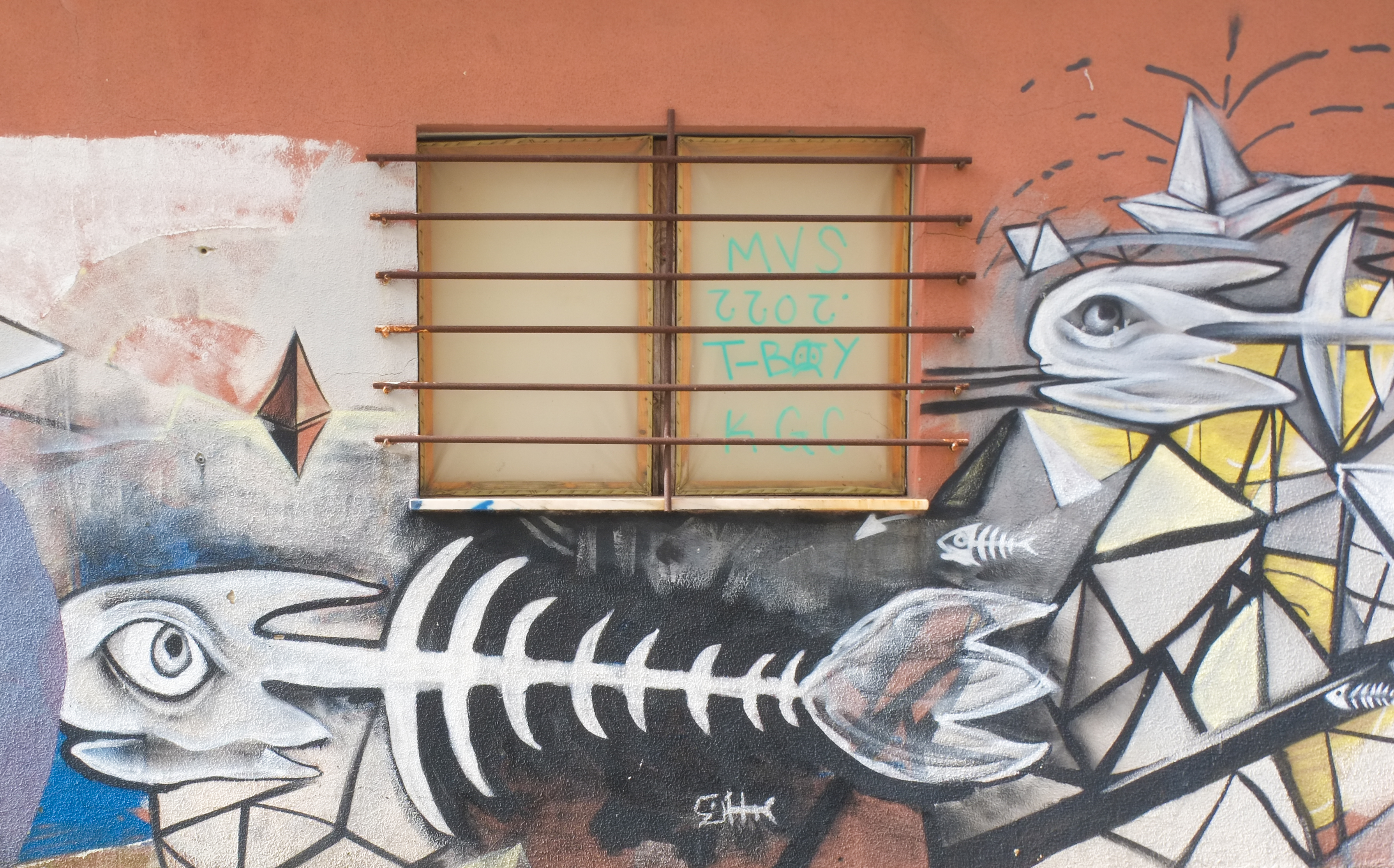
below: A mermaid, octopus, paper sailboat, and fish bones

mural in shades of grey, marine theme, a paper sailboat sails above a topless mermaid and an octopus

street art mural, large fish showing just the bones

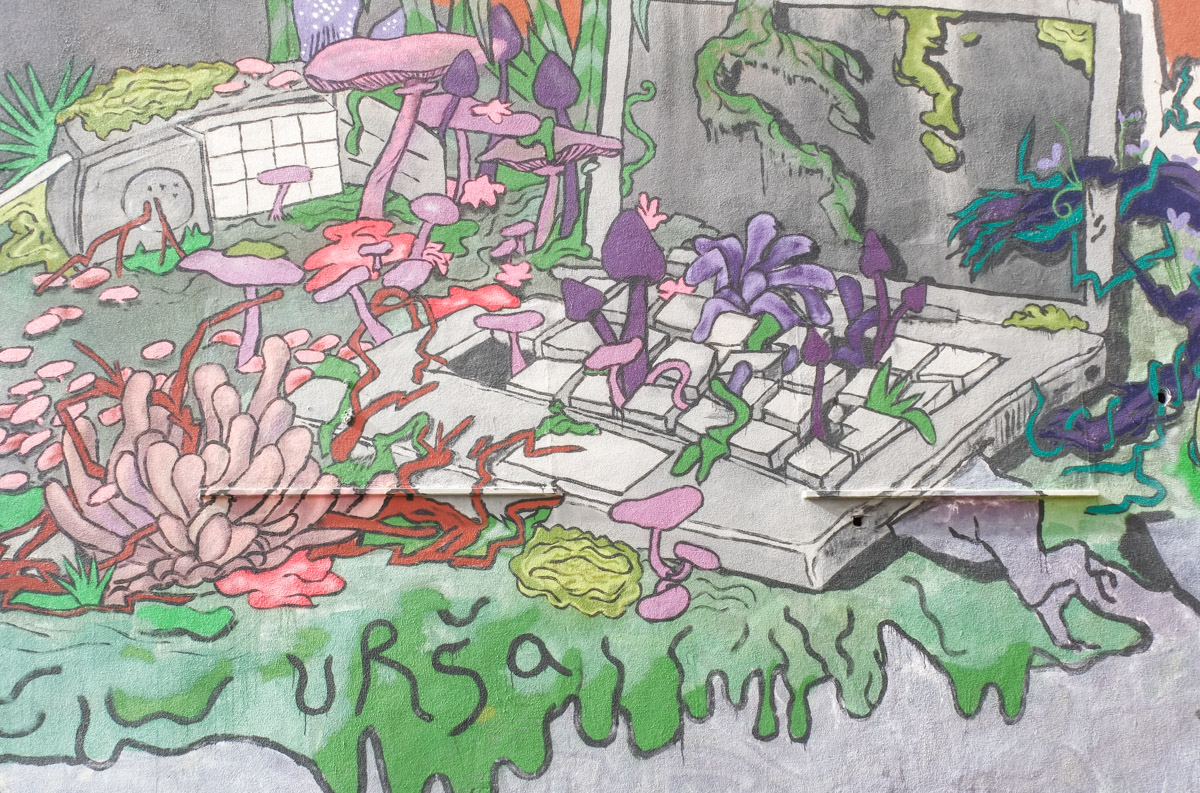
below: Ursa’s laptop and old flip phone has begun to sprout.

mural of an old flip phone and open laptop that have begun to sprout new growth

below: Old School Futuristes

blog_old_school_futuristes

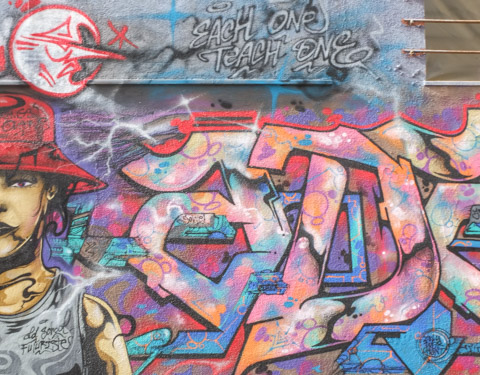
below: Each one teach one

text that says each one teach one in  a mural, surrounded by tag text calligraphy in a mural

below: Rays of sunshine above with sharp angles of concrete below.

blog_metal_sunshine_cubist

below: Back to the front of the ADAO Headquarters ….

view of front of A D A O building in Barreiro, covered with murals

below: …. where this beauty stands by the entrance.

view of part of mural by Mar, including a naked overweight figure

Old First Ward murals, Buffalo

The First Ward in Buffalo NY includes the docks along the Buffalo River and was once a thriving industrial area.  Old grain elevators still dominate the area.   The first residents were Irish who came to help dig the Erie Canal (completed in 1825) and who stayed.   A second wave of Irish immigrants arrived in the 1840’s as refugees from the famine.  They settled here and found work in the port.

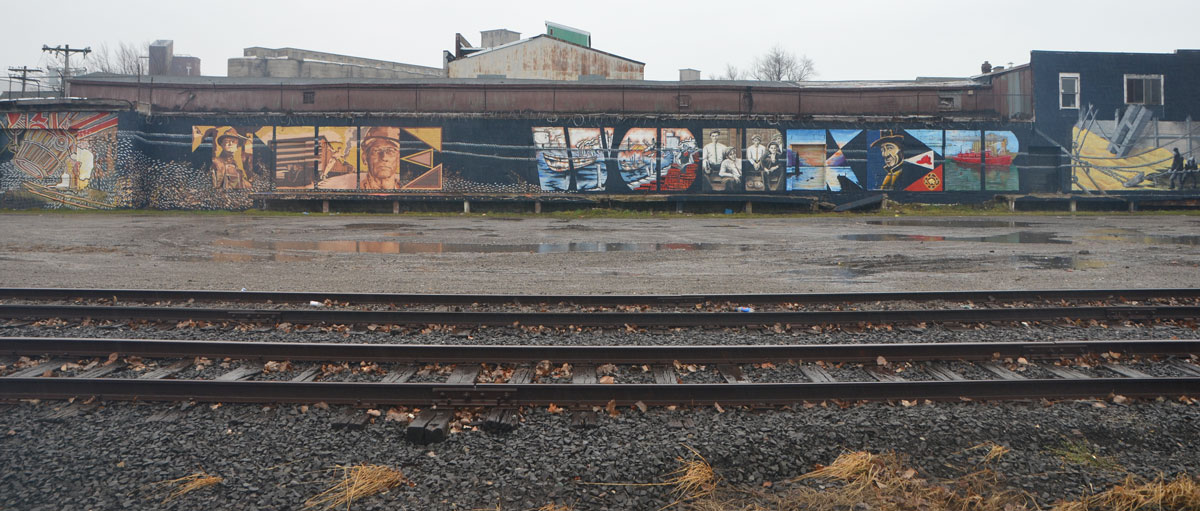
Two large murals have been painted on Republic Street, both facing the railway tracks.   The first is ‘The Worker’ on the old Brock’s building/warehouse between Tennessee and Kentucky streets.   It was completed just over a year ago.

a long horizontal mural called The Worker, with the words Thw WOrker written in large capital letters and filled in with pictures of working people. Along the side of a wall beside a train track - view of whole mural with tracks in the foreground

The project was headed by ELAB (Emerging Leaders in the Arts Buffalo).

below: Molten metal and flying sparks by Nicole Cherry

a tub of molten metal and sparks flying, as part of a large mural that pays tribute the workers and labourers who lived and worked in Buffalo's First Ward back when it was an industrial powerhouse

below: Nick Miller’s painting, “Brakemen” a tribute to those who worked on the railways fills the word THE.

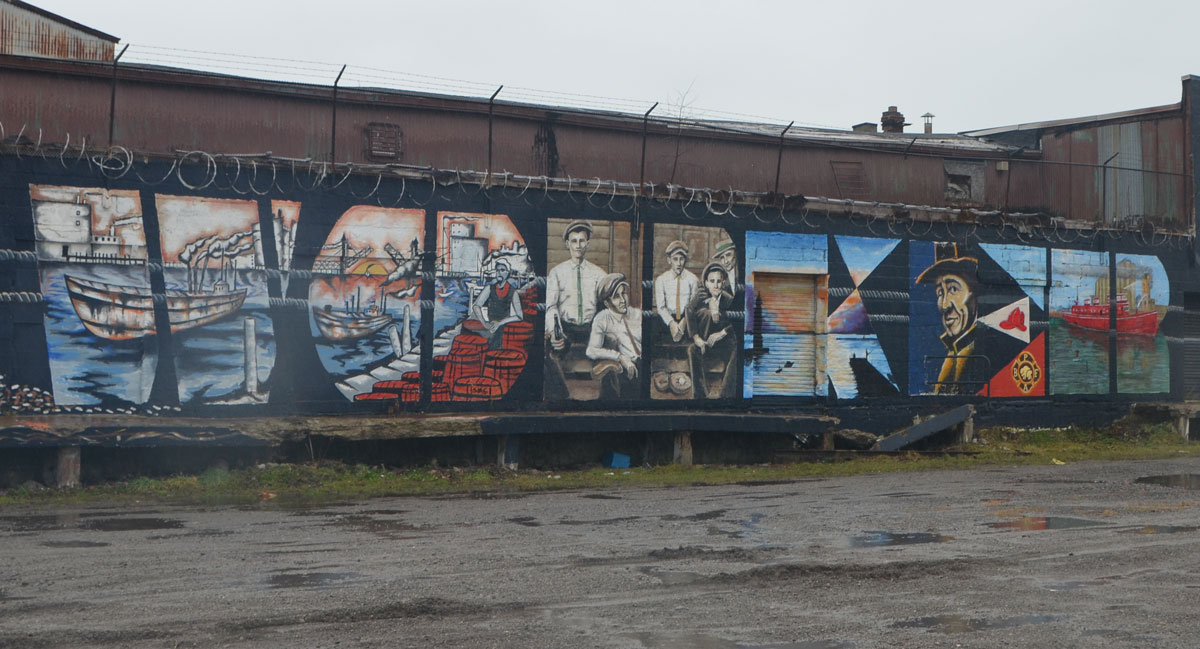
part of a larger mural called The Worker, with the words Thw WOrker written in large capital letters and filled in with pictures of working people. Along the side of a wall beside a train track

below: W O R K E R with its images

the word worker is written in large capital letters and each letter contains an image of people working, a large mural in Buffalo New York

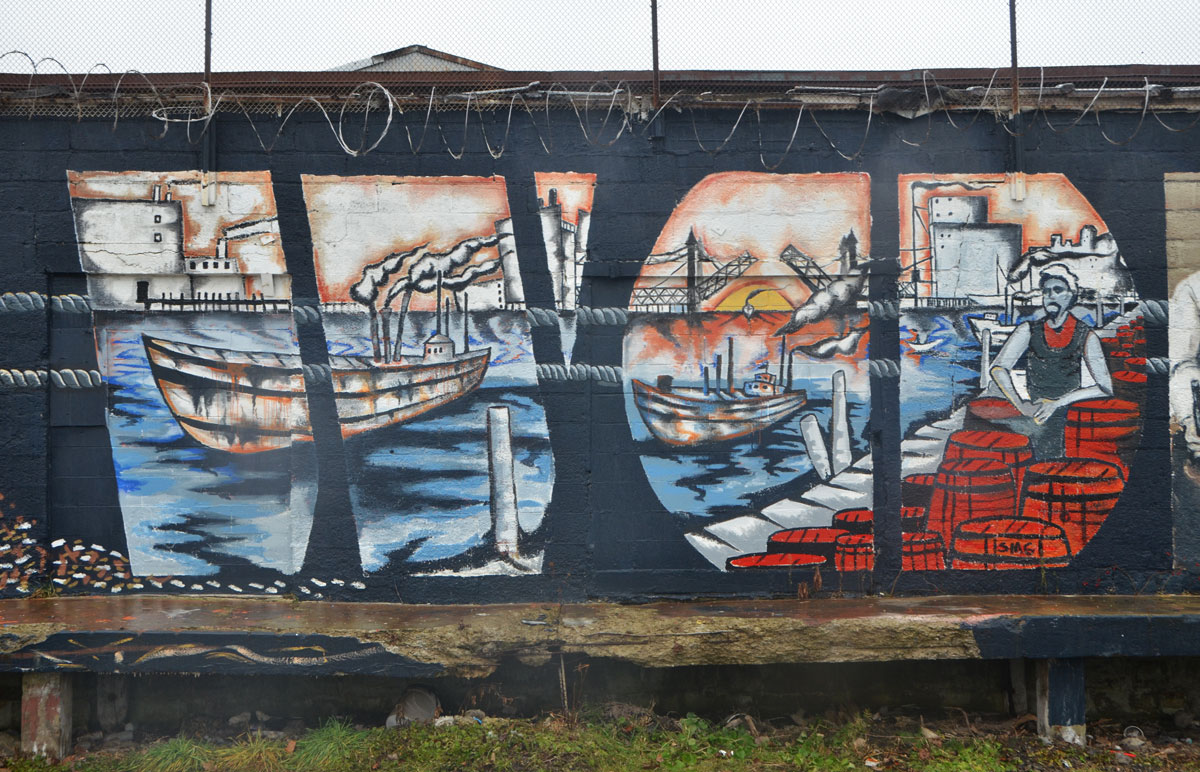
below: A harbour scene.

part of a larger mural, a dock scene, harbour, ship in the water, lift bridge open in the background, kegs and barrels on the dock, a man working on the dock

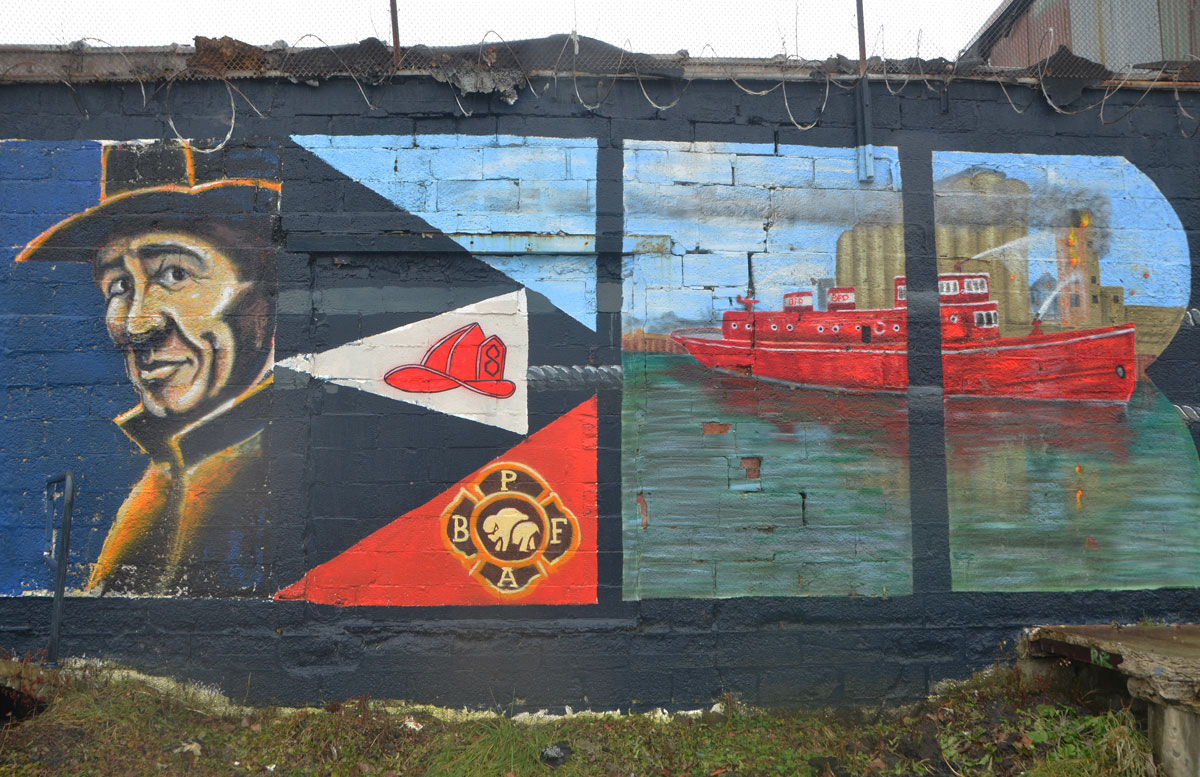
below: Honouring the police and firemen.  The boat is  the “Edward M. Cotter”.  This fireboat was built in 1900 as the “William S. Grattan” – named after the first paid fire commissioner in Buffalo.   After a 1953 rebuild she was given her present name in honour of a recently deceased Buffalo firefighter and leader of the local firefighters union.  She is the oldest active fireboat in the world and is a National Historic landmark.  She also acts as an ice breaker during the winter months.

part of a large mural celebrating the workers of Buffalo, this panel is for the police and firemen and includes a red fire boat.

below: Scoopers with grain in the hold of a lake freighter.

part of a larger mural, men hauling a rope and filling a shovel with wheat

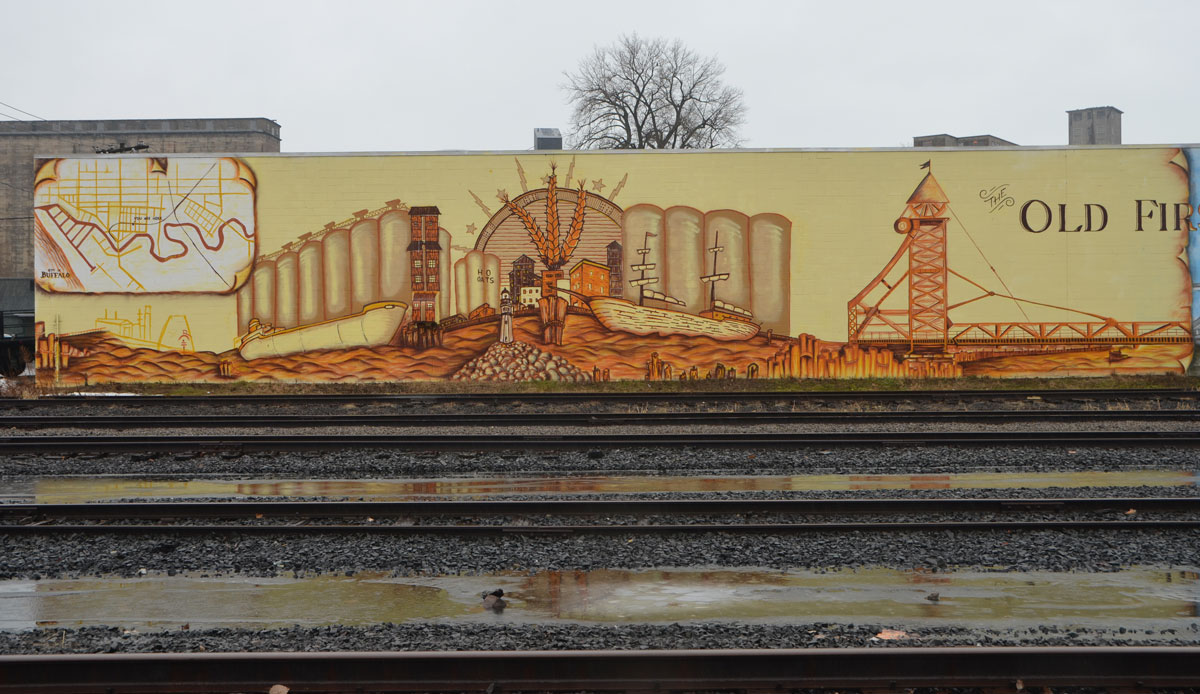
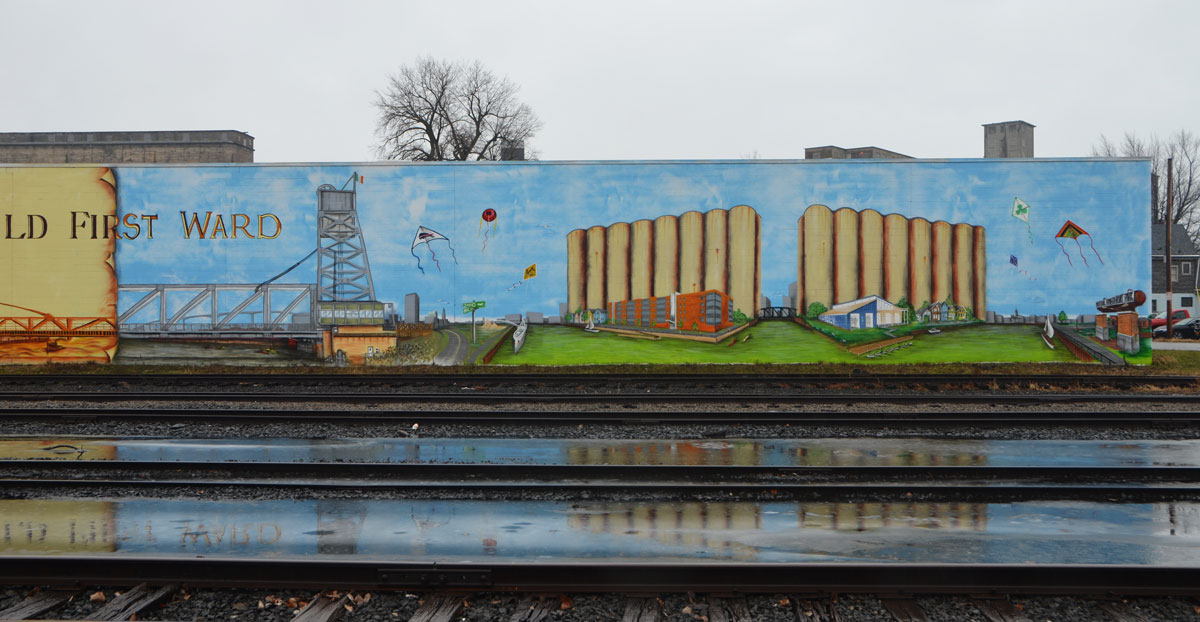
The second mural was painted by Vinnie Alejandro and a team of artists.  It is a 5000 square foot painting contrasting the past and present of the Old First Ward.

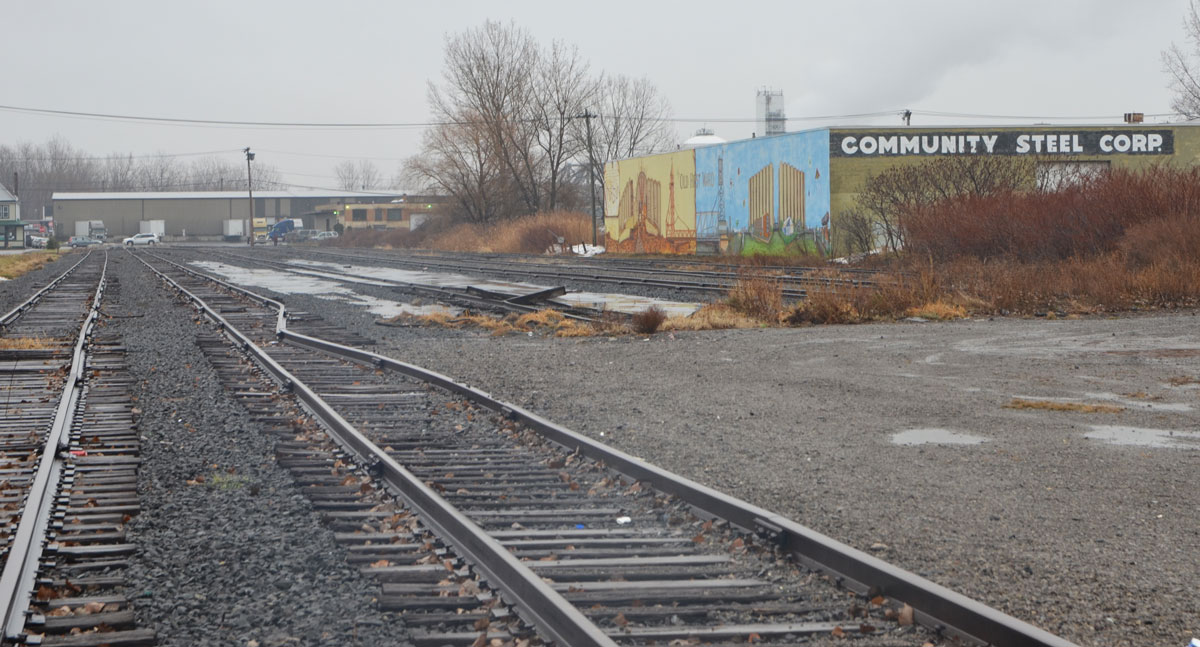
railway tracks run past the community steel corp building on Republic St., Buffalo. There is a mural on the side of the building.

It is just up the street from ‘The Workers’ mural – on the side of the Community Steel building at Alabama and Republic.

mural about the Old FIrst Ward, Buffalo. involves two large panels, one is an image from the past with grain and grain elevators and the other is a scene from the present with the area as a residential parkland with old grain elevators in the background. Railway tracks run in front of the mural.

The area has many railway lines. The ones that run parallel to Republic Street were in 1903 the City of Buffalo granted private railroad rights to the Quaker City Cooperage Company (they made barrels). These tracks connected to the Erie Railroad.

mural about the Old FIrst Ward, Buffalo. involves two large panels, one is an image from the past with grain and grain elevators and the other is a scene from the present with the area as a residential parkland with old grain elevators in the background. Railway tracks run in front of the mural.

From what I could find, other artists include Tom O’Brien, Amanda Gala Roney, Suzie Molnar Goad, Ed ‘Sparky’ Lawton, Jake Wiles, and Chris Kameck.   Like all community mural projects, many people and organizations were involved. For a short history of the mural, and a list of groups who gave supplies and/or time, see an article in ‘Buffalo Rising‘ (an excellent resource if you’re interested in the city of Buffalo).

mural about the Old FIrst Ward, Buffalo. involves two large panels, one is an image from the past with grain and grain elevators and the other is a scene from the present with the area as a residential parkland with old grain elevators in the background. Railway tracks run in front of the mural.

Photos were taken January 3, 2017